May to September is the best starting point for whale and dolphin watching in Madeira if you want to combine wildlife watching with warmer, drier holiday weather. June to August is the clearest weather-based choice. That does not make it a guaranteed peak for every species, or mean winter trips are second rate.
Madeira has no single whale watching season with a firm opening and closing date. Dolphin and whale watching is a year-round activity recognised by Madeira’s tourism board. The better question is what you want from the trip: a comfortable boat outing, a chance of seeing a particular species, or simply the best departure during dates you have already booked.
Which Months Are Best for Most Visitors?
For a first visit, choose May, June, July, August or September, then keep the actual sailing date flexible. This recommendation puts holiday weather first rather than pretending there is one month when every whale and dolphin gathers offshore.
The distinction matters. IPMA’s 1991–2020 climate normals for Funchal show a pronounced dry summer, with June to August much drier than the winter months. September remains relatively dry, while average rainfall rises sharply in October. These are land-based climate averages, not a forecast of offshore waves.
April and October can still work well, particularly if whale watching is one part of a wider holiday. Avoid rejecting otherwise suitable travel dates because they fall just outside a suggested summer window. A flexible booking is more useful than an overconfident calendar.
| Months | Best use of these dates | Planning priority |
|---|---|---|
| January and February | Add a wildlife trip to an existing winter holiday. | Keep several possible sailing days available. |
| March and April | Choose spring if it suits the rest of your itinerary. | Keep expectations flexible rather than targeting a rare encounter. |
| May and June | A practical starting choice for a mixed sightseeing and wildlife holiday. | Schedule the boat trip early in your stay. |
| July and August | Prioritise Madeira’s driest part of the year. | Check shade, seating and rescheduling terms before booking. |
| September and October | Consider September for a later dry-season visit; treat October more cautiously. | Pay closer attention to the forecast as departure approaches. |
| November and December | Include whale watching without making it the only purpose of a short break. | Protect a backup day and have a land-based alternative. |
Use the table to shortlist dates, not predict sightings. If you are also weighing walking conditions, beach time and other activities, compare the wider trade-offs in the guide to the best time to visit Madeira.
The Best Season Depends on the Species
“Whale and dolphin watching” combines animals with different patterns of occurrence. Some have resident or island-associated groups; others appear more seasonally. A summer recommendation for boat-trip comfort should not be confused with a biological rule.
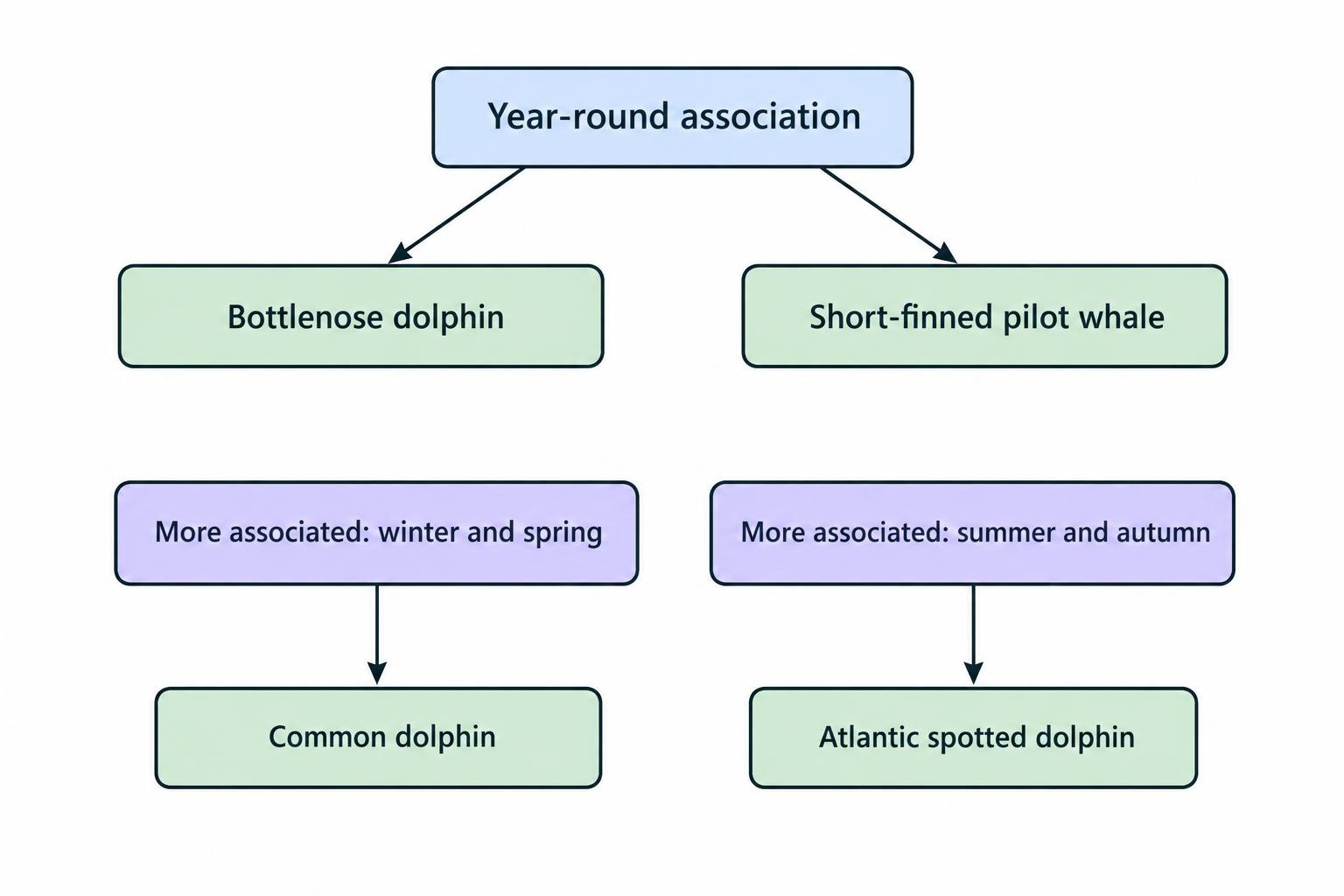
Bottlenose dolphins and short-finned pilot whales have a year-round presence in Madeira’s waters, including resident or island-associated groups. Common dolphins are more associated with winter and spring, while Atlantic spotted dolphins are more associated with summer and autumn. These patterns are documented in the Madeira Whale Museum’s CETÁCEOSMADEIRA II research summary.
| Species | Seasonal planning context |
|---|---|
| Bottlenose dolphin | Year-round presence; not a reason to restrict your holiday to summer. |
| Short-finned pilot whale | Year-round presence, but no promise of an encounter on a particular departure. |
| Common dolphin | More associated with winter and spring. |
| Atlantic spotted dolphin | More associated with summer and autumn. |
Timing a Trip for Larger Whales
The calendar becomes less dependable when your goal is a particular large whale. Research modelling cetacean distribution around Madeira found higher predicted habitat suitability for fin whales mainly in spring, while Bryde’s whales were associated with warmer conditions and more summer and autumn sightings. Bryde’s whale occurrence also varied considerably between years. These are findings from a Madeira cetacean distribution study using observations from 2003 to 2018, not current sighting forecasts.
If seeing a large whale is your main ambition, tell the operator before choosing a departure. Ask what has been observed recently and how those observations might influence the search. Keep the answer in proportion: yesterday’s sighting is useful context, not a reservation with the animal.
For departure locations, boat formats and the wider booking decision, use the main guide to whale and dolphin watching in Madeira. Timing helps narrow the choice, but it cannot replace choosing a trip that suits your needs.
Is Whale Watching in Madeira Worthwhile in Winter?
Yes, provided you treat it as a weather-dependent activity rather than a fixed appointment. There is no need to postpone an entire Madeira holiday simply because your dates fall in December, January or February.
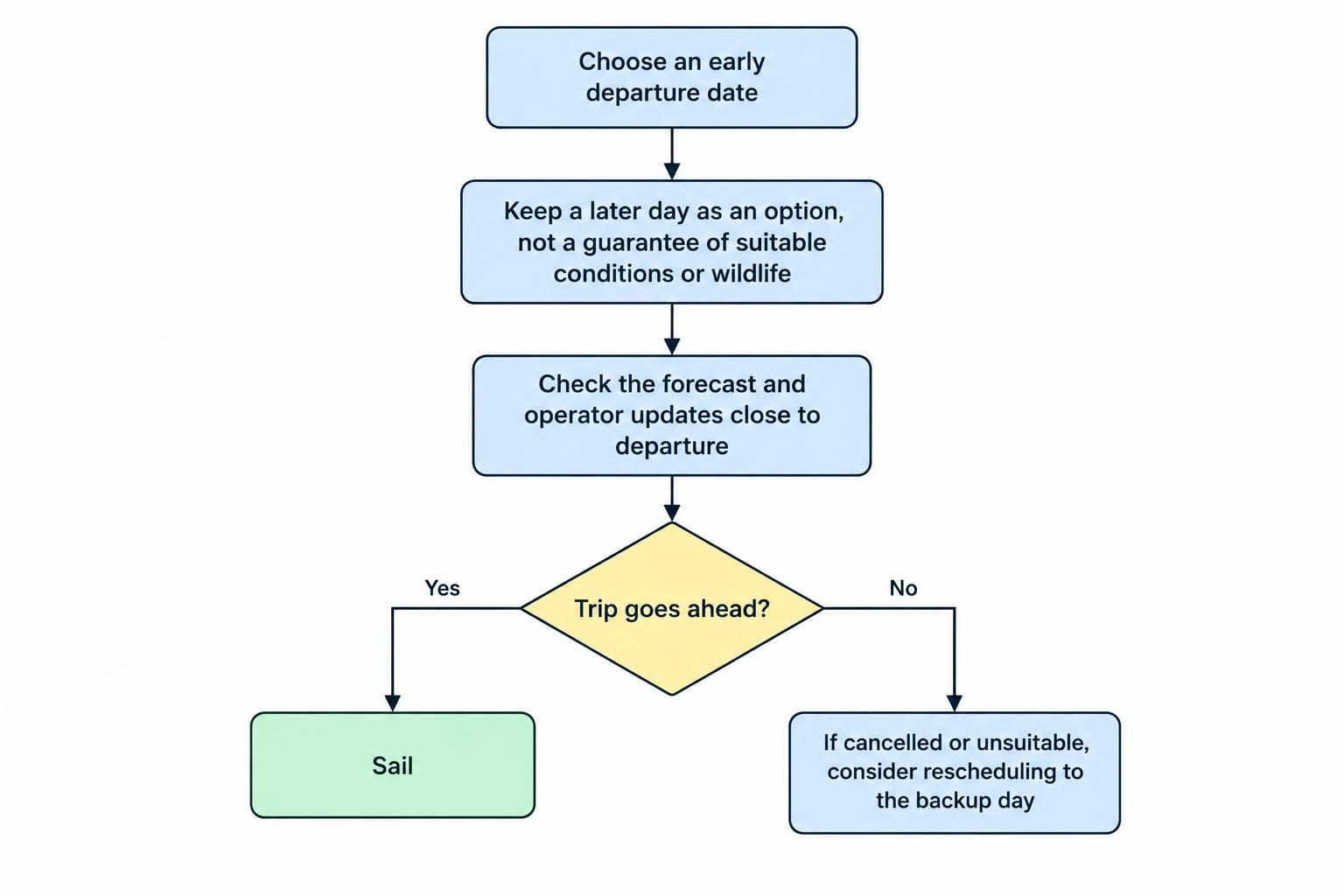
For winter, put more effort into the booking terms. Choose a departure early enough in your stay to leave another usable date, and check what happens if the operator cancels. A replacement trip is only helpful if you are still on the island when it runs.
Keep a land-based plan for the same day. That removes the temptation to push ahead with an outing you would rather move, especially when someone in the group is nervous about boat travel. The point is to enjoy the wildlife trip, not endure it because the itinerary says so.
A two-night break offers little room for rearranging activities. A longer stay gives you more opportunities to choose between departures, although no holiday length guarantees suitable conditions. The guide to visiting Madeira in winter covers the broader seasonal planning decisions.
Is Morning or Afternoon Better?
Choose the departure using the forecast and the operator’s advice, not a universal “morning is best” rule. Do not assume that an early sailing automatically offers better wildlife sightings, or that an afternoon trip is a compromise.
If two departures look equally suitable, morning can be a convenient planning choice. It leaves the rest of the day open and may make rearranging other activities easier. That is an itinerary advantage, not evidence that more animals will appear.
Ask the operator a direct question: “For this boat and the conditions expected tomorrow, which departure would you recommend?” That is more useful than asking which time always has the most whales.
Apply the same caution to sunset trips. Choose one because you want an evening outing and the timing works for you, rather than assuming sunset improves the chance of an encounter. If photography is your priority, discuss viewing space and the proposed departure time before paying.
Sea Conditions Matter More Than a Sunny Forecast
Once your travel dates are fixed, shift attention from the season to the sailing conditions. A sunny symbol in a weather app is not enough information for choosing a boat trip.
Use IPMA’s Madeira wave forecast as a starting point, then ask the operator how the expected conditions affect the planned route. Avoid turning a single wave-height figure into your own safety verdict. Let the operator assess the departure, and ask separately whether the expected ride suits your group’s comfort requirements.
That second question deserves a clear answer. “The trip can operate” and “this sounds enjoyable for us” are different decisions. Someone who dislikes boat motion may prefer to move the booking even when a sailing remains available.
Explain your concerns before selecting a date: young children, difficulty standing for long periods, anxiety about rough conditions, or a strong preference for sheltered seating. Ask what can actually be provided on the booked vessel rather than relying on photographs of another boat.
Recheck the arrangements close to departure. Confirm the meeting time, whether the trip is going ahead and how the operator will contact you if plans change. Keep that conversation practical; a forecast screenshot is not worth an argument with the person responsible for the sailing.
How to Schedule the Trip Within Your Holiday
The most useful timing decision may be where you place whale watching in the itinerary, rather than which month you visit.
For a week-long stay, consider a first booking on day two or three, leaving later days available if needed. Avoid putting it immediately before an airport transfer or another booking you cannot move. Rescheduling becomes much harder when the rest of the week is packed solid.
As an example, reserve an early departure date and identify one later day that could take its place. Keep the backup provisional until you know whether it is needed. You do not have to leave an entire holiday empty; just avoid making every day immovable.
A seven-day Madeira itinerary gives you room to arrange the boat trip around other outings. When comparing schedules, protect that flexibility before adding extra activities.
Check What “Guaranteed Sightings” Actually Means
Read the booking conditions rather than interpreting a headline as a promise of whales. Ask whether any advertised guarantee concerns a refund, another trip, or something else, and whether it applies to whales specifically or to dolphins as well.
Weather cancellation and a completed trip without sightings are separate situations. Confirm the terms for both. Also check whether a replacement trip depends on seat availability and whether you must take it during the same holiday.
If you are considering two outings, avoid treating them as a formula for a particular result. Book a second trip because you would enjoy another attempt and can accept another uncertain outcome.
Choose Responsible Viewing Over a Promised Encounter
Seasonal expectations should never become pressure to pursue an animal. Be cautious about sales language that promises close contact or a named species on a fixed date.
Marine vertebrate watching in Madeira requires authorisation from the regional conservation authority. Check the operator’s authorisation and review the IFCN information on marine wildlife watching and its regulations if you want to understand the official framework.
Before booking, ask how the crew handles an encounter when other boats are already present, and what happens if animals move away. Look for a clear description of responsible observation rather than a promise to get closer than everyone else.
Do not judge the trip only by the distance between the boat and an animal. Choose a crew whose stated approach you are comfortable supporting, including when that means ending an observation or accepting that an encounter will not happen.
Choosing Your Travel Dates
If your dates are open, start with May to September and favour June to August when dry holiday weather is the main consideration. If you already have a spring, autumn or winter trip booked, concentrate on choosing a suitable departure rather than worrying that you missed a single correct season.
For a species-focused visit, use seasonal patterns to set expectations, then ask about recent observations. For everyone else, the practical approach is straightforward: book early in the stay, retain a backup date and choose the sailing that suits the conditions. The calendar can help plan the trip. It cannot arrange the wildlife.