For a straightforward beach day in Madeira, start with Calheta or Machico. Choose Seixal for black sand and mountain scenery, Porto Moniz for volcanic swimming pools, or Funchal’s bathing complexes when you want a swim without organising a full day out.
The better choice depends on how you want to enter the water, who you are travelling with and the conditions that morning. A sandy beach, a rock pool and a platform with steps into the Atlantic offer very different experiences. This guide compares the main options without treating every attractive stretch of coast as a suitable swimming spot.
Which Madeira Beach or Natural Pool Should You Choose?
Use this shortlist to narrow your plans, then check local conditions before committing to a swim. These are recommendations for different types of beach day, not guarantees of calm water.

| Your priority | Start with | What to check |
|---|---|---|
| A conventional sandy beach day | Calheta or Machico | Bathing flags and supervision |
| Black sand and coastal scenery | Seixal Beach | Surf conditions and bathing notices |
| Volcanic pools with visitor facilities | Porto Moniz | Whether the complex is open for swimming |
| A smaller natural sandy bay | Prainha | Access and conditions without lifeguard supervision |
| A swim while staying in Funchal | Lido or Doca do Cavacas | Pool access versus direct sea access |
For a first visit, choose one sandy beach and one natural pool rather than collecting bathing spots like stamps. Allow enough time to change, swim, dry off and have lunch. Five hurried stops rarely make a better beach day than one unhurried afternoon.
The Best Sandy Beaches in Madeira
Calheta and Machico: The Most Familiar Beach Experience
Calheta and Machico have beaches created with imported golden sand, making them a different proposition from Madeira’s natural dark sand and pebble shores. Both belong on the shortlist if sitting on sand matters more to you than finding an untouched bay. The distinction between these artificial beaches and the island’s natural sandy coves is covered in Turismo de Portugal’s overview of Madeira’s beaches and bathing areas.
For families, the appeal is practical: sand provides somewhere to sit, play and take breaks between swims. It does not remove the need to assess the water. Choose your position after checking the bathing flags, and ask the lifeguard about the designated swimming area rather than assuming the whole bay has the same conditions.
Let the rest of your day decide between the two. Avoid crossing the island just to visit a second golden sand beach unless beach time is the purpose of the trip. Our Calheta versus Machico beach comparison covers the choice in more detail.
Seixal: Black Sand Below Green Mountains
Seixal Beach, also called Praia do Porto de Abrigo do Seixal, sits beside the village’s harbour on the north coast. Its natural black sand and steep green surroundings give it a very different character from Calheta and Machico. Beach access is free; the location and nearby facilities are listed in the Porto Moniz municipality’s beach directory.
Choose Seixal when the setting is part of the reason for going, but keep swimming optional. If the water does not look suitable, spend time on the shore instead. A beach can be worth visiting without getting wet, an occasionally useful distinction on an Atlantic island.
Check the approach and your plans for the surrounding area before travelling. The Seixal Beach guide covers the beach itself rather than the separate natural pools elsewhere in the village.
Prainha: A Small Natural Sandy Bay
Prainha, near Caniçal and Ponta de São Lourenço, is a small beach of natural dark sand reached by a short walk. It has supporting facilities, including showers and a snack bar, but the municipal tourism directory identifies it as unsupervised even during the bathing season. Check those details in Visit Machico’s directory of local beaches.
It suits visitors who want a smaller bay rather than a town beach. Consider the return walk before carrying a large picnic, beach chairs or children’s equipment down to the sand. If anyone in your group needs an easy, supervised entry into the water, make that requirement more important than the scenery.
Madeira’s Natural Swimming Pools
Porto Moniz: The Main Choice for a Pool Visit
Porto Moniz’s main natural pool complex combines volcanic rock basins with managed visitor facilities. It has a children’s pool, changing rooms, a playground, a bar and first aid provision. These features make it a practical starting point for visitors who want to swim among volcanic formations without choosing an informal rock pool. The facilities are detailed on the Madeira tourism board’s Porto Moniz pool page.
Distinguish this paid complex from the separate, free Cachalote or Aquário pools. The two should not be treated as interchangeable simply because both appear under “Porto Moniz natural pools” in travel searches. Choose the setting that matches your swimming ability and the support your group needs.
Give the main complex a proper place in your schedule rather than squeezing it between several distant stops. Before leaving, check admission arrangements and whether swimming is permitted that day. Our Porto Moniz Natural Pools guide covers the visit in greater detail.
Seixal Pools: Separate From the Black Sand Beach
Seixal has more than one bathing location. The Clube Naval pool near the harbour and Poças das Lesmas are separate from the black sand beach. Check the map pin carefully when arranging transport or meeting someone; “the pools at Seixal” is not a precise destination.
Poças das Lesmas deserves particular caution. The municipal beach directory warns that sea conditions can catch bathers by surprise even when the swell appears harmless. Do not use people already in the water as your safety assessment. If waves are crossing the rocks or you cannot identify a dependable exit, leave swimming out of the plan.
Where to Swim in Funchal
Funchal offers a useful choice between beaches and bathing complexes. Praia Formosa is the option to consider if you want a pebble shore. Lido combines pools with access to the sea, while Doca do Cavacas, also called Poças do Gomes, provides a smaller volcanic pool setting near Praia Formosa. Their locations and bathing facilities appear in the official Madeira and Porto Santo visitor guide.
The practical question is whether you want a pool swim, an ocean swim or time beside the water. Do not assume admission to a bathing complex means direct sea access will also be available. Ask which areas are open before paying, particularly if sea swimming is the reason for your visit.
For a short stay, consider using Funchal for an easy swimming afternoon and reserving a separate day for the north coast. That avoids turning every swim into an excursion. At Praia Formosa, assess the shore entry before settling down, especially if loose stones are awkward for anyone in your group.
When Is the Best Time for Swimming?
Summer is the more straightforward season to choose if swimming is a priority, although water temperature is only one part of the decision. Madeira’s sea temperatures range roughly from 18°C in winter to 24°C in summer. Conditions also vary around the island, with the north generally more exposed to wind and rainfall than the south. These are broad patterns, not daily forecasts; see the Madeira tourism board’s weather and sea temperature guidance.
Keep a beach day movable within your itinerary. Check the forecast before travelling, then reassess at the shore. A warm afternoon does not, by itself, tell you whether the water is suitable for swimming.
For a winter trip, treat sea swimming as an opportunity rather than the foundation of the holiday. If a daily swim matters, ask your accommodation whether its pool is heated, what temperature it maintains and whether it will be operating during your stay. “Pool available” leaves several useful questions unanswered.
Swimming Safety: Flags, Waves and Supervision
Follow the displayed flags and local instructions. Portugal’s beach notice defines green as permitting bathing and swimming, yellow as prohibiting swimming, and red as requiring people to stay out of the water. A chequered flag means the beach is temporarily without a lifeguard. These meanings are set out in the National Maritime Authority’s English beach safety notice for mainland Portugal and Madeira.
A green flag is not an instruction to swim beyond your ability. Stay within the designated area and ask about anything you do not understand. If a gate, ladder or section of a complex is closed, do not look for an alternative way around it.
At natural pools, pay attention to the boundary between the pool and the open sea. Stay away from wave exposed outer edges, and do not climb onto rocks to watch the swell. Before entering any unfamiliar bathing spot, identify how you will get out again.
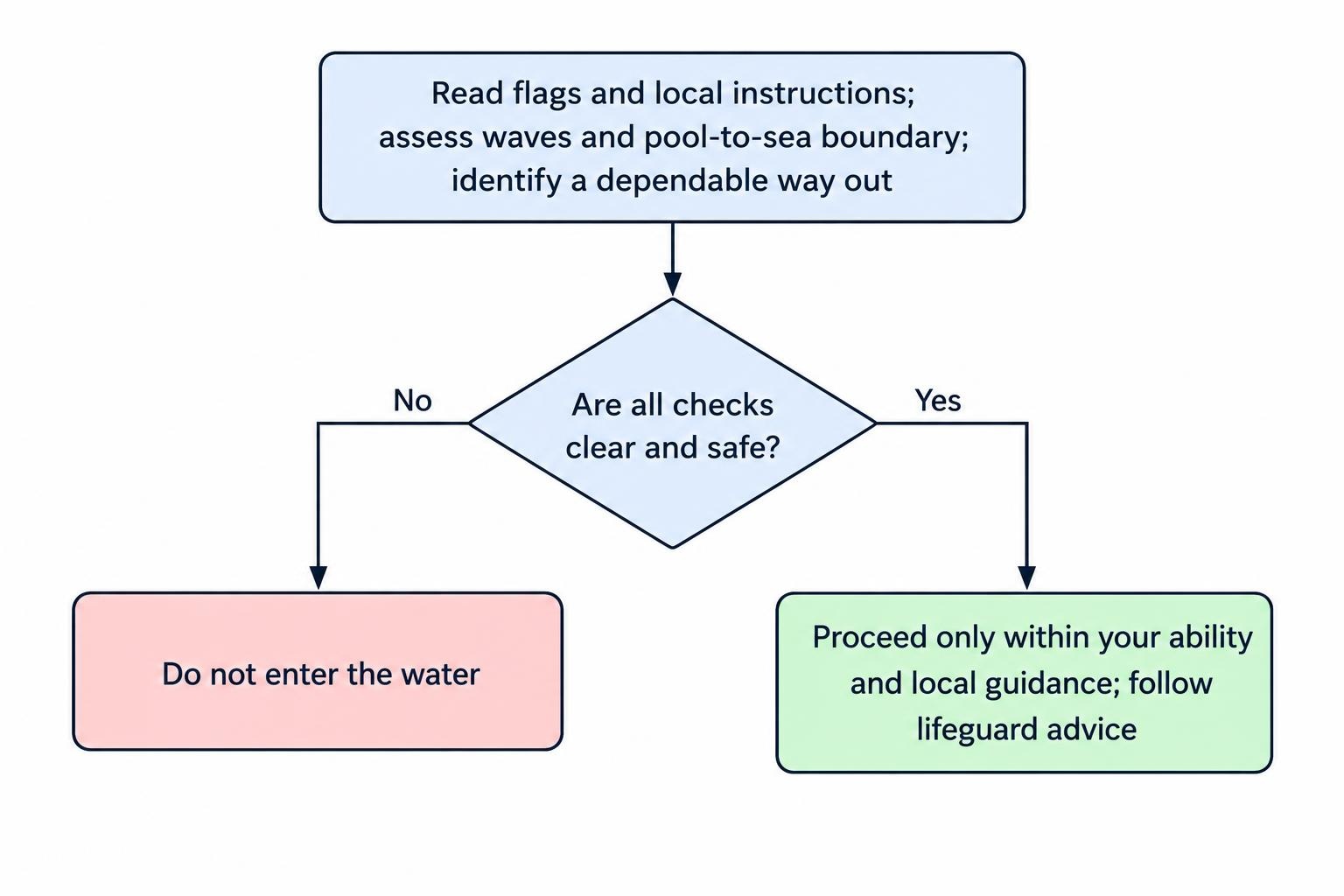
Keep children under close, continuous supervision, including in shallow pool areas. Avoid sitting beneath unstable cliffs, wear suitable footwear on access routes and follow lifeguard directions. In an emergency, alert the lifeguard or call 112 rather than entering the water to attempt an untrained rescue. These precautions form part of the National Maritime Authority’s bathing season safety recommendations.
Planning a Beach or Pool Day
Transport and Timing
Choose your destination before choosing your transport. For a bus trip, check the outward and return services together, allow time to reach the stop after changing, and avoid relying on an uncertain final connection. Use the Madeira bus planning guide for the wider transport arrangements.
If you are driving, allow time to park and walk to the water. Do not build a schedule that requires every parking space, road and swimming area to be available exactly when you arrive. Keep a second plan that does not depend on bathing, such as lunch in town or a coastal walk where access is open.
What to Bring and What to Budget
Pack swimwear, a towel, sunscreen, drinking water and footwear suitable for the approach. Water shoes are worth considering for rocky entries, but they do not make wave exposed rocks safe. A dry change of clothes is useful if swimming is one stop in a longer day.
For paid complexes, check what admission includes. Ask separately about loungers, parasols, lockers and re-entry rather than assuming they are part of the ticket. At free beaches, allow for transport, parking and anything you plan to hire. Check current charges before travelling instead of building a budget around an old price in a travel post.
Should You Add Porto Santo for a Beach Holiday?
If your ideal holiday centres on long stretches of sand rather than a mixture of beaches, pools and sightseeing, compare Madeira with Porto Santo before booking the whole stay. Treat the extra island as a separate travel decision, with transfer time and accommodation to consider, not an automatic addition to an already busy itinerary.
For a first Madeira trip, a simpler plan often works better: choose a sandy beach day, a natural pool visit and an easy swim near your accommodation. If you want more beach time than that, the Porto Santo travel guide will help you assess whether to extend the trip.