May, June and September are the best months to visit Madeira for a trip that combines walking, sightseeing and time by the sea. Choose May for gardens and spring outings, June for an active holiday before the hottest part of summer, or September if swimming matters as much as hiking.
There is no single month that wins on weather, prices, crowds and events. A walking holiday needs different conditions from a week beside the pool, and Madeira’s mountains can ignore whatever the weather is doing outside your hotel. Start with what you want to do, then choose dates. The wider Madeira travel guide covers the other decisions that shape your trip.
Which months suit your trip?
Use these recommendations as a starting point rather than a promise of perfect conditions:
- For a first visit: May, June or September offer a useful balance for a mixed itinerary.
- For walking: Consider May and June, or September if you prefer warmer coastal evenings. Keep mountain days flexible.
- For swimming: Choose late summer, with August and September worth prioritizing.
- For flowers and celebrations: Check the Flower Festival programme before booking a spring trip.
- For a winter break: Choose dates around Funchal, food, gardens and coastal outings rather than guaranteed beach weather.
If your dates are fixed by school holidays, there is no need to dismiss July or August. Adjust the itinerary instead: avoid packing every day with long walks, allow time for swimming, and reserve the accommodation you actually want rather than relying on whatever remains.
Madeira weather by month
The table below uses IPMA’s 1991–2020 climate averages for Funchal. “Average high” means the average daily maximum, not the temperature throughout the day. These figures describe a low elevation station on the south coast; they are not mountain forecasts.
| Month | Average high | Monthly rainfall |
|---|---|---|
| January | 20.0°C | 67.1 mm |
| February | 19.9°C | 72.4 mm |
| March | 20.6°C | 62.3 mm |
| April | 21.0°C | 45.2 mm |
| May | 22.0°C | 27.2 mm |
| June | 23.7°C | 7.8 mm |
| July | 25.4°C | 1.7 mm |
| August | 26.8°C | 1.3 mm |
| September | 26.6°C | 23.1 mm |
| October | 25.2°C | 91.2 mm |
| November | 22.8°C | 80.3 mm |
| December | 21.0°C | 94.8 mm |
The main distinction is between the drier summer and wetter autumn and winter, not between extreme summer heat and severe coastal cold. October illustrates the tradeoff: warm average daytime temperatures, but appreciably more rainfall than September.
Monthly rainfall totals also need care. They do not tell you whether your particular week will have brief showers, a prolonged wet spell or mostly dry days.
The coast and mountains need different expectations
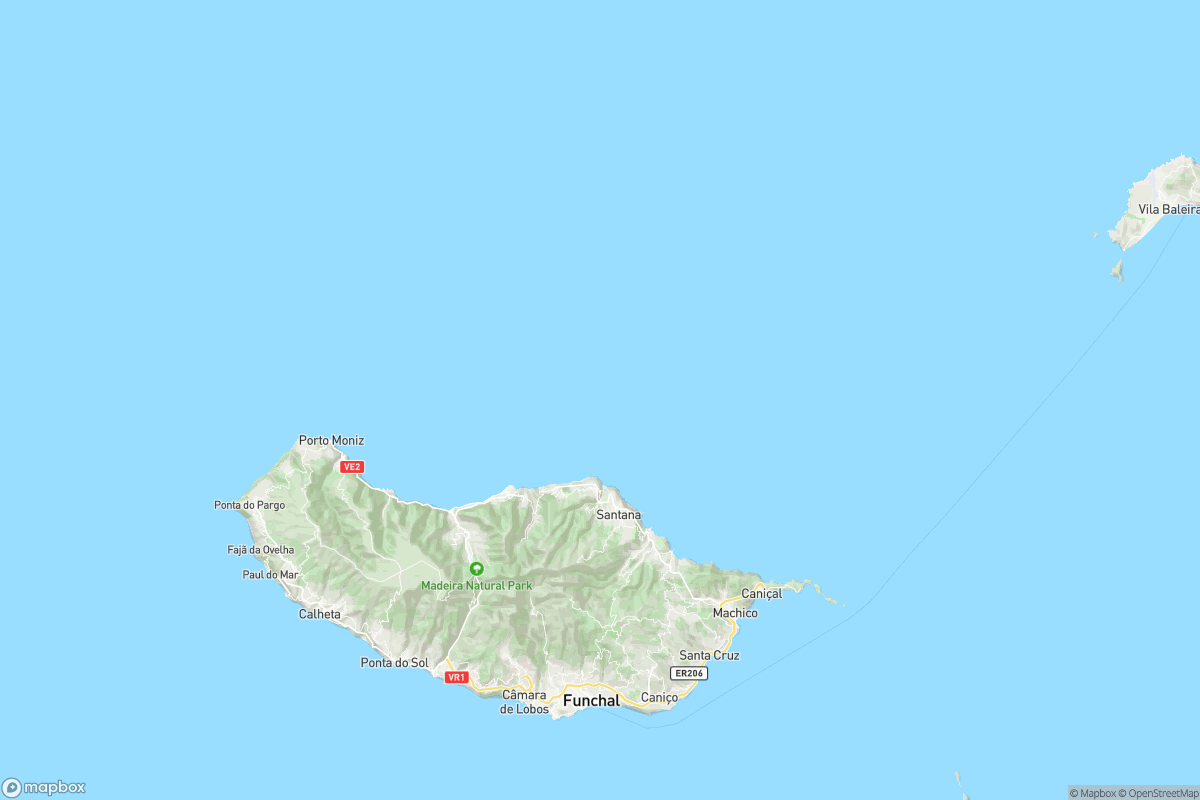
Madeira’s south coast is generally warmer and drier than the north and high ground. Fog and cooler conditions can affect the mountains while the coast remains sunny. Sea temperatures also change through the year, from roughly 18°C in winter to 24°C in summer, as shown in the Madeira Tourism Board’s weather and microclimate information.
This matters more than a small difference between two monthly averages. If walking is the purpose of your holiday, check conditions at the route rather than using Funchal as a stand in for the whole island. If swimming is the priority, think about water temperature as well as afternoon warmth.
Keep alternative plans that genuinely appeal to you. A museum visit or long lunch should not feel like punishment for missing a summit. Equally, do not cross the island chasing a patch of sunshine without checking whether conditions at the destination have actually improved.
What each season offers
Spring: March to May
Spring is a good choice if you want gardens, walking and sightseeing without making swimming the centre of the holiday. For a first visit, May would be the strongest starting point; March and April suit travellers who are comfortable keeping outdoor plans changeable.
Give yourself more than one possible day for an important hike. Rather than attaching every excursion to a date before departure, group your plans by the conditions they need. Gardens and town visits can fill one category, exposed mountain walks another. Spring works best when the itinerary has some give.
Summer: June to August
Choose summer when dry coastal weather carries more weight than avoiding the main holiday period. June is a useful compromise for an active trip, while July and August make sense if you want swimming to feature regularly.
Be realistic about the daily workload. A steep walk followed by several viewpoints and a long drive can turn a holiday into an unpaid logistics position. Alternate demanding outings with easier days. If your hotel pool matters, leave time to use it; booking one and then spending every daylight hour elsewhere is an expensive decorative choice.
Autumn: September to November
September is the strongest autumn recommendation for a mixed holiday. It suits travellers who want to combine coastal time with walking rather than choose between them. October remains worth considering, but the rainfall averages make a flexible schedule more valuable.
For November, build a trip you would enjoy even if some outdoor plans change. Avoid making one mountain route the entire reason for travelling. A stay with restaurants, indoor attractions and pleasant places to spend an unhurried afternoon gives you more options than an itinerary dependent on clear views every day.
Winter: December to February
Winter suits a different brief: a change of scene, time in Funchal, meals out and outdoor visits when conditions allow. It is not the season to book on the assumption that every day will be suitable for the coast, the mountains and the sea.
Decide whether you want festive celebrations or a less event focused break before comparing dates. Those are different holidays, even within the same season. The dedicated guide to Madeira in winter covers weather, activities and practical preparation in more detail.
Best time to visit Madeira for hiking
For a walking led holiday, start by comparing May, June and September. That is a planning recommendation, not a claim that other months are unsuitable. Your route choices, fitness and willingness to change plans matter as much as the month.
Trail availability is a separate question from seasonal weather. Authorities can close or restrict routes because of weather, ground risks, maintenance or other circumstances. Before setting out, consult the IFCN classified trail status and access information, including any booking requirements for your chosen route. A dry forecast does not cancel an official closure.
For a week of walking, avoid scheduling all your mountain ambitions into the final two days. Give the most weather dependent outing several possible slots, and keep a less demanding alternative. Do not assume a lower route is automatically suitable in poor conditions; assess that route on its own merits.
Month selection should come before route selection, but it should not replace it. Use the Madeira hiking guide to build a shortlist that matches your ability and the conditions you are prepared to walk in. Two well chosen walks are better than five booked out of obligation.
Best time for swimming and boat trips
If sea swimming is a major part of the holiday, favour late summer over spring or winter. August and September are sensible starting points. Someone happy with a quick cool water dip has a different threshold from someone hoping to spend an hour snorkeling, so “swimmable” is not a particularly useful promise.
Water temperature is only part of the decision. Check local sea conditions and bathing notices, and do not enter a closed swimming area because the air feels warm. For choosing between beaches, bathing complexes and volcanic pools, use the guide to Madeira’s beaches and natural pools.
For boat excursions, leave room to move the booking if the operator cancels. Scheduling an outing near the start of your stay gives you more opportunities to rearrange it than reserving it for the afternoon before departure. Check cancellation terms before paying, especially if the trip is one of your main reasons for visiting.
When to go for fewer crowds and better value
If avoiding busy periods is your main goal, August would not be the first month to investigate. Madeira’s hotel net bed occupancy reached its 2025 annual high of 80% in August, within the regional statistics office’s final 2025 tourism results. That is an accommodation measure, not a headcount at every attraction.
For a quieter trip, investigate dates outside school holidays and major celebrations, then check actual availability. Do not assume that every week in May or September will be inexpensive, or that winter automatically produces the lowest total cost.
Compare the same trip across several departure dates: flights with baggage, the same room type, transport and any activities you intend to book. A cheaper flight is not a saving if the accommodation difference swallows it. Refundable reservations may also be worth considering when your plans are not settled.
The Madeira trip cost guide provides the wider budgeting framework. Treat seasonal labels as a way to narrow your search, not as substitutes for live prices.
Festivals that can decide your travel dates
If an event is the reason for your trip, book around its actual programme rather than its usual month. The official Madeira tourist entertainment calendar for 2026–2028 currently lists these dates for 2027, subject to change:
- Flower Festival: April 29 to May 30, 2027, with Great Allegoric Flower Parades listed for May 2 and May 16.
- Atlantic Festival: June 4–27, 2027, with the international fireworks contest on June 5, 12, 19 and 26.
- Madeira Wine Festival: August 22 to September 12, 2027.
- New Year’s Eve fireworks: December 31, 2027.
The distinction between a festival’s full run and its headline event matters. Staying during the wider celebration does not guarantee that you will see a parade or fireworks display. Confirm the programme again before making nonrefundable arrangements.
If you are indifferent to the event, compare nearby weeks instead. There is little sense paying for a location or date chosen around a celebration you do not plan to attend.
Choose dates around your least flexible priority
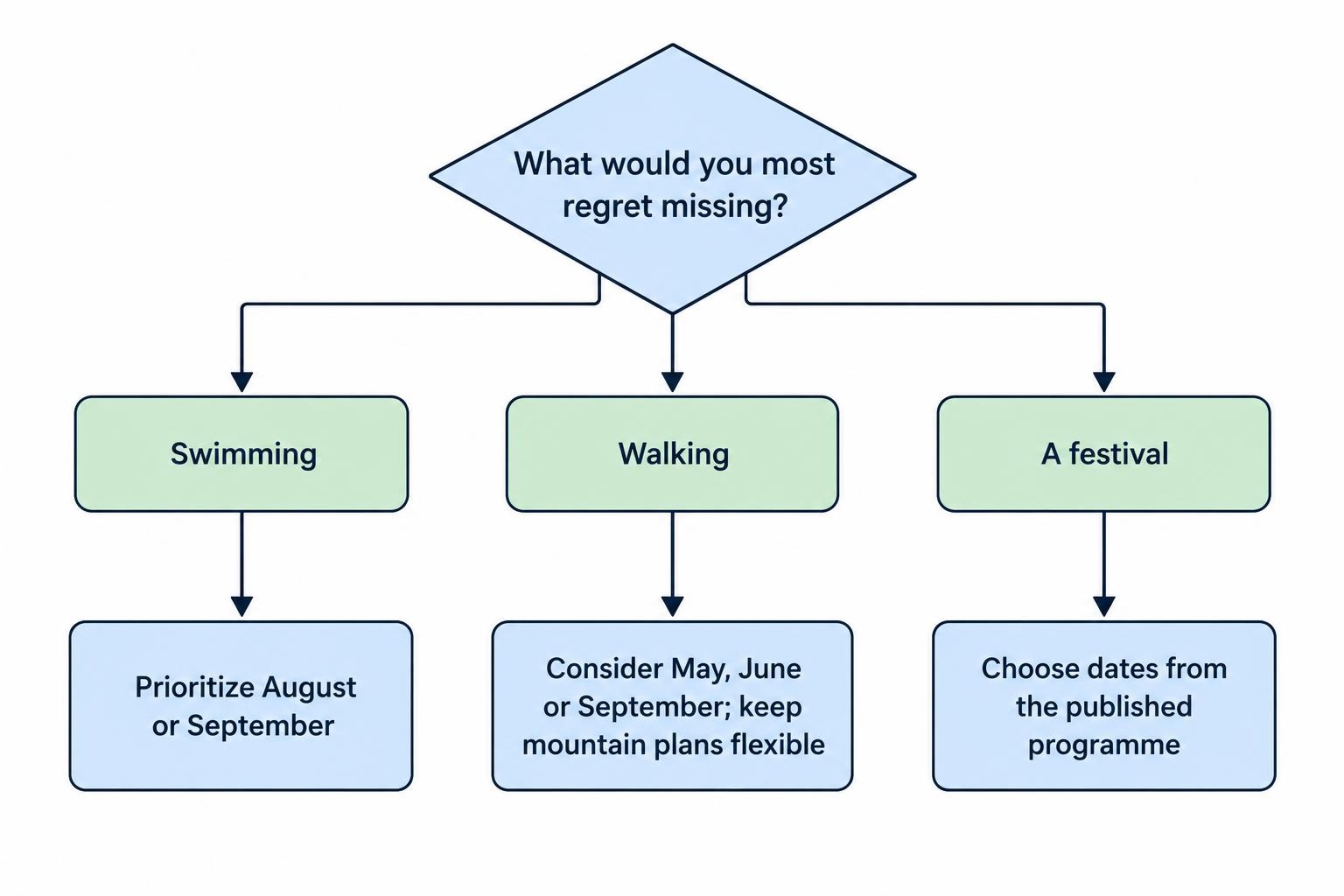
For a first Madeira holiday with no fixed event or school calendar, shortlist May, June and September. Then decide what you would most regret missing. Prioritize late summer if that is swimming, a spring or early summer window if it is an active walking itinerary, or the published programme if it is a festival.
Leave some decisions until closer to departure. Book the travel arrangements that need certainty, but avoid assigning every outdoor activity to an unchangeable day months ahead.
The best time to visit Madeira is the period that suits the holiday you actually want, with enough flexibility to enjoy the island when conditions change. Choose the month carefully, then resist asking it to guarantee the week.