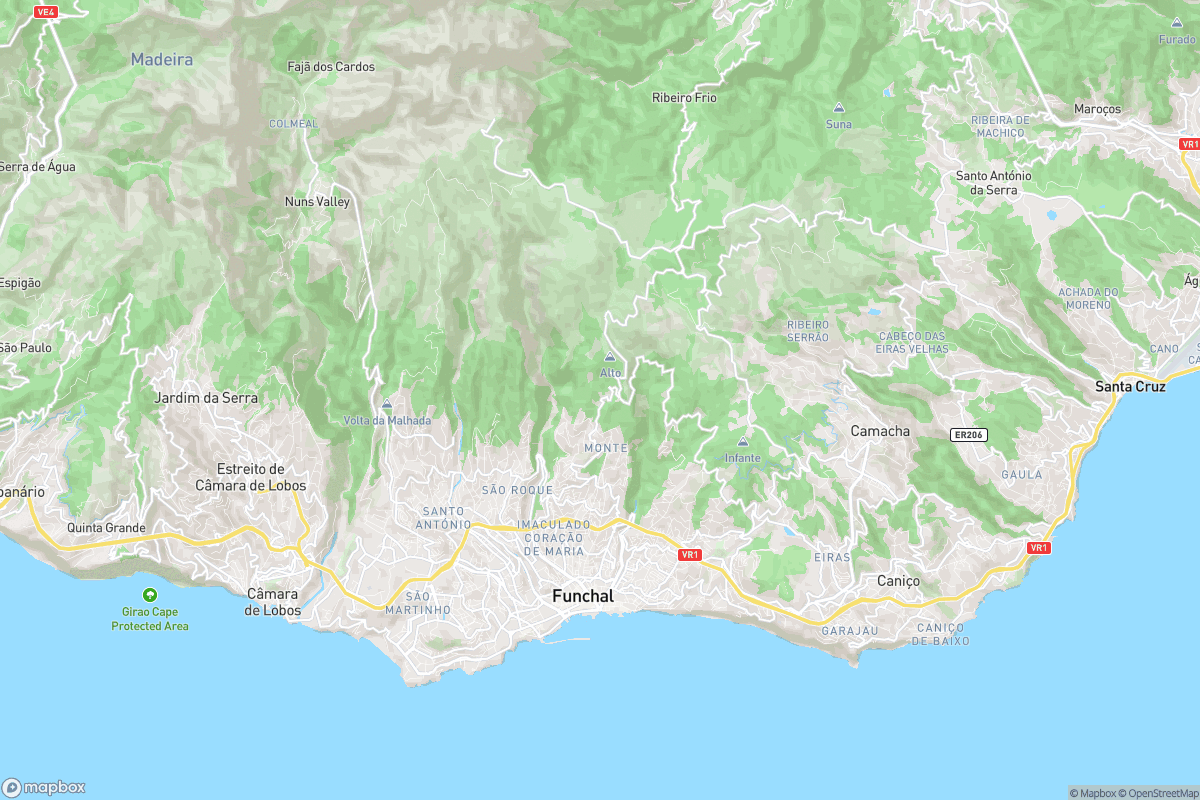
Funchal brings together much of what makes Madeira worth visiting: gardens above the Atlantic, old streets, regional food and a waterfront made for an unhurried walk. Madeira’s capital sits on the south coast, with neighbourhoods climbing steeply from the bay. That shape matters when planning a visit. A hotel can look close to the centre on a map and still involve a demanding walk home.
For a first visit, give Funchal two full days: one for the historic centre and Old Town, another for Monte and its gardens. You can see the central sights without a car, and there is no need to turn every afternoon into an island excursion.
How Much Time Do You Need in Funchal?
One day allows a useful introduction: the cathedral, Mercado dos Lavradores, Old Town and waterfront. Keep that day at street level rather than squeezing in Monte between lunch and dinner. The distances alone are not the problem; garden visits, transport and time spent stopping along the way all add up.
Two days is a sensible starting point. Add a third if you want museums, a wine tasting, shopping or time beside the sea. These are suggested allowances, not a race schedule. Travellers who enjoy gardens could spend most of a day on Monte alone.
Think of Funchal in three parts: the central streets near the cathedral, the Old Town to the east, and the Lido area farther west. Monte sits uphill rather than along that coastal line. Grouping visits by area saves unnecessary journeys.
What to See and Do in Funchal
Start With the Cathedral and Historic Centre
The Sé Cathedral is a useful starting point for a central walking circuit. Its relatively plain exterior gives little warning of the carved wooden ceiling inside. The building dates from the sixteenth century, and its ceiling is one of the details highlighted in Visit Portugal’s historic Funchal route.
Continue through the streets around Avenida Arriaga, then work uphill to Praça do Município. Keep the route flexible: a church interior, a café stop or a museum can easily occupy the time originally assigned to three more streets. Dress respectfully for religious buildings and avoid treating a service as part of the sightseeing programme.
Walk Through the Old Town
Funchal’s Zona Velha is the part of the city to visit for narrow cobbled streets and painted doors, particularly around Rua de Santa Maria. Go beyond the first restaurant terraces rather than assuming you have seen the neighbourhood after one busy stretch.
Visit during daylight for the street details, then return in the evening if you want dinner or drinks. Those are two different experiences, and neither requires a lengthy checklist. Our self-guided Old Town walking tour covers the route and individual stops in more detail.
Allow roughly an hour for an introductory wander, longer if you stop for food. Wear shoes suited to uneven paving. Attractive cobbles become rather less charming when your footwear starts negotiating surrender.
Visit Mercado dos Lavradores With a Buying Plan
Mercado dos Lavradores combines produce stalls, flowers, fish and an architectural setting worth noticing. Look at the tiled panels around the entrances and fish section rather than focusing only on the fruit displays. The tourism board’s market listing also confirms the normal weekly schedule: Saturday closes earlier than weekdays, and the market is closed on Sunday.
A morning visit fits neatly before an Old Town walk. Check holiday arrangements before building a short stay around it.
Before buying fruit, ask the price per kilogram and confirm the total for the quantity offered. A tasting need not become a purchase. Compare products and prices rather than buying everything at the first stall.
For gifts, decide whether you want something edible, something locally made or simply something easy to carry. Our Funchal shopping guide separates market browsing from shopping for crafts and regional souvenirs.
Give Monte and Its Gardens Enough Time
Monte is best treated as a separate half-day outing, not a quick extension of a downtown walk. Choose your transport, leave time for a garden, and decide how you will return before heading uphill. The wider guide to visiting Monte covers the attractions and transport choices without packing them all into one compulsory circuit.
Monte Palace Tropical Garden is a strong choice if you want planting, art and garden scenery in the same visit. Allow two to three hours as a planning estimate. The palace interior itself is not open to visitors, so book for the garden and museum rather than expecting a palace tour.
Adult garden admission is currently listed at €18. The grounds are steep, and wheelchair users or anyone who needs to avoid slopes should review the Monte Palace visitor and accessibility information before purchasing. Transport to the entrance does not make the garden itself step-free.
Monte Palace and Madeira Botanical Garden are separate attractions. For a first visit, choose one unless gardens are the main reason for your trip. Two garden admissions, connecting transport and a hurried lunch can turn a pleasant outing into administration.
Leave Time for the Waterfront
A walk beside the bay makes a useful change of pace after the central streets. Keep some time unassigned rather than using the waterfront only as a corridor between attractions.
For a higher view without committing to Monte, consider Santa Catarina Park. Farther west, the Lido promenade offers another coastal walking area. The Horários do Funchal visitor brochure maps both places and describes the western promenade between Lido and Ponta da Cruz.
Do not assume the Lido is immediately beside the Old Town. If you have already spent the day walking, use transport for part of the journey. For swimming, check the conditions and operating arrangements at the bathing area you choose; a sea view is not an invitation to enter the water anywhere.
Getting to Funchal and Moving Around
Madeira Airport is outside central Funchal. Your main arrival choices include the Aerobus, a taxi or a booked transfer. The airport’s ground transport information links to the current bus route and timetable and identifies the taxi rank at Arrivals.
For the bus, compare the actual stop with your accommodation entrance, not just the hotel name or neighbourhood. A short final distance can still include a slope or steps. A direct transfer may be worth the extra expense for a late arrival, bulky luggage or reduced mobility.
Within Funchal, walk around the lower centre and use buses or taxis for longer or steeper journeys. You do not need a rental car solely for city sightseeing. If you hire one for the rest of Madeira, ask your accommodation about parking before confirming the booking.
The Funchal–Monte cable car is an attraction as well as transport. The published adult fare is €22 return or €16 one way; check the operator’s fares and opening hours before travelling. Garden admission is a separate cost.
For other journeys, check the destination, departure stop and return service together. Our Madeira bus planning guide covers routes and tickets in more detail. Avoid relying on an old screenshot of a timetable.
Where to Stay in Funchal
Choose your base around how you want to spend the evenings. Being close to daytime attractions is useful, but the walk back after dinner deserves equal attention.
| Area | Best suited to | What to check |
|---|---|---|
| Central Funchal | A first visit focused on sightseeing on foot | Street noise, access with luggage and parking if needed |
| Old Town | Restaurants, evening outings and historic streets | Proximity to busy terraces and whether the room faces the street |
| Lido area | A stay combining hotel time and coastal walks | Transport into the historic centre and the exact hotel location |
Check the route from the property to the waterfront as well as its straight-line distance. Photos of a balcony view rarely explain the climb required to reach it. The detailed guide to where to stay in Funchal compares the areas without assuming every visitor needs the same base.
What to Eat and Drink
Use a few meals to try regional dishes rather than ordering the whole menu on your first evening. Bolo do caco is bread, commonly served with garlic butter. Espetada is skewered beef, traditionally cooked on a bay stick. Black scabbardfish, tuna and limpets are other dishes to look for; Visit Portugal’s Madeira gastronomy overview covers these regional staples.
Read the menu before sitting down and ask how fish or shared dishes are priced. If you have dietary restrictions, ask about preparation and ingredients rather than relying on a short translated description.
For drinks, choose a Madeira wine tasting if you want a structured introduction, or a poncha stop if you prefer something informal. Poncha contains sugar cane spirit; its fruit flavour does not make it a soft drink. Keep either experience separate from driving.
You do not need to cross the island to begin trying local food. The Madeira food and drink guide provides more detail on dishes, wine and traditional drinks when you are ready to plan beyond a single meal.
A Practical Two-Day Funchal Plan
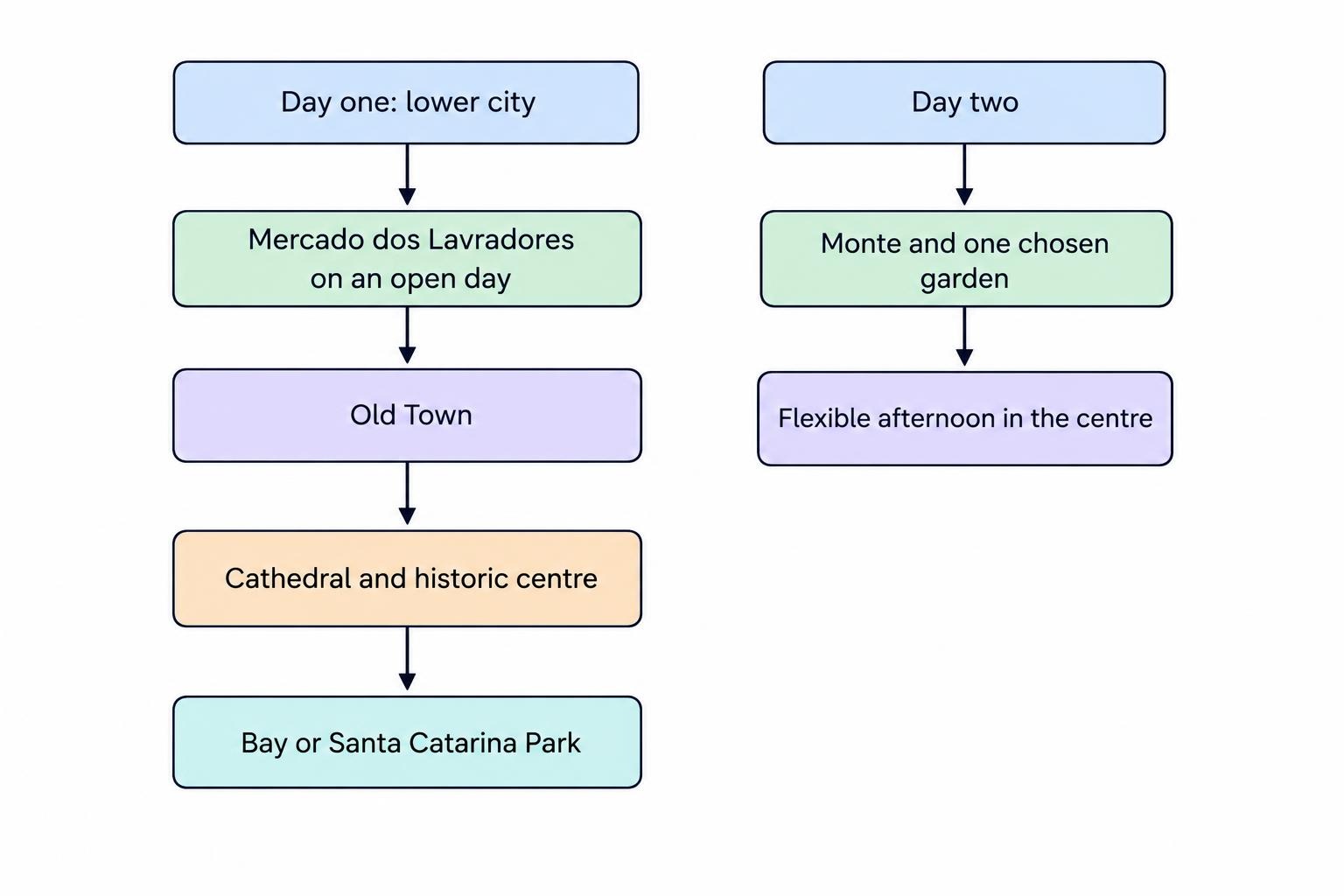
Day One: Keep to the Lower City
Start at Mercado dos Lavradores on a day when it is open, then walk through the Old Town. Have lunch before crossing back through the centre for the cathedral and surrounding streets. Finish beside the bay or at Santa Catarina Park, depending on your energy.
Choose one optional indoor visit rather than adding several by default. If your first day is Sunday, move the market to another morning and begin with the historic centre instead.
Day Two: Monte, Then an Unhurried Afternoon
Head to Monte with enough time for the garden you have chosen. Afterwards, return to the centre for lunch, shopping or a waterfront walk. Leave the evening free for dinner rather than booking another timed attraction.
If you add a wicker toboggan ride, note that it finishes in Livramento, not at the waterfront. The Carreiros do Monte departure and arrival details identify the endpoints. Arrange the next part of your journey rather than assuming the ride completes your return.
Practical Details Worth Planning Around
Pack comfortable shoes with grip, a light rain layer and something to drink during longer walks. Choose clothing that works for both a café terrace and a cooler spell uphill. Do not let a clear morning persuade you to abandon every other layer at the hotel.
Build flexibility into outdoor plans. Check attraction notices before travelling, particularly if a garden or cable car is the main purpose of the day. Keep an indoor alternative available rather than forcing an outing because it appears on the itinerary.
For spending, separate accommodation and meals from optional admissions and transport. A day walking through the centre is a different purchase from a day combining cable cars, gardens and tastings. Pick the paid experiences you actually want, then leave space between them. Funchal is better experienced at walking pace than as a series of ticket checks.