Getting around Madeira works best when you match transport to the day’s plans. Use buses and walking for a Funchal stay, consider a rental car for days with several scattered stops, and arrange transfers when a hike starts or finishes somewhere awkward. You do not need to drive throughout your holiday to see more than the capital.
The main planning mistake is treating a short distance on the map as a simple journey. Check the actual road, bus timetable and final approach to your accommodation or attraction. Getting close is not always the same as getting there.
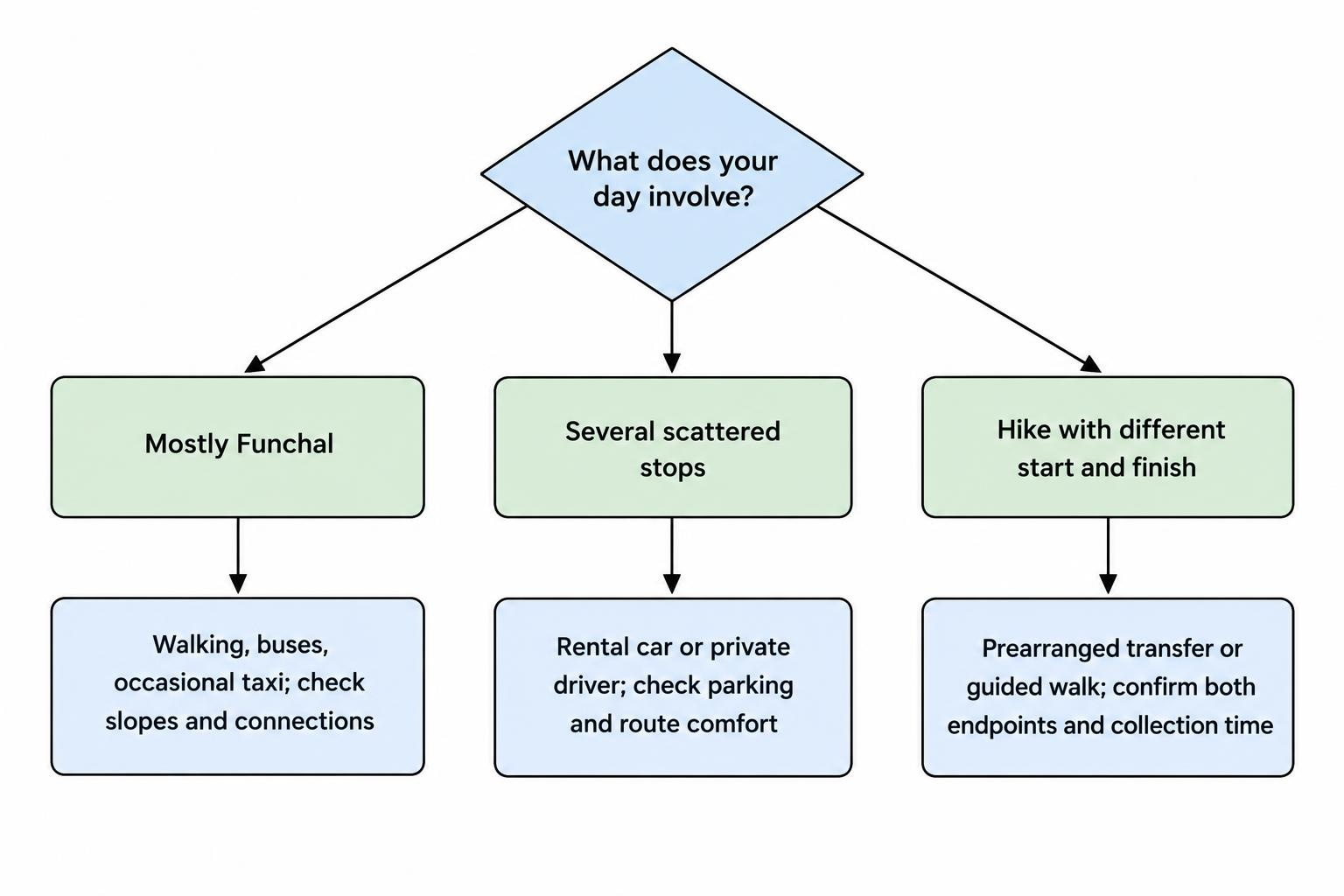
Which transport option suits your trip?
Start with your itinerary rather than a rental booking. A holiday built around restaurants, gardens and occasional excursions needs a different approach from a week of early hiking starts.
| Your plans | Transport to consider | What to check |
|---|---|---|
| Mostly Funchal, with occasional outings | Walking, buses and occasional taxis | The slope and bus connections near your accommodation |
| Several viewpoints or villages each day | Rental car or private driver | Parking, driving confidence and the realistic route |
| A holiday without driving | Buses combined with organised excursions | Return services and pickup locations |
| Hikes with different start and finish points | Prearranged transfers or guided walks | Both endpoints and the collection time |
| A group with luggage or mobility needs | A suitable vehicle booked in advance | Vehicle capacity and access at the destination |
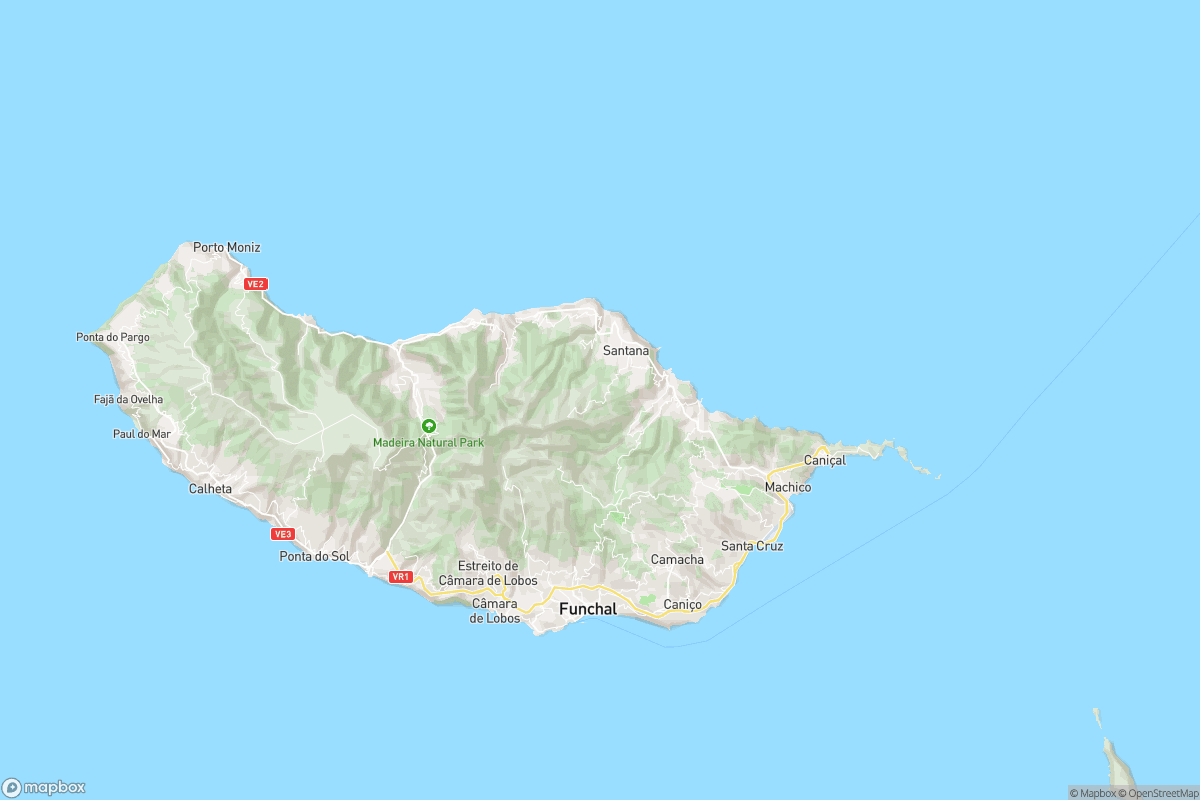
Choose your base alongside your transport. Before booking, use our guide to where to stay in Madeira to compare locations, then inspect the accommodation’s exact address. A property described as being near town may still involve a climb you would rather not repeat after dinner.
Using buses in Madeira
Buses deserve consideration for journeys between towns and for getting around Funchal. They work best when you build the day around the service available, rather than expect a bus to fit an already crowded sightseeing plan.
Check the current route, not an old route number
The official SIGA timetable directory lists routes and displays old and current numbers together. Use it to confirm the destination and route variant, not just the number quoted in an older article. A familiar route name does not mean every departure follows the same path.
Read the timetable for your actual travel day, including any notes about weekdays, weekends, holidays or school periods. Locate the boarding stop before departure, then check where you will get off. For an outing beyond Funchal, work backwards from the return bus: that tells you how much time you really have.
Tickets and payment need a little preparation
SIGA brings together services operated by Horários do Funchal, SIGA Rodoeste and Companhia de Autocarros da Madeira. Route renumbering began in March 2026, so older transport advice needs checking. Tickets bought aboard are paid for in cash, not by bank card. Preloaded GIRO tickets have different transfer conditions from tickets bought from the driver; the SIGA passenger FAQ sets out the distinctions.
Carry small euro notes and coins rather than relying on your phone or a large banknote. If you expect to make several journeys, compare the appropriate prepaid ticket with buying each ride aboard. Check the area covered and whether your planned connections qualify before paying.
Our Madeira bus guide covers routes, tickets and trip planning in more detail. For this broader decision, ask whether the timetable leaves enough time at your destination. A cheap outward ride is less useful if the return arrangement does not work.
When renting a car makes sense
A car is worth considering when you want control over departure times, several stops in one day or accommodation that does not suit your intended bus journeys. It also lets you change the order of your plans without rebuilding a chain of connections.
However, compare the whole rental cost, not just the advertised daily rate. Include fuel, parking, insurance choices, any extra driver and the collection or return arrangements. For a couple taking one excursion, another option may be simpler. For a group planning several outings, calculate the shared cost before deciding.
You can also rent for part of the holiday. Keep the Funchal days separate from driving days, then collect a car when you are ready to leave the city. Our guide to renting a car in Madeira covers the booking decisions that need closer attention.
Choose a vehicle and route you are comfortable with
Do not use the holiday to relearn an unfamiliar gearbox on a steep road. If you normally drive an automatic, check availability before booking. Consider luggage space too: the smallest vehicle is not necessarily the right choice for four adults and their bags.
Madeira has narrow, winding roads, and a navigation app can suggest an impractical or steep approach. Review the route before leaving and favour a road you feel comfortable driving. On descents, use an appropriate lower gear rather than relying only on the brakes. The tourism board’s Madeira road and parking guidance also stresses checking parking signs and keeping access clear.
Ask your host which approach to use for the final stretch to the property. Allow time for parking at each stop, and resist adding another viewpoint simply because it appears nearby. A map pin does not come with a parking space.
Taxis, ride apps and private drivers
Taxis can fill the gaps between a bus itinerary and the places you actually want to reach. Uber and Bolt are available in Funchal and surrounding areas, while public bus frequency can be lower away from main routes and at weekends. Some attractions also require a walk or another ride beyond the nearest stop. These are practical reasons to combine transport, reflected in Madeira’s official transport overview.
For an ordinary urban journey, check the pickup point and destination carefully before confirming. For a remote outing, treat the return as a separate booking problem. Being able to order a car at your hotel does not establish how you will get back from a mountain road later.
When requesting a private driver, send the full itinerary and ask what the quote includes. Distinguish a direct transfer from a sightseeing trip with waiting time. Agree on the duration, stops and return arrangements, and mention luggage, child seats or other vehicle requirements before accepting.
Getting from Madeira Airport to your accommodation
The Aerobus leaves the airport arrivals area towards Praia Formosa, stopping near several hotels along its route. There is also a taxi rank outside arrivals on the ground floor. The airport’s official ground transport information links to the bus routes and timetables.
Choose by address rather than the broad label “Funchal.” Check the walking route from the proposed bus stop to your front door, particularly with suitcases. A stop that looks close on a map may not be the most convenient arrival point for your property.
A booked transfer may suit a late arrival, a larger group or accommodation outside the airport bus route. Confirm the meeting instructions, luggage allowance and arrangements for a delayed flight. If collecting a rental car, check the desk hours and any shuttle procedure.
Our Madeira airport transfer guide compares these arrival choices without assuming that every visitor is heading to the same hotel district.
Walking and the cable car in Funchal
Walking can handle much of a central Funchal sightseeing day, but assess each route rather than committing to an entirely pedestrian holiday. Check elevation as well as distance, and leave the uphill return optional if someone in your group tires easily.
The lower Funchal–Monte cable car station is in the Almirante Reis garden beside the Old Town, within the flatter downtown area. The operator’s cable car station directions help place it within a walking route. Treat the ride as transport for a Monte visit, not as a substitute for the island’s wider road network.
Before buying, decide whether you want to return by cable car or make another arrangement. Check operating information for your day and allow time between leaving an attraction and reaching the station. A departure deadline is worth checking before lunch, not after dessert.
Wear footwear suited to the walking you plan, and check whether suggested pedestrian shortcuts involve stairs. When planning for a pushchair or wheelchair, inspect the actual route rather than relying on walking time alone.
Reaching hiking trails and remote attractions
Plan hiking transport around the exact trailhead. A booking to a village, a viewpoint and a walking route with a similar name can mean three different meeting places. Send the driver a map pin and confirm the road access point in writing.
For a walk that finishes elsewhere, arranging transport can be more useful than having your own car. Otherwise, you still need a way back to where you parked. Even on a return walk, leave room between your expected finishing time and a fixed collection.
Before paying for a hiking transfer or excursion, confirm:
- The precise drop-off and collection points.
- Whether the service includes a guide or transport only.
- How to contact the driver if your timing changes.
- What happens if access or weather disrupts the plan.
A transfer booking should not replace checking the walk itself. Confirm current access, preparation and any booking requirements separately through our Madeira hiking guide. Ask whether admission or trail reservations are included rather than assuming that a transport payment covers them.
For sightseeing, compare an organised excursion’s itinerary with your priorities. Check how long each stop lasts and whether the pickup point is convenient. A tour is useful when its route suits you, not simply because it removes the driving.
Can you enjoy Madeira without a car?
Yes, but plan a car-free holiday on its own terms. Do not copy a driving itinerary and replace each road journey with a bus search. Choose fewer stops, allow longer at each one and reserve paid transport for the outings that are awkward to arrange otherwise.
A workable approach is to combine days near your accommodation with bus outings and prebooked excursions. Keep at least one day flexible so that a changed departure or disrupted outdoor plan does not force you to rearrange the entire week.
Our seven days in Madeira without a car develops that approach into a suggested schedule. Use it as a planning model, then check the services and pickup arrangements for your dates.
Be realistic about early starts and evening returns. If a day depends on transport at an exact hour, arrange it before committing to the activity. Independence does not have to mean driving; it can mean having a return plan that does not depend on luck.
Budget for the whole day and everyone travelling
Compare door-to-door costs for your whole party. A bus fare is per person; a taxi or private transfer quote may cover the vehicle. Ask for the total price, including both directions, waiting time and any required equipment. For a rental, divide the complete cost across the days you will actually use it.
If anyone has reduced mobility, confirm boarding arrangements, vehicle dimensions and access at both ends directly with the provider. Request the features needed rather than accepting a general promise that transport is “accessible.” Apply the same care to child seats, pushchairs and bulky luggage.
The right arrangement may change from one day to the next. Book the journeys that need certainty, keep simpler days flexible, and avoid paying for a vehicle that spends most of the holiday parked.