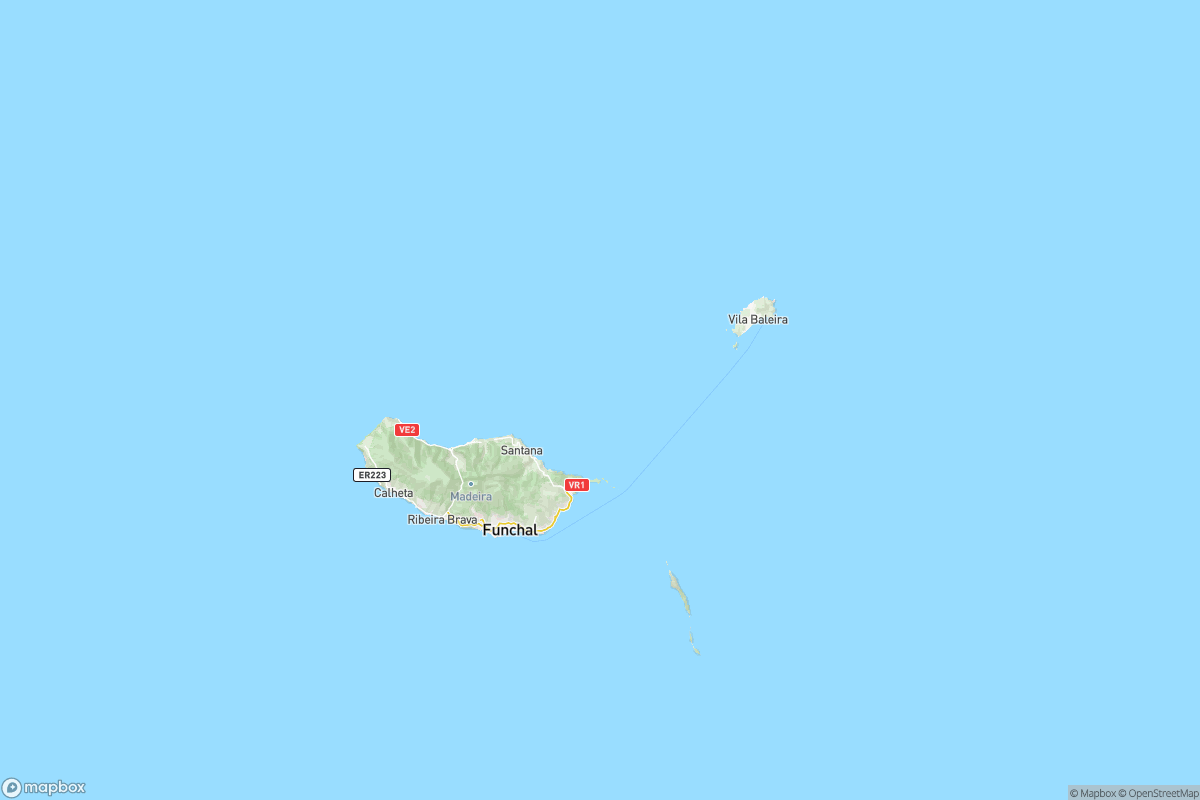
Forex trading from Madeira involves the same basic market decisions as trading elsewhere: which currencies to trade, how much exposure to carry, and whether a strategy remains profitable after costs. The local considerations concern access to brokers, Portuguese regulation, tax residence, banking and the reliability of the working setup.
Madeira is an autonomous region of Portugal. For retail forex traders, Portuguese financial regulation provides the relevant starting point. The island’s autonomy and business tax incentives should not be interpreted as a separate set of permissions for speculative currency trading.
The product also matters. Converting euros into dollars through a bank differs from opening a leveraged EUR/USD position through an online broker. Many retail forex accounts provide currency exposure through contracts for difference, or CFDs, including arrangements described as rolling spot forex. These products create trading exposure without operating like an ordinary foreign currency bank account. ESMA’s explanation of its CFD measures includes rolling spot forex within their scope.
For someone already living in Madeira, the main task is establishing suitable brokerage and reporting arrangements. For someone moving there, the additional work is determining what changes when their residence, tax status and registered address change.
Is Forex Trading Legal in Madeira?
Retail forex trading through an appropriately authorised provider is permitted within Portugal’s regulatory framework. Portugal restricts how CFDs can be marketed and supplied to retail clients, with conditions governing margin, account protection and risk disclosures. The applicable national measure is CMVM Regulation No. 5/2019.
The Comissão do Mercado de Valores Mobiliários, usually called the CMVM, is the Portuguese securities market regulator. A trader should establish that the firm offering the account is entitled to provide the relevant investment services in Portugal. A Portuguese language website or an application form that accepts a Madeira address does not establish that entitlement.
A broker can serve Portuguese residents without maintaining an office in Madeira. Under the European framework, an investment firm authorised in another EU member state can provide covered services across borders, subject to the applicable notification arrangements. This mechanism is set out in Article 34 of MiFID II. The practical question is whether the actual contracting firm has the necessary permissions.
Residence and physical location also need to be distinguished. Someone visiting Madeira for several weeks may retain an existing brokerage relationship, but should check the provider’s travel and access policies. Someone relocating should tell the broker about the change before assuming the same account terms will continue.
Trading personal capital is also a different activity from offering investment services to other people. Managing client money, executing transactions for others or operating an investment business raises further regulatory questions. The European authorisation requirement applies to investment services and activities conducted as a regular occupation or business, as explained in MiFID II Article 5. An ordinary personal trading account does not settle those questions.
Retail Forex Rules and Account Protection
Margin requirements and position size
The European retail CFD framework sets maximum opening exposure broadly equivalent to 30:1 for major currency pairs and 20:1 for other currency pairs. Providers can impose stricter requirements. These limits are described in ESMA’s CFD restrictions.
At 30:1, a position with a notional value of €30,000 requires approximately €1,000 in initial margin, before allowing for costs or additional broker requirements. A 1% adverse movement against that exposure produces an approximate €300 loss. That is 30% of the initial margin.
The margin deposit therefore says little about an acceptable loss. It establishes how much collateral the broker requires to open the position. A trader still needs a separate calculation for the money at risk if the market moves against the trade.
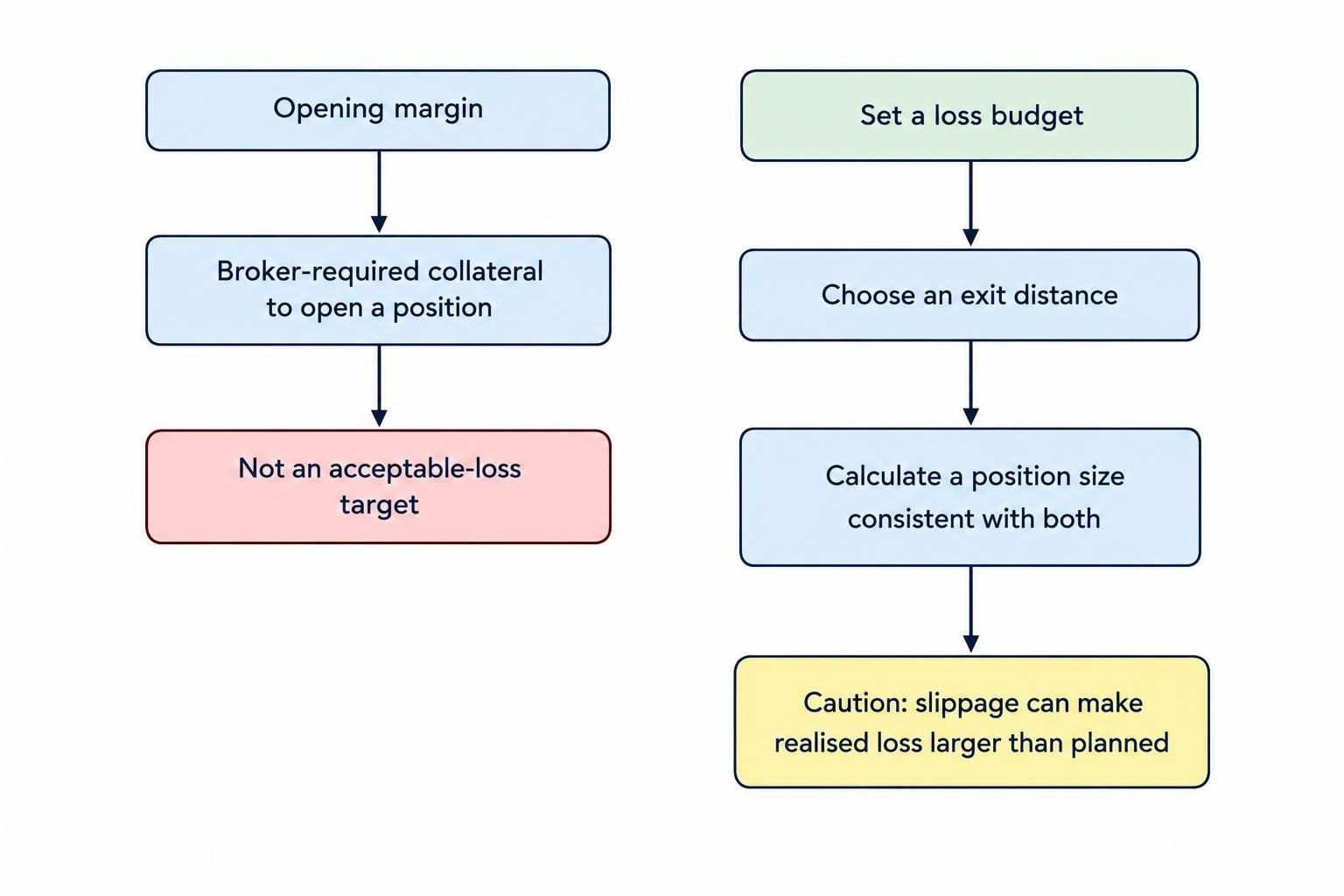
Account equity matters more than the margin figure viewed in isolation. The same €30,000 position creates very different exposure in a €2,000 account and a €20,000 account, even when the initial margin requirement is identical.
Forced closures and negative balances
Portugal’s rules require margin closeout protection when account equity falls below half the aggregate minimum initial margin required for the open CFDs. They also require negative balance protection at the CFD account level. These provisions appear in the CMVM regulation’s definitions and operating conditions.
These protections address severe losses. They do not preserve the initial deposit or ensure that a trader can keep every position open until the market recovers. A broker may have to close positions while losses are still developing.
An ordinary stop order introduces a separate execution issue. During a rapid move or price gap, execution can occur beyond the requested stop level. ESMA’s investor guidance on CFDs explains that stop orders may be ineffective at the expected price during fast markets or market closures.
Professional classification
Some traders seek professional classification to access different trading conditions. That classification involves an assessment and a formal process; it is not established simply by describing trading as a full time occupation.
The MiFID II professional client criteria cover experience, financial resources and trading activity, with written acknowledgements concerning protections that may be lost. Anyone considering reclassification should identify the exact changes to their account agreement before accepting them. A larger permitted position is only one part of that decision.
Choosing a Forex Broker from Madeira
Verify the company behind the brand
Broker selection should begin with the legal entity that will hold the account. An international brand may operate through several companies with different regulators, client protections and contractual terms. A review of one group company may not describe the account offered to a resident of Madeira.
Locate the company name in the proposed client agreement and compare it with the regulator’s records. The Portuguese government’s financial intermediary search service explains that investors can check authorised services and warnings about unauthorised firms. ESMA’s register guidance provides another route for checking a firm’s authorisation.
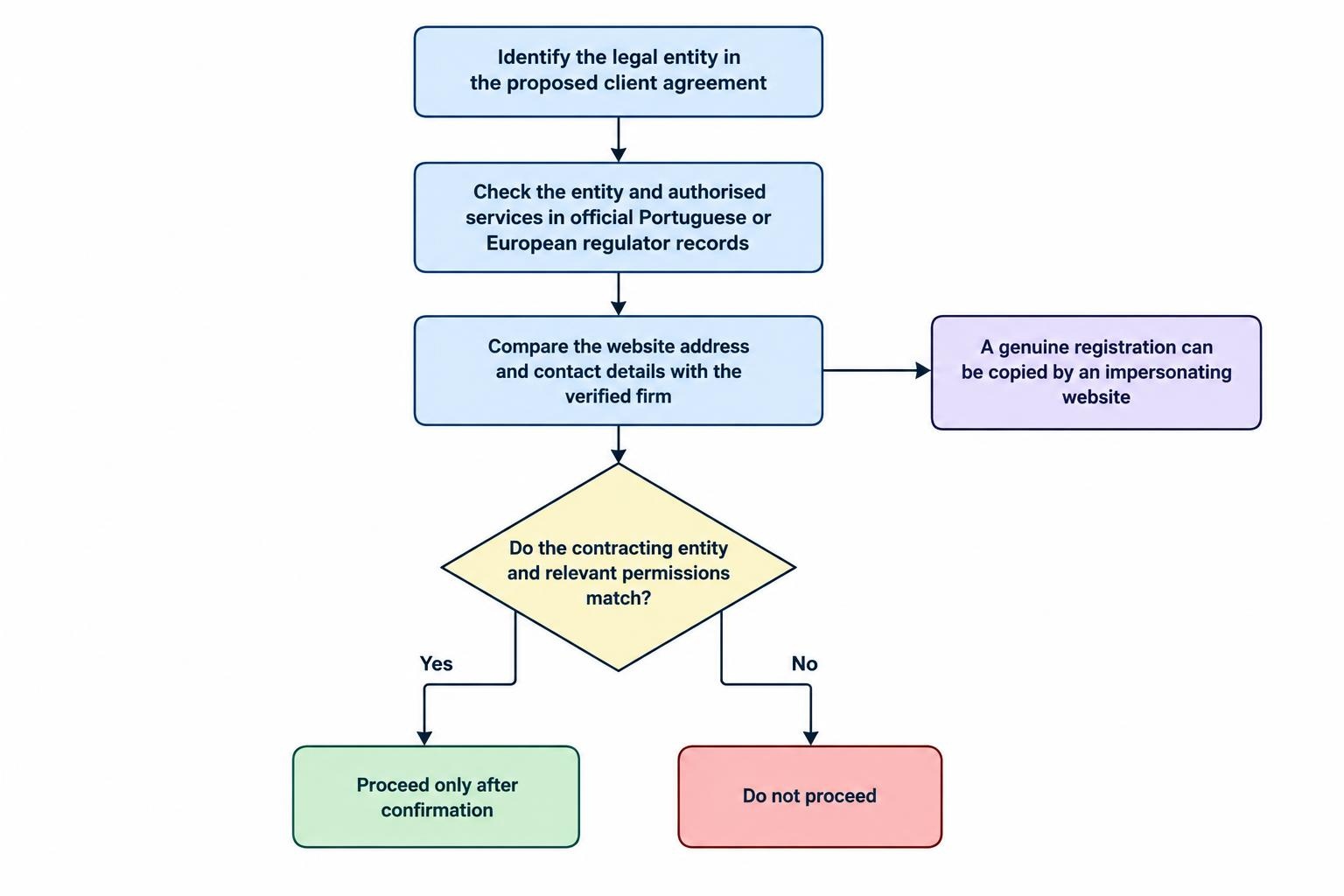
The website address and contact details deserve the same attention. A genuine company registration can be copied onto a fraudulent website. The CMVM has warned about websites and identities that imitate financial intermediaries and supervisors in its guidance on misleading advertising and fraud.
Compare the account you can actually open
Broker research websites can help organise an initial comparison. ForexBrokersOnline publishes broker reviews and trading platform guides that can be used to identify providers for further investigation. Confirm Portuguese resident eligibility, the contracting entity and current charges directly with each provider before relying on a comparison.
The useful questions depend on the strategy. A trader who enters several positions each day needs close attention to spreads, commissions and execution. Someone holding positions for weeks needs more detail on financing charges. An automated strategy requires information about platform access, order limits and the handling of interruptions.
Check the minimum position size as well. A broker may offer an attractive headline spread while requiring trade sizes that are too large for the intended loss budget. That mismatch can matter more than a small difference in commission.
Funding, withdrawals and records
Ask how a euro bank transfer will be credited, whether a conversion will occur, and what information must accompany the payment. Obtain the withdrawal conditions before depositing. Processing times, beneficiary requirements and intermediary charges should be clear enough to incorporate into cash planning.
A modest initial deposit and withdrawal can test whether the process functions as described. It cannot prove a firm’s future solvency or eliminate fraud risk, but it can reveal administrative problems before more money is committed.
Download a sample account statement where possible. Useful records identify closed trades, commissions, financing adjustments, deposits, withdrawals and currency conversions. A platform that displays a profit figure but produces poor exports creates avoidable work when reconciling the account or preparing a tax return.
Forex Trading Hours in Madeira
London trading fits the local working day
Madeira uses UTC in winter and UTC+1 during summer time, following the seasonal arrangement documented by the Lisbon Astronomical Observatory. Its clock aligns with Lisbon and London under their current seasonal schedules.
For a trader concentrating on European market activity, this makes scheduling straightforward. A working session beginning around 08:00 local time can cover the opening part of the London business day without an overnight routine.
Forex session names describe periods of activity across financial centres. They are not opening bells for one global exchange. The broker’s published trading hours determine when a particular account can place orders, including any daily interruptions and holiday adjustments.
The London and New York overlap generally falls in Madeira’s afternoon. That can suit traders who want to follow both European developments and the first part of the US trading day. It also creates a practical boundary: a trader can define an afternoon observation period rather than remain at the screen throughout the market week.
Economic announcements and seasonal clock changes
US economic releases need more care because European and US daylight saving changes occur on different dates. The usual time difference shifts temporarily during the transition periods.
The US Employment Situation report is normally scheduled for 08:30 Eastern Time, as shown in the Bureau of Labor Statistics release calendar. That usually corresponds to 13:30 in Madeira, but can correspond to 12:30 during the seasonal mismatch. Check the calendar for the actual date.
A trading platform may use a server clock that differs from local time. This affects candle boundaries, daily performance reports and the interpretation of backtests. A strategy defined around an hourly close should specify which clock it uses.
Maintain the same convention in the trading journal. Record the local time and, where necessary, the platform time for important orders. If an execution dispute or strategy review occurs later, consistent timestamps make it possible to reconstruct what happened without guessing which session a record refers to.
Trading Costs and Account Currency
Calculate the complete transaction cost
The spread is only part of the cost of a forex trade. Commission, financing, currency conversion and execution differences can change the result substantially. Evaluate those costs using the position sizes and holding periods the strategy will actually use.
Consider a hypothetical EUR/USD trade of 10,000 euros. A one pip move is approximately US$1. A one pip spread therefore represents roughly US$1 of cost for an immediate round trip at unchanged market prices. If the account also charges commission, that amount must be added.
The comparison becomes meaningful when repeated over a trading sample. A strategy making several hundred transactions faces a different cost burden from one opening a few positions each month. Even a small average difference per transaction can consume a large share of a modest gross return.
Execution quality also needs to be measured. Record the requested price and the actual fill, particularly around announcements or periods of thin trading. Occasional favourable execution should be counted alongside adverse execution. Reviewing only the worst fills produces a distorted assessment.
Financing changes the economics of longer trades
A position held beyond the provider’s daily cutoff may receive a financing debit or credit. The amount depends on the contract and the broker’s schedule. It can change over time, and the long and short sides of the same currency pair can have very different charges.
Before opening a position intended to last several weeks, estimate its carrying cost across that period. A trade that appears attractive from the price chart may have little expected profit remaining after financing.
Do not assume that a textbook interest rate differential will match the amount posted to the account. The broker’s pricing terms, adjustments and charges determine the actual cash flow. Check how weekends and holidays are incorporated into the schedule.
Choosing a euro account
Madeira uses the euro, as confirmed by the official Madeira tourism information. For someone whose income, savings and expenses are mainly in euros, a euro account can make budgeting and performance measurement easier.
It does not remove currency exposure from individual trades. A profit calculated in dollars may still need conversion into euros, and that conversion may carry a charge. Account denomination and the currencies being traded are separate decisions.
For illustration, US$5,000 is worth about €4,545 at an exchange rate of US$1.10 per euro, and about €4,167 at US$1.20 per euro. The dollar balance has stayed constant, but its euro value has changed.
Measure results in the currency used to fund living costs and assess capital. Otherwise, a profitable trading statement can conceal a less favourable change in purchasing power.
Internet, Workspace and Platform Reliability
The relevant connection quality is the service available at the actual trading address. An island average or an accommodation listing that promises fast internet cannot establish whether a connection will support a particular routine.
Portugal’s communications regulator provides coverage information through GEO.ANACOM. Use that information to investigate an address, then confirm installation and service availability with the operator. Coverage information is a starting point for checking a property.
Test the connection during the hours when it will be used. Download speed alone is insufficient. Repeated disconnections, variable latency and unreliable wireless coverage can interfere with order handling even when a speed test reports a high figure.
A wired connection can remove one source of instability inside the property. A mobile connection provides a possible backup, but should be tested before it is needed. Two services may still depend on shared infrastructure, so having two subscriptions does not guarantee complete independence.
The recovery procedure should be simple enough to use under pressure. Confirm that another device can access the account, that authentication is available, and that open positions and pending orders can be identified accurately. Keep the broker’s verified support details accessible outside the trading platform.
Order behaviour during a disconnection also matters. Establish which orders are held on the broker’s systems and which functions require the local platform to remain connected. Trailing stops, scripts and automated strategies can behave differently across platforms.
A virtual private server may help keep automated software running when a home computer is unavailable. It adds another system to monitor, with its own credentials, updates and failure risks. Its value should be assessed against an actual operational requirement.
A short trial period in the intended workspace can reveal more than a specification sheet. Use it to check platform access, noise, lighting, authentication and the ability to work through the chosen session without interruption.
Tax and Residency for Forex Traders in Madeira
Establish tax residence before estimating the bill
Portuguese tax residence cannot be determined solely by counting days within a calendar year. Article 16 of the Portuguese Personal Income Tax Code includes a test based on spending more than 183 days in Portugal during a relevant twelve month period. It also includes a habitual home test that can apply with a shorter stay.
This matters to traders planning a move in stages. Renting a home, establishing normal living arrangements and splitting time between countries can require a closer examination than simply checking whether day 184 has arrived.
The residence date matters because Portugal generally taxes residents on worldwide income. Nonresidents are generally taxed on Portuguese source income. Those principles, including the treatment of periods of partial residence, appear in Article 15.
An account held abroad therefore does not, by itself, place its income outside Portuguese taxation. Keep a dated record of the move, address changes and account statements so an adviser can assess the relevant periods.
Identify the instrument and income category
“Forex income” is a commercial description rather than a complete tax classification. A currency CFD, interest on a foreign currency deposit and remuneration from a trading related business may fall under different provisions.
For personal investment activity, Article 10 of the IRS Code includes gains from financial derivatives within Category G, subject to the statutory conditions and exceptions. Its classification applies where the income is not treated under the other categories identified in the provision.
The national starting point for a qualifying positive balance of relevant gains and losses is the 28% autonomous rate in Article 72. That article also provides for aggregation in certain circumstances. It should be read alongside the instrument’s classification and the taxpayer’s position.
A further detail concerns short holding periods. Article 72’s mandatory aggregation provision for certain gains on assets held for less than 365 days refers to a defined category of transactions. It should not be applied automatically to every derivative simply because the position was closed within a day.
For an active trader, this is a useful point to resolve before filing. The correct analysis starts with the contracts and account records, then applies the relevant provisions.
Madeira’s regional tax reductions
Madeira has regional income tax rules that can affect the calculation. Its 2026 regional budget extends the maximum 30% differential against mainland general IRS rates across all nine income brackets.
That does not establish a universal 30% reduction in every tax charge associated with trading. General progressive rates, withholding rates and autonomous rates serve different purposes and require their own legal basis.
For a trader considering aggregation, the regional progressive scale may be relevant. The comparison needs to use total taxable income and the applicable rules for the year. Applying a percentage discount to an online estimate of mainland forex tax is insufficient.
Request a calculation based on the actual income categories. This is particularly useful where the household also receives salary, pension, rental or investment income, because the choice available for one category can affect the wider result.
The 5% corporate rate and newcomer regimes
Madeira’s International Business Centre is often associated with a 5% corporate tax rate. That is a regime for qualifying licensed companies, with conditions governing access and eligible activity. It does not become the personal tax rate on a resident’s trading account.
The International Business Centre’s own information also states that financial services such as banking, insurance and brokerage do not qualify for its available tax benefits. Any proposed company structure needs an assessment of the actual activity, operating requirements and treatment of distributions to its owner.
Older relocation articles may also describe Portugal’s former nonhabitual resident regime as though it remains generally available to new arrivals. The repeal and transitional provisions are recorded alongside Article 16. Existing status and a new move require separate analysis.
Neither a relocation label nor an overseas broker establishes that gains are exempt. The relevant status, income source and applicable provision must all be checked.
Reporting and supporting records
Portugal’s foreign income guidance explains the use of Annex J for foreign income. It also describes the identification of qualifying foreign deposit and securities accounts, including accounts that generated no income.
Ask how the particular brokerage arrangement should be reported. Account structures vary, and the platform’s commercial name may differ from the institution appearing on the legal documentation.
Keep complete annual statements and transaction exports. Separate trading results from deposits, withdrawals, interest and currency conversions. A transfer from the broker to a bank account is not a reliable substitute for calculating the underlying result.
Before preparing the return, reconcile the opening balance with subsequent cash movements and the closing balance. Resolve unexplained differences while the broker’s records and support team remain accessible. This is usually easier than reconstructing several years of activity after an account has been closed.
Managing a Trading Operation from Madeira
Separate capital from living expenses
A trading plan should distinguish the capital exposed to market losses from the cash needed for ordinary expenses. This becomes particularly relevant when a move introduces deposits, accommodation costs and other payments that arrive before any trading income.
A useful budget assumes that withdrawals may be needed during an unprofitable period. If paying routine expenses requires increasing position size or abandoning a loss limit, the account is being asked to support an unsuitable cash flow requirement.
The account’s available margin should not determine position size. Begin with the planned loss and the distance to the proposed exit, then calculate the exposure consistent with those inputs.
For illustration, a €10,000 account with a hypothetical 0.5% planned loss allocation has a €50 budget for one trade. A 25 pip stop implies approximately €2 per pip before costs. The number of currency units then depends on the pair, the exchange rate and the contract specification. Slippage can make the realised loss larger.
Assess positions together
Several trades can express the same underlying view. Buying EUR/USD and GBP/USD creates exposure to a weaker dollar in both positions. Treating each as an unrelated trade can conceal the concentration.
Review what would happen if the shared assumption fails. The useful measure is the potential effect on the account across the positions, including the possibility that correlations strengthen during a market shock.
Maintain enough detail in the journal to distinguish a poor trade decision from an execution or operational problem. Entry rationale, intended exit, position size, costs and actual fills provide a workable record. Screenshots can add context, but should accompany exportable data.
Measure the operation after all costs
Review performance over a sample large enough to include different market conditions. A profitable week says little about whether the approach can support regular withdrawals, particularly when it contains one unusually favourable trade.
Separate gross trading performance from spreads, commission, financing and conversion charges. Then account for recurring operating expenses such as software, data and workspace costs. Tax provisioning belongs in the cash plan even when the final liability will be calculated later.
The first live period after establishing the Madeira setup is also an opportunity to verify routine administration. Confirm that statements reconcile, withdrawals reach the intended account and backup access works. Increase the scale of the operation only when its trading results and its day to day processes justify the additional exposure.