Ponta de São Lourenço is Madeira’s exposed coastal hike: open Atlantic views, low vegetation and a rolling path rather than a shaded forest walk. The PR8 route runs from Baía d’Abra to Casa do Sardinha, with the return along the peninsula.
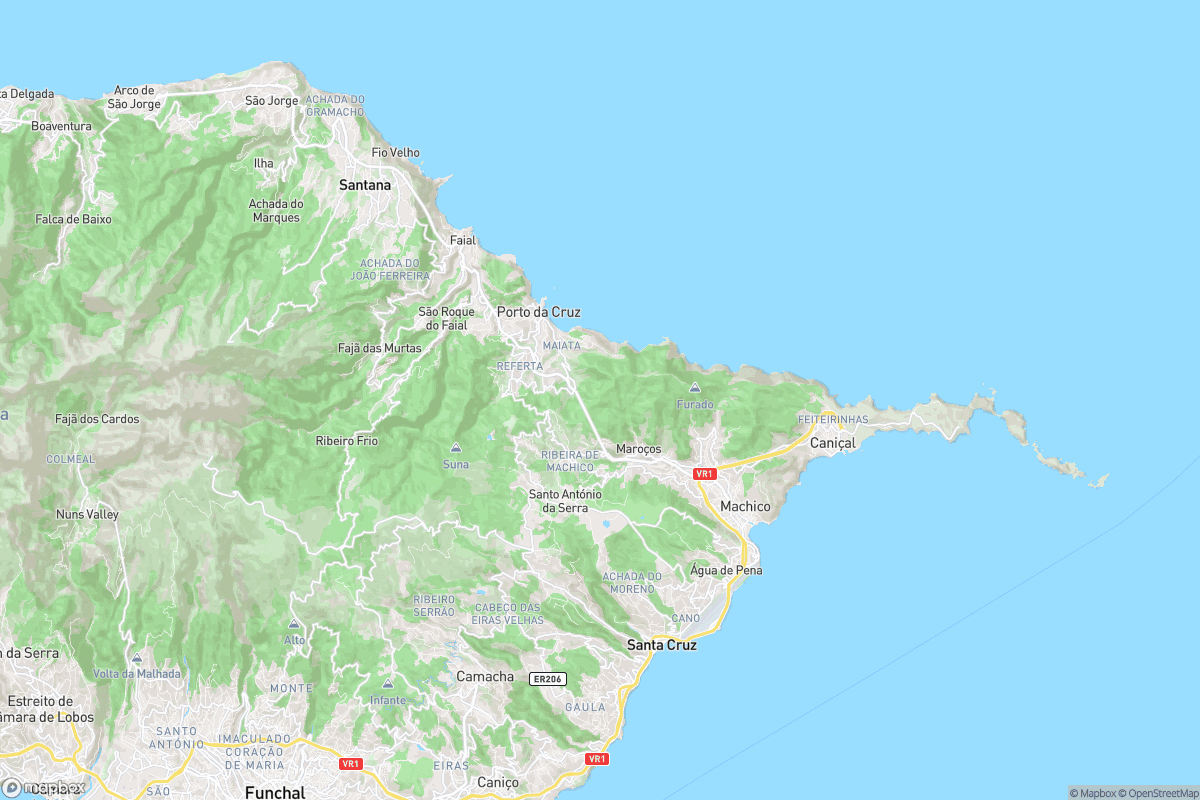
Plan it as a half-day outing, not a quick stop between viewpoints. The distance is manageable for many regular walkers, but wind, sun and repeated climbs deserve more attention than the route’s modest altitude. Leave enough time to enjoy the coast without racing back for transport.
Ponta de São Lourenço Hike: Distance, Time and Current Access
| Detail | What to expect |
|---|---|
| Official route | PR8 Vereda da Ponta de São Lourenço |
| Start and destination | Baía d’Abra to Casa do Sardinha |
| Published distance | 4 km each way; 8 km return, approximately 5 miles |
| Official difficulty | Moderate |
| Published duration | 2 hours 30 minutes |
| Suggested planning allowance | 3–4 hours for a relaxed outing, with extra time for longer breaks |
Access checked on October 19, 2026: PR8 is listed as restricted, with minor temporary diversions rather than a complete closure. Follow the marked arrows and instructions on site. The official PR8 route page and access notice also provides the published route measurements above. Check it again before travelling.
Treat the suggested 3–4 hours as a planning allowance, not a promised completion time. Your group’s pace, stops and any diversion will affect the day. Do not use the shortest published duration to calculate the last possible bus you can catch.
How Difficult Is Ponta de São Lourenço?
The useful question is not simply whether you can walk eight kilometres. Ask whether you can do that comfortably on uneven ground, with repeated ascents and descents, while carrying water and dealing with exposure.
A moderate classification does not mean every walker will find it moderate. If you dislike heights, struggle with steps or have only walked on paved promenades recently, allow more time and keep an early turnaround as an option. There is no prize for reaching the far end with nothing left for the return.
Choose this route for an open coastal walk, rather than assuming it is an easier substitute for every mountain itinerary. The broader Madeira hiking guide can help you compare routes by terrain and preparation, not just distance.
PR8 Booking and Entry Fees
For an independent visitor in 2026, the standard PR8 fee is €4.50 per person over 12. Children aged 12 and under are exempt from payment. Madeira residents also qualify for an exemption, subject to proof of residence.
Book your entry time through SIMplifica before travelling. Registration and reservation remain necessary for visitors who qualify for a fee exemption. The booking is for your entry slot, not a deadline for completing the walk. These requirements and exemptions appear in the IFCN’s official trail booking and fee rules.
Save your confirmation offline and check that it shows the right trail, date and party details. Arrange transport around the booked entry time, including a buffer for delays. If you join an organised walk, ask whether the operator handles the reservation and includes the access fee; do not assume either is covered.
Getting to the Baía d’Abra Trailhead
By car or prearranged transfer
Set your destination to Baía d’Abra, the PR8 starting point, rather than using the broad peninsula name alone. Check the route before leaving your accommodation and allow time to park, organise your bags and reach the entrance without rushing.
If you book a transfer, agree on the exact pickup location and return arrangements in advance. A fixed collection time can work well, but only if it allows your group a comfortable walking pace. Ask what happens if you turn back early or need longer than planned.
By public bus
SIGA lists the Caniçal–Baía d’Abra service under route 702, previously 113. That numbering change matters when comparing older travel guides with current information. Use the official SIGA timetable for route 702 to check departures for your travel date.
Work backwards from the return journey before booking your trail slot. Confirm whether your chosen departure reaches Baía d’Abra, where you board, and whether connections are required from your accommodation. Check the weekday or weekend schedule that actually applies.
Choose a realistic target return service and identify a backup. Keep the timetable saved offline. A cheaper journey loses some appeal if it leaves you watching the clock throughout the walk.
How to Approach the Walk
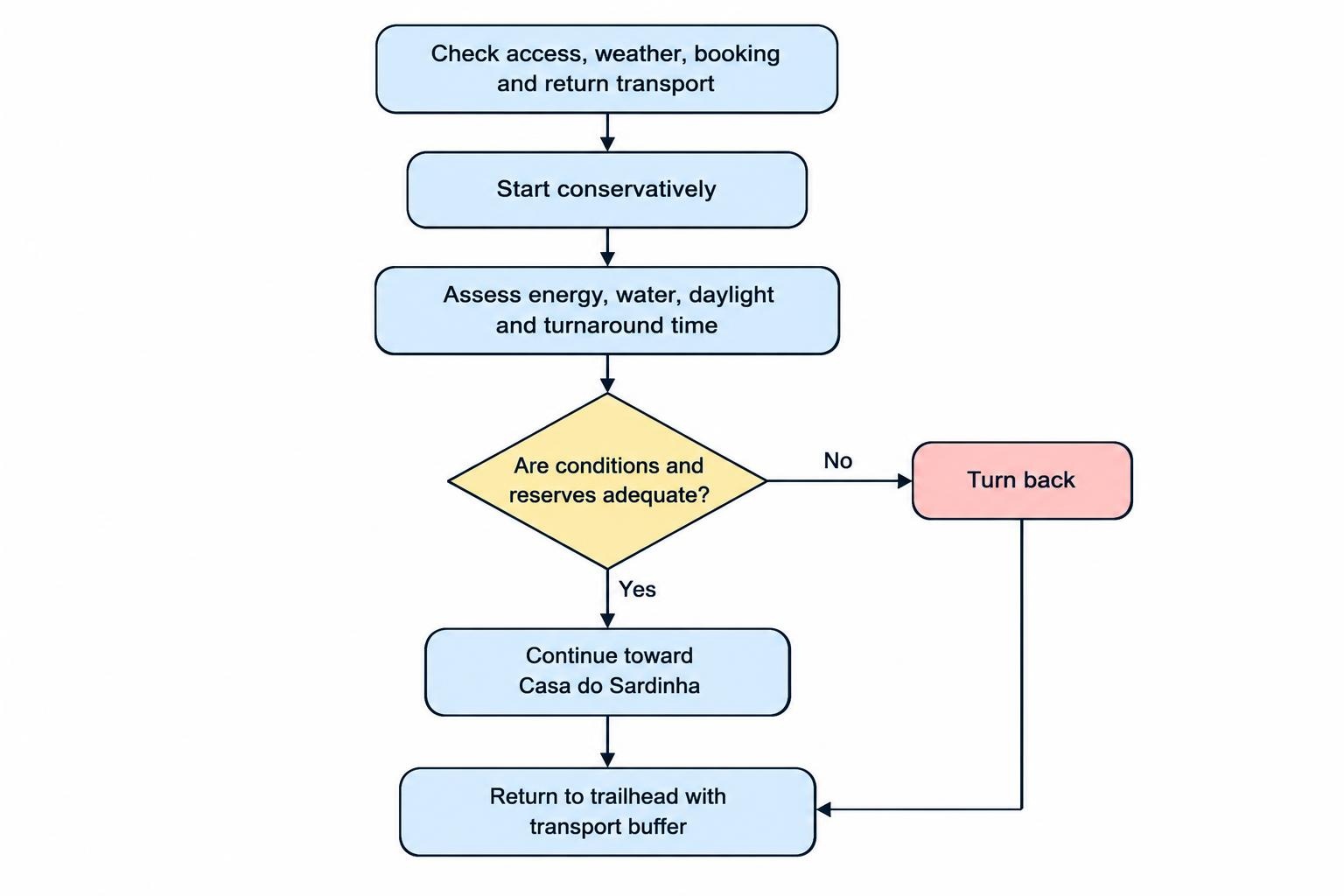
Start conservatively from Baía d’Abra
Use the opening section to judge the conditions and your group’s pace. If walking already feels uncomfortable because of wind or footing, reconsider before committing to the full route.
Avoid treating the outward leg as a race to the destination. Stop for photographs where there is room to stand safely without blocking other walkers. Put the phone away while moving over awkward ground; the coast will still be there when you stop.
Continue towards Casa do Sardinha
Casa do Sardinha is the named destination of the published PR8 route. Make it a decision point rather than an obligation. Before continuing, ask whether everyone has enough energy, water and daylight for the walk back.
For a hypothetical group taking frequent photographs, a sensible approach is to set a turnaround time before departure. When that time arrives, turn back even if the destination still looks close. This prevents a relaxed outward walk becoming a hurried return.
At any junction or temporary diversion, follow the signs currently in place. An old downloaded track should help with orientation, not overrule a barrier or directional arrow.
Treat extra viewpoints as optional
Do not build your day around completing every spur shown on a hiking app. Check whether an extension is open, assess the conditions and consider the return effort before adding it.
If a path is blocked or signed against access, leave it alone. Another walker’s decision to continue does not make the route suitable for you.
Keep enough in reserve for the return
Eat, drink and adjust clothing before setting off again. Recheck your transport time, then walk at a pace the slowest member of the group can maintain comfortably.
Do not assume retracing familiar ground requires less concentration. Keep watching your footing, especially when tired or distracted by photographs. Plan to reach the trailhead with time to spare rather than making the final section a sprint.
Weather and the Best Time to Start
Choose your walking day by the forecast and access status, not by the month alone. Before committing, review IPMA’s official weather warnings for Madeira, paying attention to wind, rain and coastal conditions. Check the forecast for the eastern peninsula rather than relying solely on conditions at your hotel.
An early daylight start is a sensible preference if you want more flexibility afterwards. It gives you room to slow down, take a longer break or change plans without immediately running short of daylight. However, an early start does not cancel an unfavourable forecast.
A later departure can work if your booking, transport and available daylight leave a generous margin. Calculate backwards from when you need to finish, then add a buffer. Avoid choosing a late slot simply because it is the only one left.
On arrival, reassess. If gusts make it difficult to walk steadily, postpone or turn back. Do not continue just because you have paid for entry or travelled across the island. Those costs are already spent; they are not reasons to accept more risk.
What to Wear and Carry
Wear footwear with a dependable grip that you already know is comfortable over several hours. This is a poor occasion to test brand-new shoes. Choose clothing you can adjust as conditions change and keep loose belongings secured.
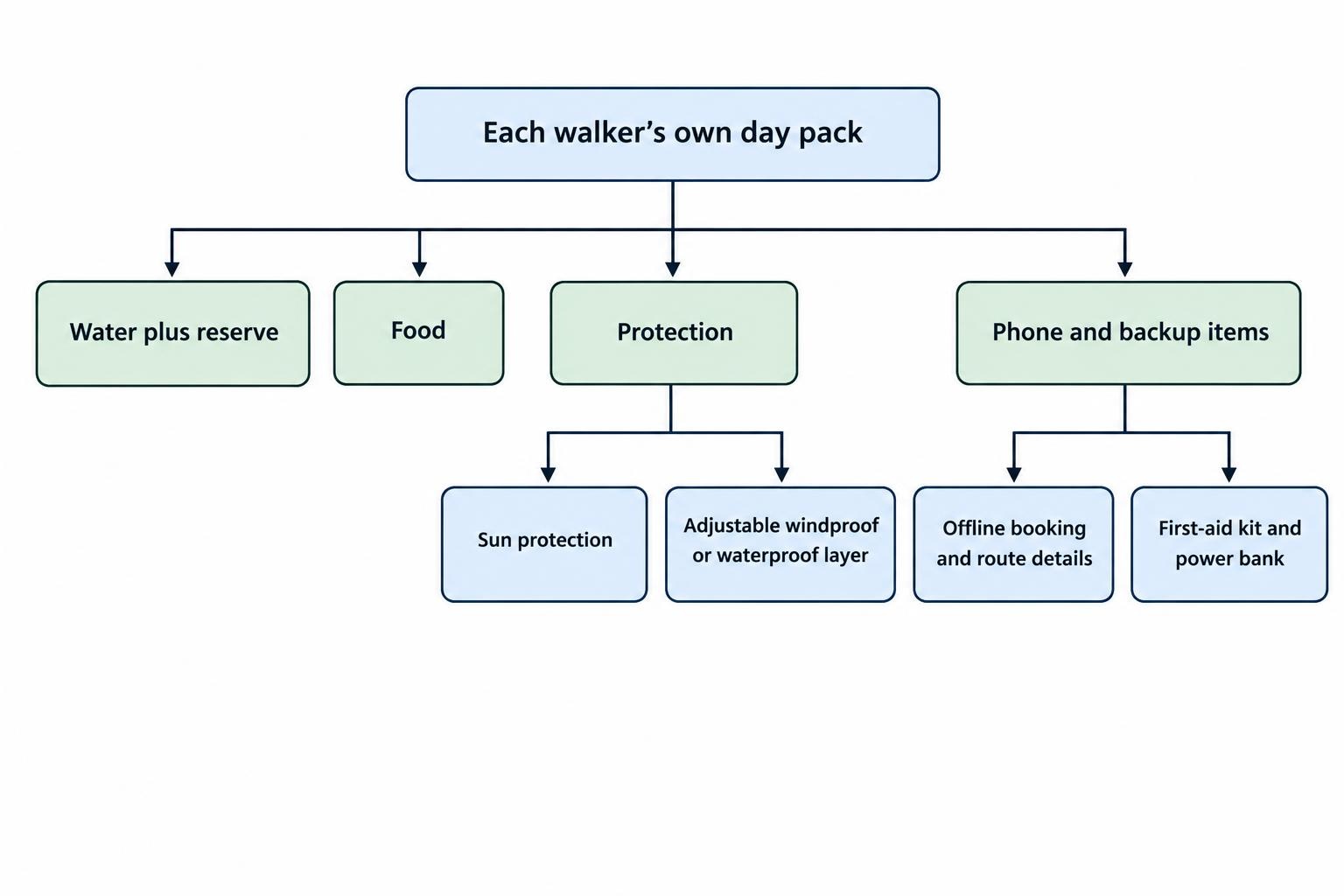
Pack for the entire walk without depending on a purchase or refill partway through. Carry drinking water plus a reserve, something substantial to eat, sun protection, a windproof or waterproof layer, and a charged phone with your booking and route information saved offline.
The island-wide Madeira packing list covers broader holiday needs. For PR8, keep the day bag focused: useful layers, food, water and navigation are worth carrying; several unnecessary outfit changes are less helpful.
- Water: bring enough for your expected duration, conditions and personal needs, with extra for delays.
- Food: carry a snack or packed meal rather than planning to walk hungry until you finish.
- Protection: pack sunscreen, sunglasses and headwear that stays secure.
- Backup: take a small first-aid kit, power bank and a light if there is any possibility of returning late.
Carry your own supplies even when walking with a group. If people become separated or one person turns back, shared equipment can end up with the wrong half of the party.
Can You Swim at Cais do Sardinha?
Cais do Sardinha is a bathing spot near the far end of the walk, but it is not a serviced beach. There are no bathing support services or supervision, as noted in the official Cais do Sardinha visitor information.
Treat swimming as an optional activity, not a promised reward. Assess the sea, your confidence and the entry and exit before deciding. If you are uncertain, skip it. Clear water alone does not establish safe conditions.
If a swim is part of your plan, allow time to dry off and change before walking back. Keep enough food, water and energy for the return, and do not rely on an unconfirmed boat departure as an alternative to walking.
Is This Hike Suitable for Children or First-Time Hikers?
Base the decision on the least confident person in the group. A child who enjoys a long park walk may still dislike exposed terrain, while an adult with good general fitness may find uneven ground tiring.
For families, consider a shorter outward walk with a firm turnaround point instead of promising the full route. Keep children close, supervise them throughout and stop before tiredness becomes an argument. Build the day around what they can enjoy, not what an itinerary says they should finish.
For first-time hikers, preparation matters more than buying elaborate equipment. Start with suitable footwear, a manageable pace, enough supplies and permission to turn back. A guide can help with organisation, but cannot remove exposure or make bad weather irrelevant.
If you prefer a different type of walking day, compare the Madeira levada walks before choosing. Assess each route separately; a different setting does not automatically mean an easier or safer trail.
Before You Leave the Trailhead
Check the booking, access notice, weather, water supply and return transport one final time. Tell someone where you are walking and when you expect to be back. Agree that anyone in the group can request a stop or turnaround without needing to justify it at length.
For a genuine emergency, call 112, the free European emergency number. Give the route name, your location and the nature of the problem as clearly as possible. Keep your phone available for further instructions.
The best PR8 plan leaves room to enjoy the walk. Book a suitable time, follow the current signs and protect your return margin. Reaching Casa do Sardinha is worthwhile; getting back comfortably is part of the same plan.