Monte Palace Tropical Garden combines Asian inspired gardens, lakes, Portuguese tile panels and art collections on a steep hillside above Funchal. It suits visitors who want more than a walk past flower beds: the interest comes from moving between planting, water, architecture and museum galleries.
Allow around three hours for an unhurried visit, plus transport. The main planning issue is the terrain, not the distance from central Funchal. Expect slopes and steps, wear shoes with grip, and leave enough energy for the return uphill. Despite the name, this is a garden and museum visit, not a tour of palace interiors.
What Makes Monte Palace Worth Visiting?
The estate covers approximately 70,000 square metres in Monte, overlooking Funchal Bay. Its history includes an eighteenth century estate owned by English consul Charles Murray and a palatial residence built after Alfredo Guilherme Rodrigues bought the property in 1897. That residence later became the Monte Palace Hotel. The Madeira tourism board’s Monte Palace overview records this history alongside the garden’s plant, tile and sculpture collections.
The appeal is the mixture. You can spend time looking at cycads, stop beside a pond, then turn your attention to carved stonework or a tiled wall. That makes Monte Palace a reasonable choice for companions with different interests, rather than an outing that requires everyone to share an enthusiasm for botany.
It is less suitable for a rushed stop between other attractions. If you have only an hour, choose a smaller route rather than trying to cover the grounds at speed. A garden visit should not become a timed hill climb.
Monte Palace Tickets and Opening Hours
For October 2026 planning, the published adult ticket costs €18. Children aged 14 and under enter free when accompanied by an adult. The official Monte Palace visitor information lists these admission prices and seasonal opening hours.
| Item | Details |
|---|---|
| Adult admission | €18 |
| Children aged 14 and under | Free with an accompanying adult |
| Garden, April through September | 9am to 7pm |
| Garden, October through March | 9am to 6pm |
| Museum | 9am to 5:30pm on the visitor information page |
| Annual closure | December 25 |
Opening hours are not the same as admission cutoffs. The official visitor page and FAQ give different last-entry times, so do not build a visit around arriving near closing. Confirm directly if a late arrival is unavoidable.
For budgeting, separate admission from transport, refreshments and any other Monte activities. Buying a cable car ticket does not replace the garden entrance ticket. Decide how you intend to return before paying for transport; an unused return ride adds nothing to the afternoon.
How to Get to Monte Palace Tropical Garden
By Funchal Cable Car
The Funchal cable car provides an arrival close to a garden entrance. Its published adult fares are €16 one way and €22 return, with operating hours of 8:45am to 5:45pm. Check the Funchal cable car fares and opening hours before choosing your departure time.
At those prices, an adult garden visit with a return cable car ticket costs €40 before refreshments. For two adults, that becomes €80. Compare the total rather than treating the transport fare as a minor extra.
A return ticket makes sense if you intend to travel both ways by cable car. Choose a one-way ticket only after checking the cost and practicality of your alternative return. Also note that the cable car’s published closing time is earlier than the garden’s summer closing time.
By Bus, Taxi or Car
Monte Palace lists bus routes 20, 21, 22 and 48 as access options. Check the timetable for your travel date and confirm the appropriate stop rather than assuming every departure follows an identical route. The Madeira bus planning guide covers the wider ticket and route questions.
For a taxi, use the full attraction name and the address, Caminho das Babosas 4-A. “The gardens” is an unnecessarily vague destination when planning a Funchal outing.
If driving, consider the return before leaving your car in Monte. A plan that finishes elsewhere still requires someone to collect it. For a visit focused on the garden, keeping the arrival and departure arrangements simple can be more useful than adding another transport experience.
What to See Inside Monte Palace
The Oriental Gardens and Koi Ponds
The Oriental Gardens draw on Chinese and Japanese design, with bridges, pagodas, Buddha statues and stone lanterns. Koi ponds add another reason to pause. The official garden collection overview identifies these features alongside the flora and resident birds.
Give this area time rather than treating it as a photograph stop. Look at how the structures sit beside the water and planting, then change your viewing angle. A wider view can show more of the garden’s design than a close photograph of a bridge.
The Central Lake and Plant Collections
The central lake includes swans, small islands, water jets and a waterfall. Elsewhere, the planting ranges from African cycads and Asian bamboo to North American trees and Portuguese olive trees. A section also represents Madeira’s native Laurissilva vegetation.
Use the lake as a pause in your route, not an automatic turnaround point. Before descending farther, check where you are on the map and how you plan to leave. The pleasant part of walking downhill is that it requires little persuasion; the uphill return deserves more thought.
You do not need to identify every plant to enjoy the collection. Compare leaf shapes, trunk forms and the contrast between dense planting and open water. This gives the walk a focus without turning it into homework.
Portuguese Tiles and Outdoor Sculpture
The tile collection deserves attention in its own right. Panels depict religious scenes, Portuguese history and links between Portugal and Japan. Contemporary Zimbabwean sculpture is now displayed outdoors following changes to the museum’s upper galleries. The Monte Palace art collection information describes both the tile displays and the sculpture garden.
Read a few panels properly rather than trying to inspect every work. Choosing one subject gives the collection more meaning than walking past a long sequence of decorated walls.
Keep looking beyond the tiles, too. Stone arches, windows and coats of arms form part of the outdoor display. The garden rewards a slower pace because its art is spread through the grounds, not confined to a single gallery.
Monte Palace Museum
The museum occupies three exhibition floors. The ground floor contains minerals, precious stones and petrified wood, while the upper floors display modern and contemporary art. The exhibition “The World Begins Here!” includes works by artists such as Lourdes Castro and Joana Vasconcelos. The tourism board’s current museum description reflects this arrangement.
Do not plan from an older description that places the Zimbabwean sculpture collection in the upper galleries. The current indoor displays offer a different visit.
Reserve time for the museum deliberately. If art or minerals are a priority, visit before committing most of your available time to the grounds. Leaving it until the final few minutes is a poor bargain, particularly when the museum closes before the garden.
How Long to Spend and How to Plan Your Route
A practical allowance is about three hours inside, with extra time if you expect a meal stop or want to study the art. This is a planning recommendation, not a required visit length. Your walking pace and tolerance for slopes matter more than completing every path.
At the entrance, check the map and choose your priorities. A balanced visit could give roughly an hour to the Oriental Gardens and water features, another hour to planting and outdoor art, then 30 to 45 minutes to the museum. Leave a margin for rests and finding your exit.
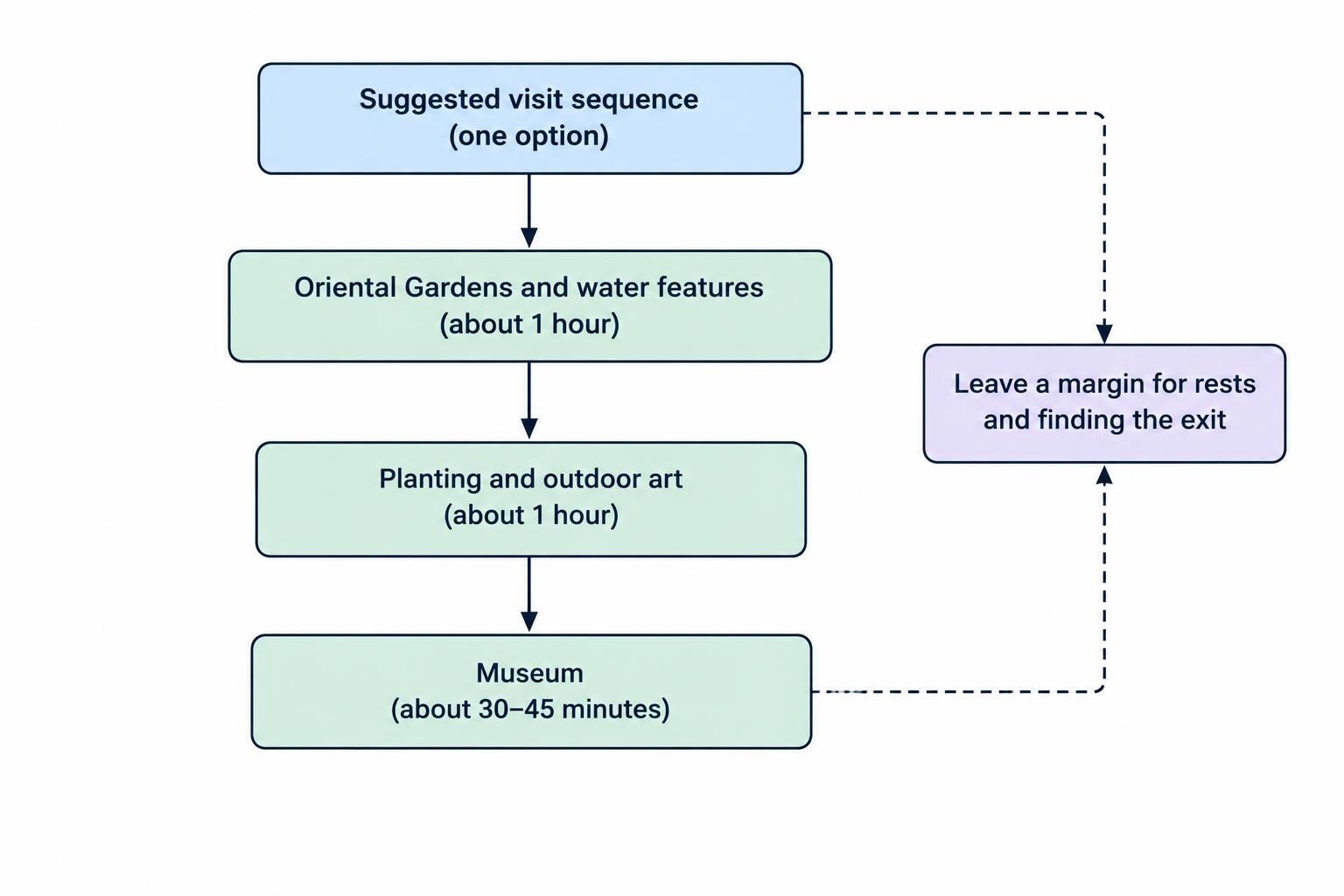
Adjust that order to your arrival time. On a morning visit, either the museum or garden can come first. Later in the afternoon, protect the museum time before walking farther into the grounds.
Ask staff about the best route back to your intended exit before descending. Do not assume that a path which looks convenient on a map will suit your mobility or transport arrangements. For the surrounding attractions, use the guide to visiting Monte rather than squeezing every nearby stop into the garden visit.
Accessibility, Children and Refreshment Stops
Monte Palace is a historic hillside property, not a fully step-free garden. Sloping terrain can present difficulties for visitors with reduced mobility. A paid trolley service is listed between the central lake and the Caminho das Babosas entrance, but confirm availability and suitability before relying on it. The official visitor FAQ also covers accessible toilets, stroller storage and facilities.
If you use a wheelchair or have difficulty with steps, contact the garden before buying tickets. Ask which sections you can reach, how you would return, and whether the available assistance meets your needs. Getting to the entrance and moving around the grounds are separate questions.
For children, choose a few interests rather than a complete circuit. Fish, birds, bridges and the mineral displays can give the visit structure. Keep younger children close around steps and water, and shorten the route before everyone becomes tired.
Refreshment options include Greenhouse and Bluehouse Café. Admission includes the garden and museum, but leaving and re-entering is not permitted. Plan any outside meal around that restriction rather than expecting to return on the same ticket.
When to Visit and What to Bring
A morning arrival leaves the most room to change your pace. It also avoids making the entire visit depend on the last available admission or return transport. Choose your day using the forecast, but do not make sunshine a requirement: plants, tiles and indoor collections remain the purpose of the visit.
Wear comfortable shoes with reliable grip and bring a light waterproof layer. Carry water, sun protection and only what you want to take up and down the slopes. For a wider holiday packing plan, the Madeira packing guide covers clothing for different activities.
If conditions deteriorate, shorten the outdoor route instead of trying to finish it at all costs. A planned café or museum stop is useful, but it should not be mistaken for a guarantee that every part of a wet-weather visit will be comfortable.
Combining the Garden With the Rest of Monte
Keep the garden as the main event for a half-day outing. Add another Monte activity only after allowing for transport, walking and a break.
If you intend to take the wicker toboggan ride afterward, it finishes at Livramento rather than the central waterfront. The Carreiros do Monte route information confirms that endpoint. Arrange the remaining journey separately; the ride is an attraction, not a complete return transfer.
Monte Palace works best when given room in the schedule. Choose a manageable route, protect time for the museum, and know how you are getting back. Those decisions matter more than trying to photograph every bridge or reach every corner of the grounds.