Madeira wine’s four classic names form a useful sweetness scale: Sercial is dry, Verdelho is medium dry, Bual is medium sweet, and Malvasia is sweet. Bual also appears as Boal, while Malvasia is often labelled Malmsey. Those alternative spellings do not add two more styles to learn.
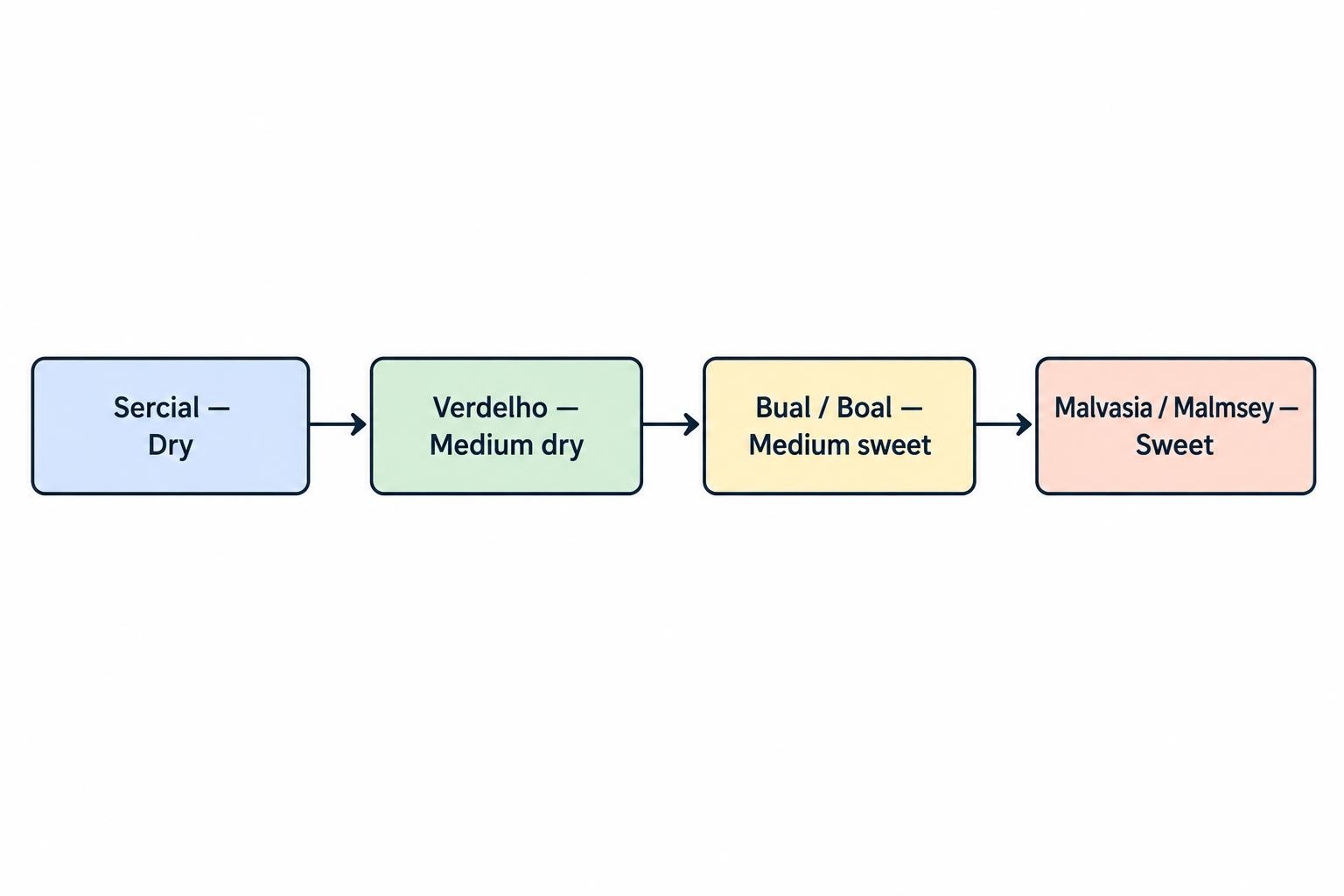
The sequence helps you choose a bottle, but sweetness is only part of the decision. Acidity, texture and ageing affect whether a wine feels brisk, rounded or rich. The Madeira Tourism Board’s overview of the four styles provides the basic order; the practical task is finding where your own taste sits along it.
Madeira Wine Styles Compared
| Style | Other label name | Usual sweetness | Starting point for choosing |
|---|---|---|---|
| Sercial | Sercial | Dry | An aperitif or a glass with savoury snacks |
| Verdelho | Verdelho | Medium dry | A little more roundness without moving into dessert wine |
| Bual | Boal | Medium sweet | A bridge between savoury food and dessert |
| Malvasia | Malmsey | Sweet | A richer glass for dessert or drinking on its own |
Read this as a buying guide, not a quality ranking. Sercial is not more sophisticated because it is drier, and Malvasia is not better because it is richer. Start with the occasion and the flavours you enjoy, rather than treating sweetness as something to graduate out of.
What Creates the Difference in Sweetness?
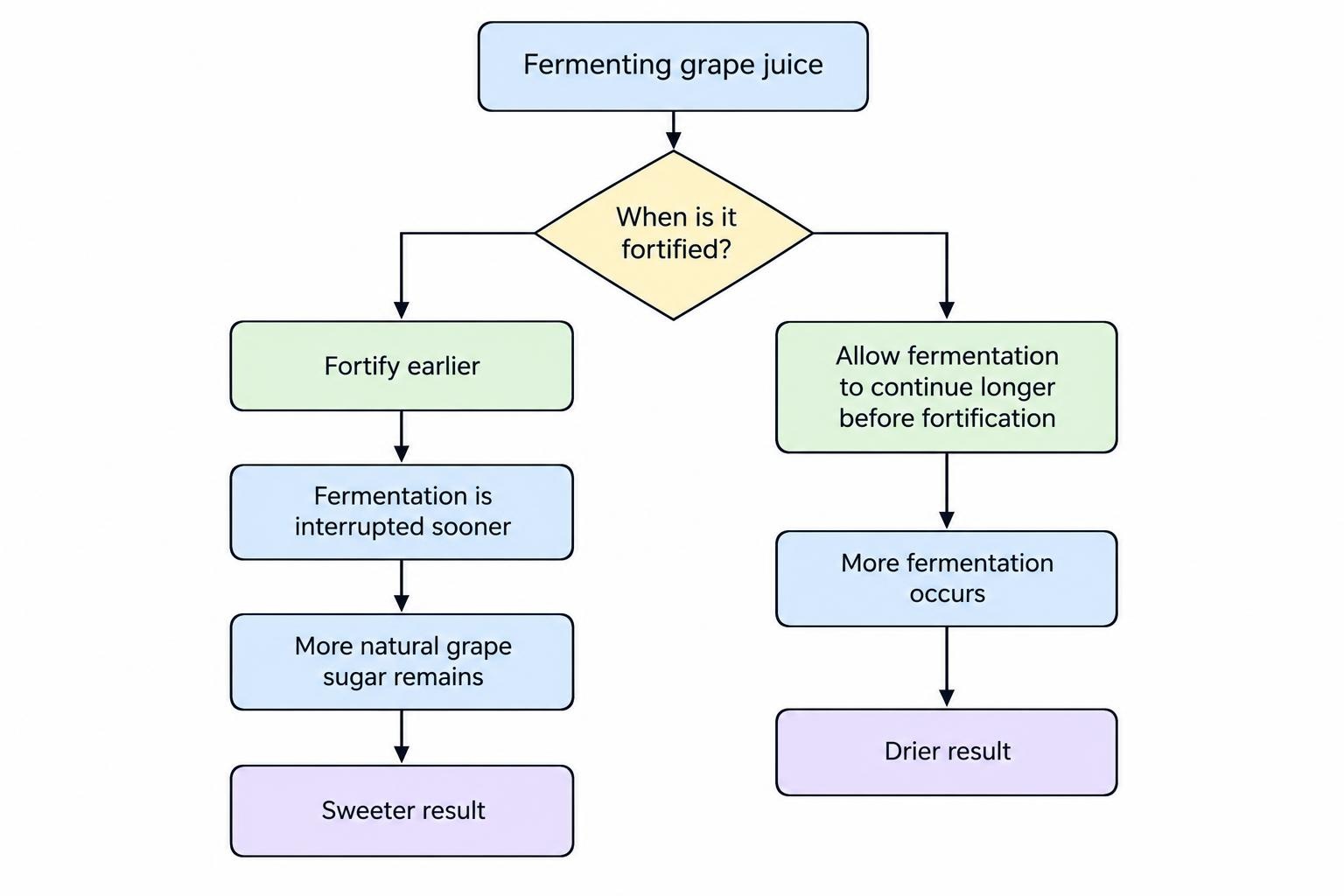
Madeira is fortified wine. During production, the timing of fortification helps determine how much natural grape sugar remains. Adding grape spirit interrupts fermentation; stopping it earlier preserves more sugar, while allowing fermentation to continue produces a drier result. The IVBAM explanation of Madeira vinification and ageing sets out this relationship between fermentation, fortification and the finished style.
Ageing then changes the wine’s character. Madeira develops through heating and oxidative maturation, using processes known as estufagem or canteiro. These help explain why its aromas differ from those of a young, fresh table wine. They do not, however, replace the sweetness description on the label.
When tasting, separate three questions: how sweet is the first impression, how full does the wine feel, and how fresh is the finish? A rich opening does not necessarily mean a heavy finish. Equally, a wine labelled dry need not feel as austere as you expected.
Sercial: The Dry, Brisk Starting Point
Sercial occupies the dry end of the classic Madeira sequence. It is a useful first choice when you want an aperitif rather than a dessert drink. Portugal’s national tourism board identifies Sercial as a light, aromatic style suited to drinking before a meal, alongside the progressively richer Verdelho, Boal and Malvasia styles.
For a first tasting, give Sercial a fair setting. Try it before the sweeter wines, and take a small sip before introducing food. Then compare it with a salted almond or another simple savoury bite. This makes it easier to judge whether you enjoy its drier balance, rather than judging it against the lingering sweetness of a previous glass.
If your usual wine order is dry, Sercial is a sensible starting point, though it is not a direct substitute for dry white table wine. Approach it as Madeira in its own right.
Choose Sercial when the purpose is to sharpen an appetite, accompany a few snacks, or compare the dry and sweet ends of a tasting. If it feels too stern, try Verdelho next rather than abandoning the category.
Verdelho: Medium Dry With More Roundness
Verdelho sits between Sercial and Bual. Its medium dry position makes it worth trying when you want some sweetness but do not want the glass to belong firmly with dessert. In a comparison tasting, pay attention to the change in texture as well as the change in sweetness.
Food is a useful way to test that middle ground. Barbeito’s Madeira food pairing chart places its 10 year old Verdelho alongside aperitif snacks, game terrine and sushi or sashimi. These are suggestions for that producer’s wine, not fixed rules for every Verdelho, but they show why this style deserves consideration beyond the end of a meal.
For your own comparison, use one savoury dish and keep the preparation straightforward. A heavily sweet sauce makes the exercise less revealing.
Verdelho is a practical candidate for someone who finds Sercial too dry and Malvasia too sweet. Ask to taste it beside Bual if possible: the contrast helps establish whether you prefer restrained sweetness or a more generous glass.
Bual or Boal: Medium Sweet and Rounded
Bual and Boal are alternative names, not different sweetness categories. IVBAM’s grape variety and synonym table lists both as names used for Malvasia Fina in Madeira wine labelling. Despite that botanical name, Bual should not be confused with the Malvasia or Malmsey style farther along the sweetness scale.
Bual is the medium sweet choice. It makes sense when you want more richness than Verdelho offers but still want to compare a wine with the sweetest style before buying. Describing it as a compromise does it a disservice; medium sweet may be exactly the balance you prefer.
During a tasting, compare Bual and Malvasia without food first. Notice where sweetness appears, how long it remains, and whether either wine leaves you wanting another sip. Then repeat the comparison with a small piece of cheese or a nut based dessert.
For a first purchase, think about how you will use the bottle. If you want something for a cheese course and occasional dessert, put Bual on the shortlist. If you want the richest end of the classic range, compare it directly with Malvasia instead of assuming the two are interchangeable.
Malvasia or Malmsey: The Sweetest Classic Style
Malvasia, often called Malmsey, completes the sequence at the sweet end. The naming equivalence and traditional sweetness order appear in Henriques & Henriques’ explanation of Madeira’s classic grape styles. Seeing “Malmsey” on one bottle and “Malvasia” on another is not, by itself, a reason to expect different sweetness levels.
Choose this style because you enjoy sweetness, not because you assume Madeira must be served after dinner. If you are buying for someone else, establish that preference before spending more on an older bottle. An impressive label cannot fix a mismatch in taste.
For dessert, start with a modest portion and compare the wine both before and after a bite. A very sugary dessert can make it harder to judge the wine on its own terms. You may prefer the glass without an accompaniment.
If Malvasia feels too rich, step back to Bual. If you enjoy its sweetness but want to examine differences within the style, compare two Malvasias with the same age indication. That is a more useful next exercise than jumping between sweetness levels, producers and ages at once.
Reading the Label: Sweetness and Age Are Separate
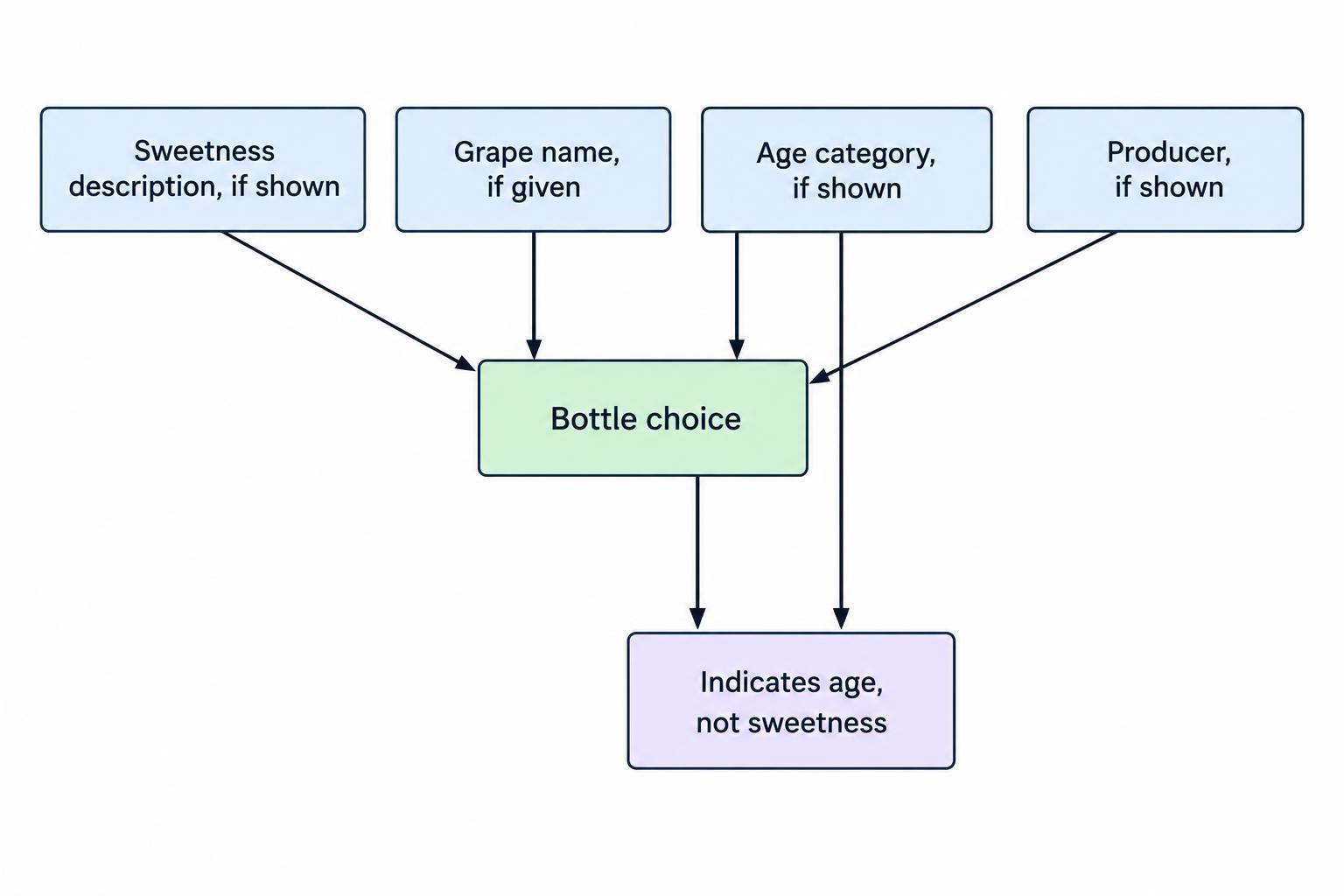
A grape name, a sweetness description and an age indication answer different questions. “Verdelho” points you toward the traditional medium dry style. “10 years old” identifies an age category; it does not tell you whether the wine is dry or sweet.
The IVBAM guide to Madeira wine types and categories separates age indicated blends from wines carrying a harvest date, and lists the Portuguese sweetness terms: seco, meio seco, meio doce and doce. It also includes extra seco, or extra dry.
Those words are particularly useful when a bottle does not prominently display one of the four grape names. Read the sweetness description rather than guessing from the colour, bottle shape or price.
Be careful with “dry”, too. IVBAM’s published sugar ranges are indicative, and the dry and medium dry ranges overlap. Treat them as guidance within Madeira rather than applying expectations from another wine category.
A useful label reading order is sweetness, grape name if given, age category, then producer. This keeps the buying decision focused on what you want to drink. An older sweet wine remains the wrong choice if your preference is for a drier style.
How to Compare All Four Styles
For an introductory tasting, ask for Sercial, Verdelho, Bual and Malvasia in that order. Where possible, choose wines from one producer with the same age indication. This reduces the number of differences you are trying to assess, although it will not make the wines identical apart from sweetness.
Keep notes short. Record your response to sweetness, texture and finish, then add the occasion when you would choose that glass. “Would order before dinner” is more useful buying information than a long aroma list you cannot recognise again.
Taste each wine on its own before adding food. Keep water available, use small samples, and leave room to revisit a favourite. You do not need to finish every pour to make the comparison worthwhile.
Before booking, check which wines the tasting actually includes. A flight described as “four Madeiras” may not mean these four grape named styles. Ask about the lineup and age categories, especially if the purpose is to choose a bottle to take home.
The wider Madeira wine guide covers tastings and wine experiences; use this style comparison to decide what you want to request once there.
Choosing Food Without Making It Complicated
Use food pairings as a starting proposal, not a test with a correct answer. Begin with the broad division between savoury snacks and dessert, then adjust for the bottle in front of you. There is little value in defending a traditional match that you do not enjoy.
For a simple home tasting, prepare one savoury bite, one cheese and one modestly sweet dessert. Try each with more than one style. This reveals your preferences more clearly than assigning every wine a separate dish and never comparing them.
If you are building a meal around local dishes, the guide to traditional Madeira food offers a broader menu starting point. Consider the complete preparation, including sauces and accompaniments, rather than matching the wine to an ingredient name alone.
Keep the serving approach consistent during comparisons. Use similar glasses and follow the producer’s temperature guidance for each bottle. If you change glassware, temperature and food at the same time, deciding what improved the experience becomes guesswork.
Which Madeira Style Should You Buy First?
Buy for the occasion you actually have. Shortlist Sercial for an aperitif, Verdelho for a less sweet middle ground, Bual for medium sweet drinking, and Malvasia for the richest classic choice. If you can taste before buying, let that comparison overrule assumptions about what you ought to prefer.
For two bottles, choose a deliberate contrast. Sercial and Malvasia show the ends of the sequence; Verdelho and Bual let you examine the middle. Neither pair is inherently better. The useful pair is the one that answers your buying question.
Once you know your preferred sweetness, compare ages and producers within that style. This keeps each purchase purposeful rather than turning the wine shelf into an expensive guessing game.
For planning beyond the bottle, the Madeira food and drink guide connects wine with the rest of the island’s eating and drinking experiences. Start with the style you enjoy, then build from there.