A seven night trip to Madeira is worth budgeting at around €650–950 per person for a careful budget stay, €1,100–1,650 for a comfortable midrange trip, or €2,000–3,100 or more for an upscale holiday, excluding flights. These estimates assume two adults sharing accommodation and splitting transport costs.
The biggest decisions are your room, how often you eat out, and whether you rent a car. The figures below are planning allowances, not surveyed averages or live booking quotes. Published admission charges and transport fares are identified separately, using official information available in October 2026. All amounts are in euros.
Madeira Trip Costs at a Glance
Use these ranges to choose a spending level before searching for flights and accommodation. Each includes lodging, meals, local transport, some paid activities, an allowance for tourist tax, and a modest contingency.
| Travel style | Planning budget | What the budget assumes |
|---|---|---|
| Careful budget | €650–950 | A simple shared room or apartment, some self catering, buses, and selective paid outings |
| Comfortable midrange | €1,100–1,650 | A comfortable shared room, regular restaurant meals, several rental car days, and paid attractions |
| Upscale | €2,000–3,100+ | A higher priced hotel, more restaurant spending, private transport, and additional excursions |
These are complete spending envelopes, not promises that every combination will fit. Choose an expensive hotel and private tours every day, and the accommodation category alone will not describe your trip very well.
How Much Should You Allow for Flights?
Keep airfare outside your island budget until you have a bookable quote. Your departure airport, dates, baggage, and connection arrangements can change the total enough to make a broad flight “average” unhelpful.
For an initial spreadsheet, you could test a return airfare allowance of €250 per person from a European departure point or €900 from the United States. These are example inputs, not current fare estimates. Replace them before making any booking decisions.
Compare the amount payable after adding luggage and any seat selection you need. If an itinerary requires an overnight connection, include the hotel, meals, and airport transfers. A cheaper ticket can become the more expensive trip before you even reach Madeira.
Check several departure dates rather than treating a whole month as cheap or expensive. The guide to the best time to visit Madeira helps you weigh timing against the kind of holiday you want, rather than choosing on airfare alone.
Accommodation: Budget by Room, Not by Person
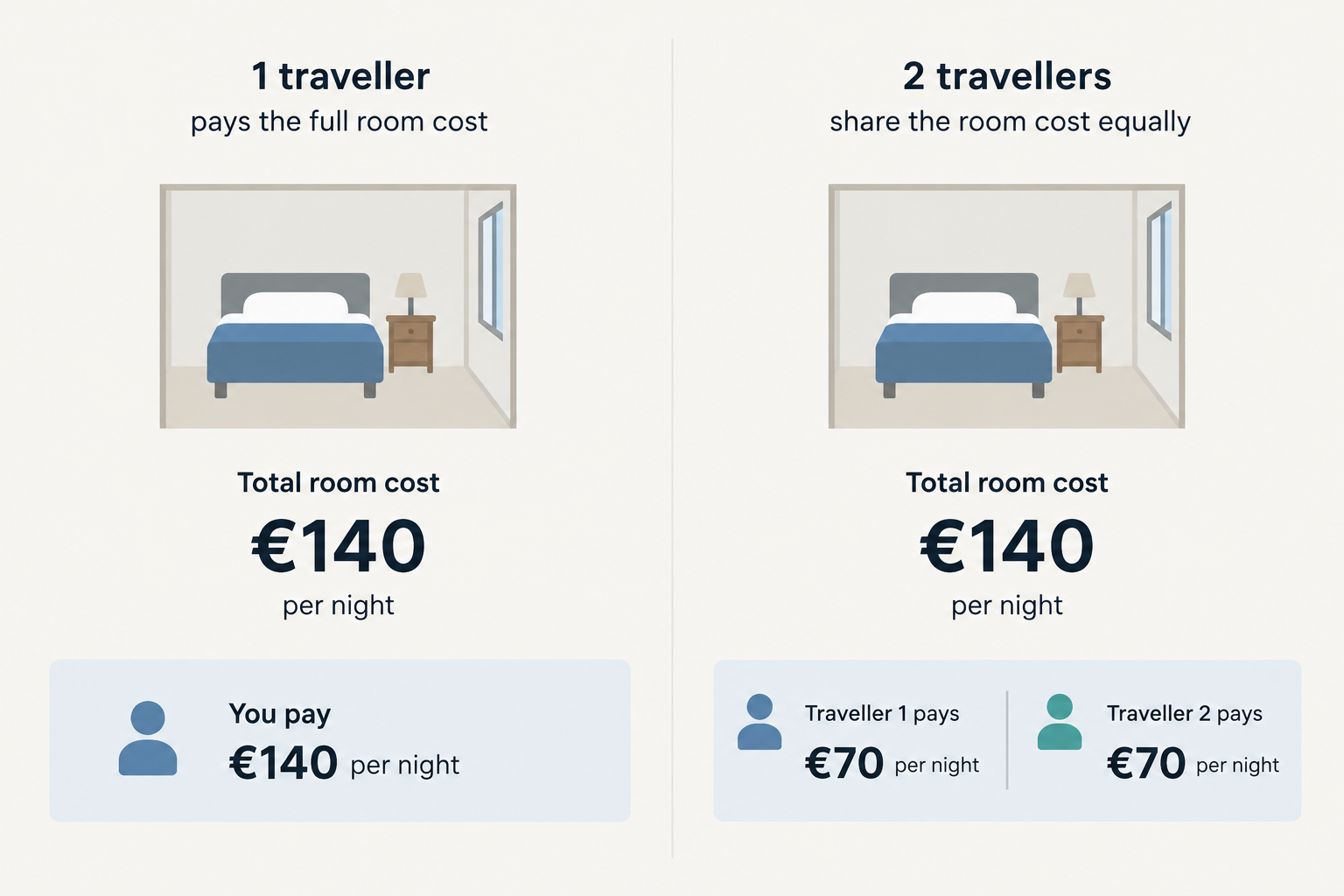
Accommodation is the first large expense to price properly. A €140 room shared by two people costs €70 each per night. For someone travelling alone, that same room absorbs €140 of the daily budget.
When searching, try nightly spending caps of €70–110 for a simple private room or apartment, €120–190 for a comfortable midrange room, and €230–350 or more for an upscale property. These are suggested search allowances per room for two people, before any separately charged tourist tax. They are not claims about availability on your dates.
Compare the final stay total, including cleaning charges, breakfast, parking, and cancellation terms. An apartment can suit a food budget, but only if you will use its kitchen. A kitchen that stores two bottles of water is not saving much.
Location also belongs in the calculation. Before accepting a cheaper room, price the journeys you expect to make from it. Use the Madeira accommodation area guide to compare bases, then judge the room and transport bill together.
Allow for Tourist Tax
For a 2026 stay in Funchal, the municipal tourist tax is €2 per liable guest per night, charged for up to seven consecutive nights. Children aged 12 and under are exempt. Two adults staying seven nights should therefore allow €28, unless another exemption applies. The charge and exemptions are set out in Funchal’s tourist tax regulation. Confirm whether your accommodation total already includes it.
There is a change to watch for later bookings: a public consultation published on October 8, 2026 proposes raising Funchal’s charge to €4, with the proposed overnight rules taking effect on January 1, 2027. As of October 19, 2026, this remains a proposal. Check the final position for a 2027 stay, and do not assume another municipality has identical rules.
Food and Drink Costs
For planning, set aside around €25–35 per person per day if you will combine groceries, simple meals, and occasional restaurant visits. An allowance of €40–60 gives more room for eating out regularly, drinks, and less attention to every menu price.
Those figures describe spending choices rather than measured restaurant averages. A €35 day might allocate €7 to breakfast, €11 to lunch, and €17 to dinner. If your chosen dinner menu already exceeds that allowance, adjust the budget rather than hoping lunch will somehow disappear.
Check what is included before comparing dishes or set menus. Drinks, starters, desserts, and anything offered separately should have a place in the calculation. The relevant number is the expected bill, not the cheapest main course printed outside.
For a seven night trip, shopping for breakfast and a few packed lunches is a straightforward way to control spending without making every evening a cooking assignment. Decide which meals matter most to you and spend there. There is little value in booking a memorable restaurant, then spending the meal worrying about the bill.
Transport: Buses, Rental Cars, and Transfers
Public Transport Costs
The published 2026 adult onboard fares are €2.05 for municipal buses and €2.65 for intermunicipal buses. Prepaid fares are €1.45 and €2 respectively. The Aerobus onboard adult fare is €6.70 each way. These amounts appear in the regional transport tariff published in March 2026. Check which ticket covers your journey before buying.
A bus based budget needs a separate allowance for any hiking transfers or excursions you intend to book. Do not price a remote outing using bus fares until you have checked both the outward journey and the return. The seven day Madeira itinerary without a car is a useful starting point for building a workable schedule before assigning transport costs.
The Full Cost of Renting a Car
For a first draft budget, try an allowance of €35–60 per rental day for a small car, then replace it with a quote for your dates and required transmission. This is a planning range, not a current advertised rate.
Compare quotes on the same basis. Review the excess, any additional cover you want, deposit requirements, extra driver charges, collection arrangements, and fuel terms. Keep fuel and parking outside the headline rental figure so they do not vanish from the spreadsheet.
For example, four days at €45 costs €180 before extras. Add an illustrative €80 for selected cover or other rental charges and €60 for fuel and parking, and your transport allowance becomes €320. Split between two adults, that is €160 each.
A refundable deposit is different from a trip expense: it affects the funds or card capacity you need available, even if it is returned. The Madeira car rental guide covers the booking decisions in more detail.
Activities and Hiking Fees
Separate admission charges from the cost of getting somewhere. A modest trail fee does not make an outing inexpensive if it also requires a private transfer.
For visitors paying the standard 2026 rate, an individual classified walking route managed by IFCN generally costs €4.50, excluding the full PR1 tariff of €10.50. The shorter PR1 visit to Pedra Rija and back is €4.50. Check the IFCN hiking fee and reservation rules before booking. Fees do not establish that a route is open, and transport must be arranged separately.
Budget each planned walk as a complete outing: access charge, transport, food, and any guide. Ask whether a guided excursion includes the trail fee before adding it again.
For a priced attraction example, Monte Palace Tropical Garden’s published admission is €18 for adults, with free entry for children up to 14 when accompanied by an adult. Travel to Monte is a separate budget item.
Until you obtain operator quotes, reserve perhaps €60–90 per person for one boat trip or guided excursion you want to include. Treat that as a placeholder. Choose the activity first, check its actual price and inclusions, then revise the total.
A Worked Seven Night Budget for Two Adults
This example uses a shared room, four rental car days, seven daily food allowances, and a separate airport transfer allowance. It is constructed arithmetic, not a package offer. The contingency also leaves room for arrival or departure day spending.
| Expense | Calculation or allowance | Total |
|---|---|---|
| Accommodation | 7 nights × €140 | €980 |
| Food and drink | 7 days × €75 for two | €525 |
| Car rental | 4 days × €45 | €180 |
| Rental extras | Illustrative allowance | €80 |
| Fuel and parking | Illustrative allowance | €60 |
| Airport transfers | Illustrative allowance; obtain a quote | €70 |
| Activities and admissions | Combined allowance for two | €170 |
| Funchal tourist tax | 2 adults × 7 nights × €2 | €28 |
| Subtotal | Before flights and contingency | €2,093 |
| Contingency | Rounded reserve | €207 |
| Total excluding flights | €1,150 per person | €2,300 |
Add your actual return airfare to €1,150 per person. Using the earlier hypothetical €900 flight allowance produces a trip total of €2,050 each, or €4,100 for two.
Adjust the lines rather than adding another vague daily allowance on top. If your rental includes airport collection and return, remove any transfers it replaces. If breakfast is included, revise the food budget. Counting the same expense twice is safe, but not especially informative.
Adjusting the Budget for Solo and Family Travel
Solo travellers should price accommodation before adopting the per person totals above. A €140 room costs one traveller €980 for seven nights, compared with €490 each when shared. A cheaper room or hostel bed can change that calculation, but use an available quote rather than simply halving the couple’s budget.
Families should compare the complete room arrangement: one family room, an apartment, or two separate rooms. Then add transport capacity, child seats if needed, and admission charges by age. Do not assume every attraction uses the same child cutoff.
For groups, shared accommodation and transport can spread fixed costs, but only if the property and vehicle fit everyone comfortably. Check capacity before dividing the price.
How to Keep the Total Under Control
Make the large decisions before trimming small purchases. Reducing a room allowance by €30 per night saves €210 over seven nights. Skipping one €4 coffee a day saves €28. Both count, but they do not deserve equal time in the planning process.
Book transport around the itinerary rather than keeping a rental car automatically for the whole stay. Compare accommodation using its final payable total. Choose a few paid activities you genuinely want, and leave room in the budget for changes rather than scheduling every euro.
The most useful final check is simple: accommodation plus food, transport, activities, taxes, and airfare, followed by a reserve of around 10%. Build those choices alongside the wider Madeira travel guide. A budget works best when it pays for the trip you want, not a cheaper trip you would rather not take.