Madeira suits travelers who want coastal towns, mountain walks, gardens and good food in the same trip. The planning challenge is not finding enough to do. It is choosing a sensible base, arranging transport and leaving room to change plans when the weather does.
For a first visit, allow around a week if possible. Stay in Funchal for convenience, or choose a smaller coastal town if quieter evenings matter more. Build your days around one main outing rather than a string of stops scattered across the island.
What Kind of Holiday Does Madeira Offer?
Madeira is a Portuguese island in the Atlantic, off northwest Africa. Funchal, its capital, sits on the south coast. Beyond the city, steep valleys, high ridges and coastal settlements make the island feel much larger than its map suggests.
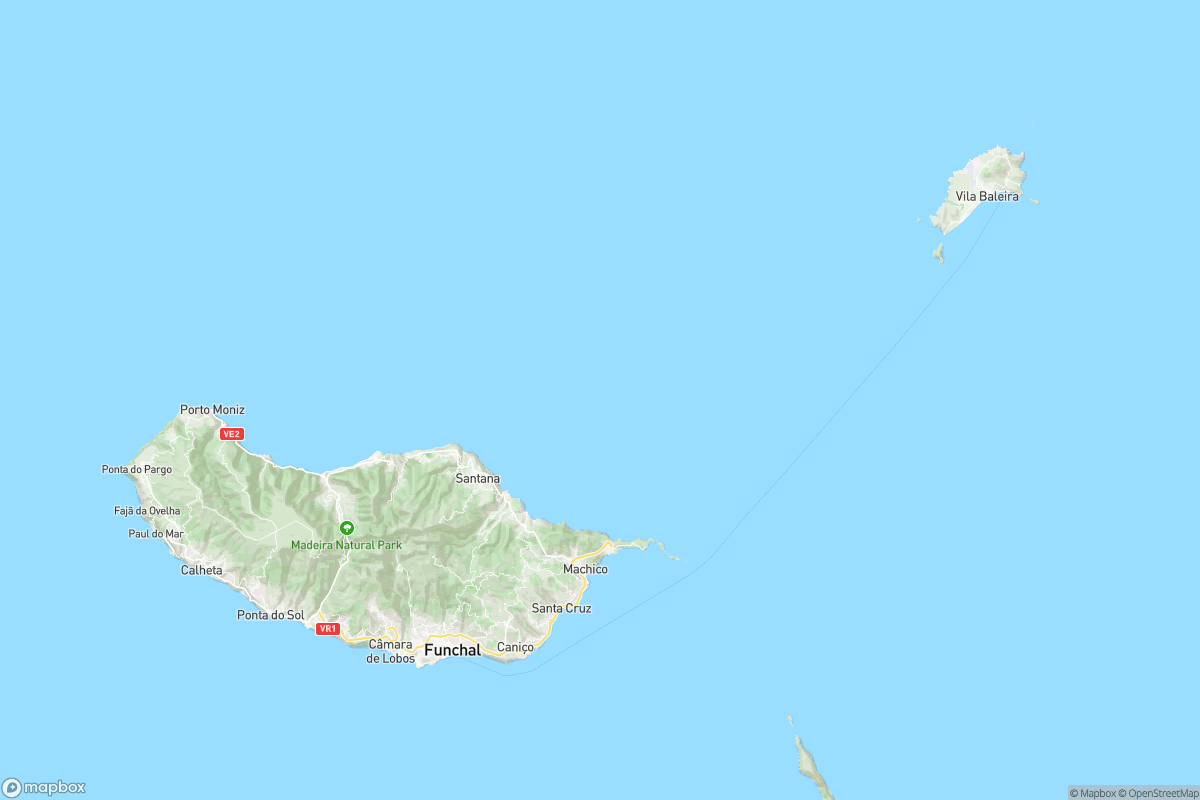
This is a good destination for mixing active days with slower ones. You might spend a morning walking, another visiting gardens, and an afternoon swimming or sitting outside over lunch. You do not need to be a serious hiker to enjoy Madeira, although choosing outings that match your mobility and comfort with heights matters.
It is less suited to a holiday built entirely around long sandy beaches. Madeira has swimming areas, pebble shores and some sandy beaches, but beach choice should influence where you stay rather than become an afterthought.
When to Visit Madeira
Madeira has a mild climate, but conditions vary sharply between the coast and higher ground. Sunshine in Funchal does not establish what is happening on a mountain trail. The south is generally warmer and drier than the north and the uplands; the Madeira Tourism Board’s weather information covers these regional differences.
For a trip combining walking, sightseeing and outdoor meals, consider spring or early autumn. Choose summer if swimming and longer daylight hours are priorities. Winter can work well for a slower city and coastal break, provided you accept that outdoor plans may need rearranging.
There is no month that guarantees clear summits or calm seas. Keep your most weather-dependent activity movable, with a garden, museum or town visit available as an alternative. The guide to the best time to visit Madeira compares the seasons in more detail.
How Many Days Do You Need?
Three days can provide a worthwhile introduction, but they call for restraint. Give Funchal proper time, then choose one or two outings outside the city. Trying to cover every coast usually produces more driving than sightseeing.
Seven days is a sensible starting point for a first holiday. It allows time for Funchal, different parts of the coast, a walk or two, and a spare day for weather changes. Ten days gives you room for longer walks, slower lunches or a second accommodation base.
Count usable days, not just nights. A late arrival and an early departure can remove much of the apparent time available. Use the Madeira itineraries to turn your trip length into a workable route without filling every hour.
Where to Stay in Madeira
Choose accommodation after deciding how you will travel. A remote property may suit a driving holiday, but become awkward if every dinner or excursion requires a taxi. Without a car, central Funchal is a practical starting point.
| Area | Consider it for | Check before booking |
|---|---|---|
| Central Funchal | City sightseeing, restaurants and a trip without driving | Street noise, steps and the walk to transport |
| Funchal’s Lido area | A hotel-focused stay with time by the sea | Travel time to the old town and excursion pickup points |
| Calheta or Ponta do Sol | A smaller coastal base and a holiday with a car | Parking, gradients and access to everyday meals |
| North coast | Time around northern towns, coastal scenery and nearby walks | Driving distances for the rest of your planned outings |
Look beyond the balcony photograph. Check the property’s exact road access, parking arrangements, lift access and walking route to restaurants. A sea view does not guarantee a level walk home.
For most week-long trips, one base is sufficient. Consider splitting your stay only if it supports the holiday you want, rather than saving a few minutes on paper. The Madeira accommodation area guide compares the main bases and their trade-offs.
Arriving in Madeira
When comparing flights, consider the complete journey: connections, baggage, arrival time and transport to your accommodation. A cheaper ticket may be less appealing if it adds a long connection or leaves you arranging a late transfer.
Madeira follows Portuguese entry requirements. These depend on your nationality and travel circumstances. U.S. passport holders should review passport validity, permitted stays and entry conditions in the U.S. State Department’s Portugal travel guidance before booking.
From the airport, options include the Aerobus, taxis and prearranged transfers. Check your accommodation against the actual bus stops rather than assuming every Funchal hotel is served directly. The Madeira Airport ground transport information provides the bus and taxi details.
Do You Need to Rent a Car?
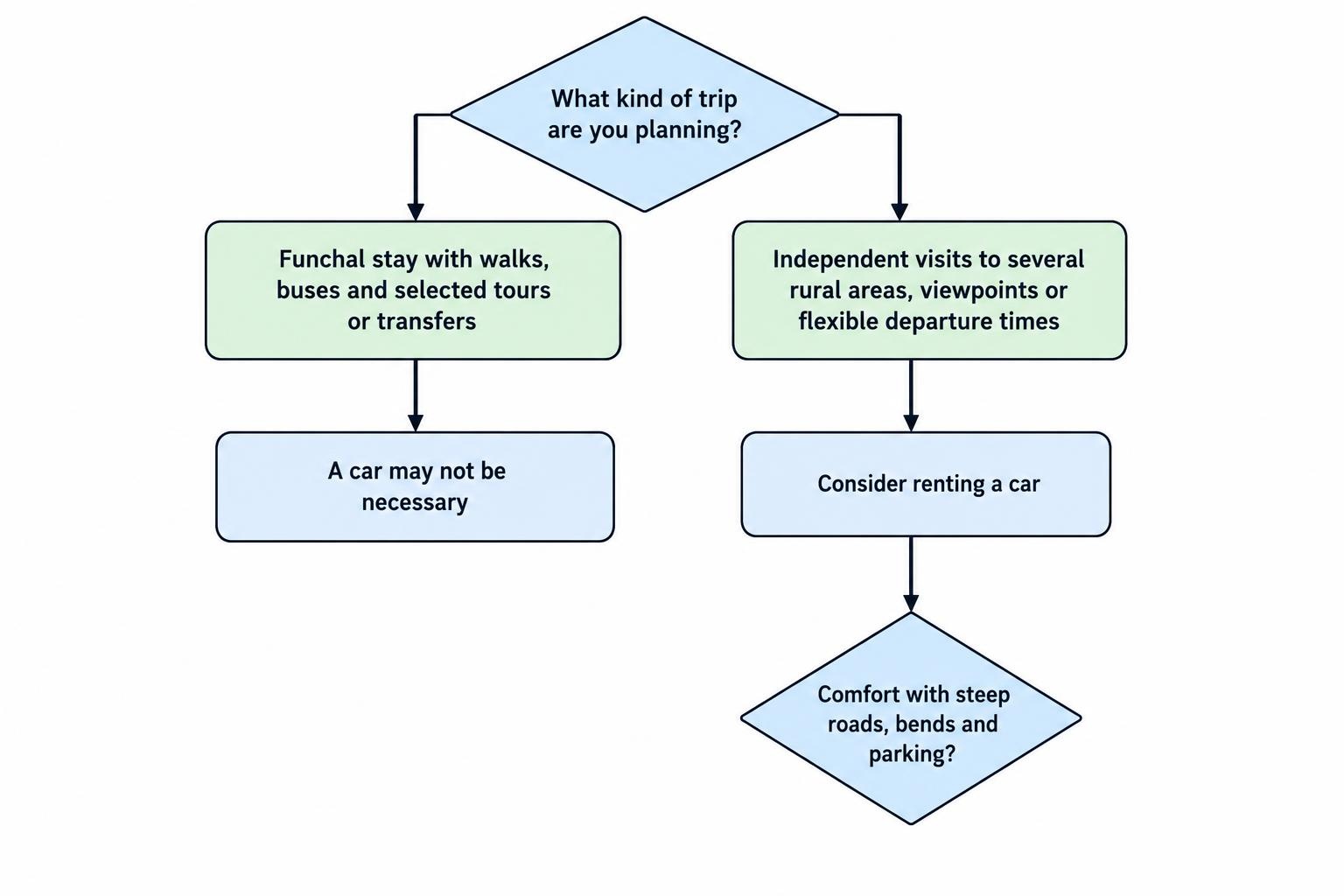
A car is useful when you want to visit several rural areas independently, stop at viewpoints or set your own departure times. It is not compulsory for a good holiday. A Funchal stay combining walking, buses and selected tours or transfers can work well.
The choice depends as much on confidence as convenience. Before renting, consider whether you are comfortable with steep roads, bends and parking on slopes. Check the vehicle’s transmission, insurance terms and deposit requirements, and confirm that your accommodation has usable parking.
Public buses are worth considering for town visits, but assess both directions before committing to a day out. Do not assume a bus stop near a village also serves a distant trailhead. For walks that finish somewhere different from the start, arrange the return journey first.
A mixed approach can be sensible: spend your city days without a car, then hire one for a shorter block of regional outings. The guide to getting around Madeira compares driving, buses and arranged transport.
What to Prioritize on a First Visit
Give Funchal Time Beyond Arrival Day
Allow at least one substantial day for Funchal rather than treating it only as a place to sleep. Combine the old town and waterfront with a garden or museum, leaving time for lunch. Monte offers another focus for a separate half day, especially if gardens are high on your list.
A city day is also useful between longer outings. Putting a demanding walk immediately before another early start may look efficient, but leaves little room for tired legs or a change of plan.
Choose Walks by Terrain, Not Photographs
Levada walks follow irrigation channels, while coastal and mountain routes offer different terrain and exposure. A route with little climbing can still involve narrow paths, tunnels or uncomfortable drops. Distance alone does not tell you whether a walk will suit you.
For classified routes covered by the IFCN booking system, reserve the required entry slot through SIMplifica and pay any applicable fee before setting out. This system does not apply to every footpath on the island. Check the IFCN trail status, access notices and reservation information when planning and again before departure.
Do not build a holiday around an assumed open route between two famous peaks. Have an alternative that matches your ability, and respect closures even if an older itinerary shows the path as accessible. The Madeira hiking guide helps you choose suitable types of walk before studying individual routes.
Combine Coastal Stops Within One Region
Choose a section of coast for the day rather than repeatedly crossing the island. Around the northwest, you might combine Porto Moniz with time near Seixal, allowing for stops instead of treating the road as a transfer between photographs.
For sand, Seixal offers a black sand setting, while Machico and Calheta have imported sand beaches. The official Madeira sandy beach directory distinguishes the main options. At any swimming location, follow local flags, closures and lifeguard instructions rather than judging conditions from the weather alone.
What to Eat and Drink
Start with a few regional dishes rather than trying to order everything at one meal. Espetada is a beef skewer traditionally associated with bay laurel, while black scabbardfish and tuna feature in local cooking. Bolo do caco, usually served with garlic butter, is bread despite its cake-like name. Portugal’s official Madeira gastronomy guide covers these dishes and other regional specialties.
Madeira wine and poncha deserve separate attention. Poncha traditionally combines sugarcane spirit, honey and citrus; Madeira wine offers another reason to arrange a tasting rather than order without considering style.
If you plan to drink, arrange transport that does not depend on you driving afterward. For dietary requirements, ask about ingredients and preparation directly. A vegetarian-looking side dish is not a reliable substitute for checking how a meal is made.
How to Budget for a Madeira Trip
Build the budget around accommodation and transport before adding meals and activities. These choices interact: a lower room price can lose its appeal if the location creates extra transfers, parking costs or daily driving.
As a worked example, not a market average, allow €70 for your share of a room, €35 for food, €20 for transport and €15 for activities each day. That totals €140 per person, or €980 across seven days. These are chosen planning figures, not quoted prices; flights, insurance and other charges sit outside the example.
Replace each allowance with quotes for your own dates. Include accommodation taxes where applicable, rental extras, fuel, parking, trail fees and paid attractions. Leave some money unallocated so a changed plan does not become a problem.
The Madeira trip cost guide breaks the budget into categories. To reduce spending, compare the total cost of each accommodation and transport combination, not just the cheapest room.
What to Pack and Prepare
Pack for the activities and elevations you intend to visit, not only for the forecast beside your hotel. Bring comfortable walking shoes, a waterproof outer layer, something warm for higher ground, sun protection and swimwear if relevant.
For a walk, carry water, food, a charged phone and an offline route map. Bring a proper light if the route includes tunnels. Confirm your return transport before starting, and do not let a reservation pressure you into continuing in conditions beyond your ability.
Check travel insurance against your planned activities, including any restrictions on hiking or adventure sports. If access is a concern, ask accommodation and activity providers about steps, gradients and surfaces rather than relying on a broad accessibility label.
Use the Madeira packing list to adjust your luggage to the season and your plans. Reserve accommodation and essential transport first, then arrange activities with restricted availability. Leave the remaining days flexible enough to enjoy the island rather than manage a timetable.