The best things to do in Porto Santo combine beach time with volcanic scenery, hill walks and a few hours in Vila Baleira. Start with the long sandy shore, visit the rock columns at Pico de Ana Ferreira, and choose either a hike or a boat trip rather than trying to squeeze everything into one day.
This guide focuses on which attractions deserve your time and how to approach them. For accommodation and broader island planning, use the Porto Santo travel guide. The most useful planning rule is simple: leave enough space between activities to enjoy being here.
Spend Time on Porto Santo Beach
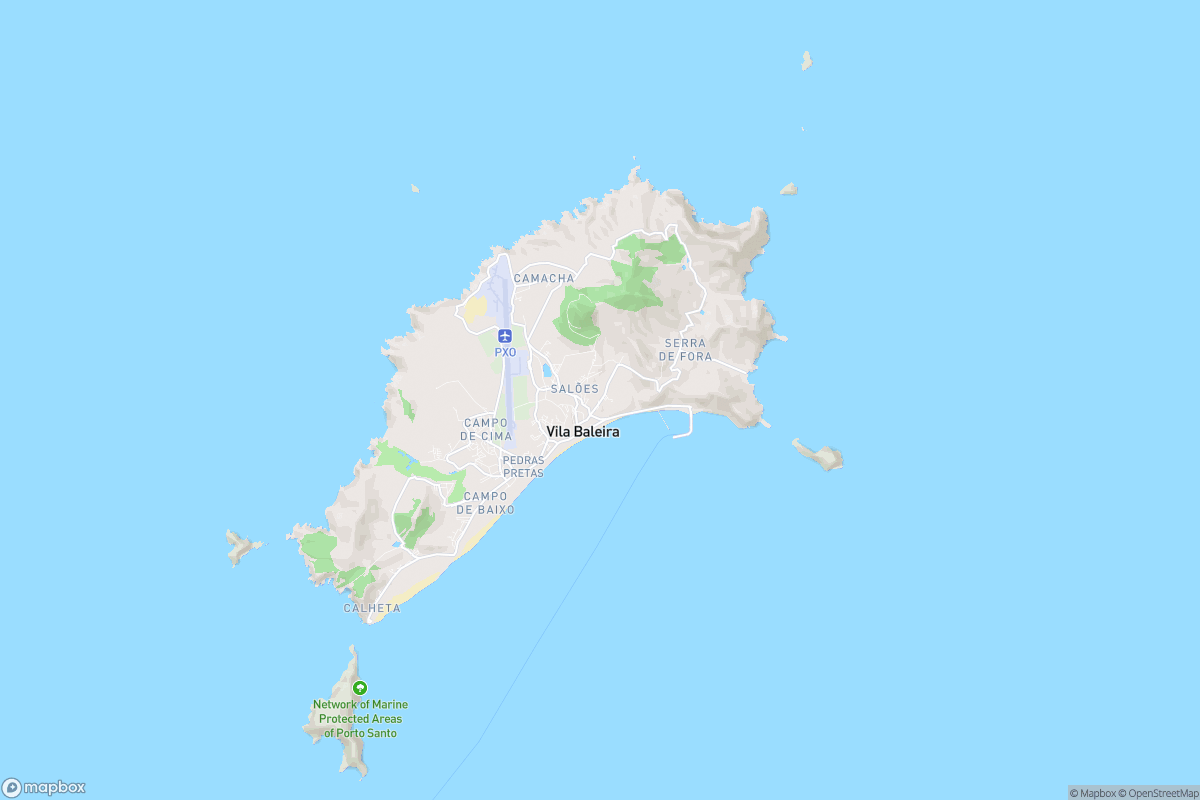
Porto Santo’s main beach stretches for approximately nine kilometers along the southern coast. Its named sections include Fontinha, Pedras Pretas, Cabeço da Ponta and Calheta. These are parts of the same long sandy shore rather than separate beaches requiring a complicated sightseeing circuit. The Madeira tourism board’s beach directory identifies the different sections and their facilities.
For a first visit, start around Fontinha near Vila Baleira. Combine a swim with lunch in town, then decide whether you want to walk farther along the sand. There is no need to cover the full beach to appreciate it. Nine kilometers of sand is an invitation, not an assignment.
Calheta, at the southwestern end, offers a different setting, with rock formations marking the end of the sandy coastline. Make it a separate stop if you would rather spend your time swimming and looking around than walking there and back.
Choose your swimming spot using the conditions you find that day. Follow beach flags and lifeguard instructions where provided, and do not assume that clear water means an easy swim. For families, convenient access and supervised bathing matter more than finding an empty stretch of sand.
Walk Around Vila Baleira
Vila Baleira is worth visiting even if your accommodation provides everything you need. The center brings together Largo do Pelourinho, the Infante gardens, the waterfront and the Church of Nossa Senhora da Piedade. Palm trees and bougainvillea soften the streets, while the church contains decorative tile panels worth seeing when it is open. These central sights feature in Visit Portugal’s Porto Santo overview.
Allow roughly an hour for an unhurried walk, excluding the museum or a meal. That is a suggested allowance, not a route you need to complete against the clock. Start around the square, look inside the church if access permits, then continue to the seafront.
This is also a sensible activity when you do not want another beach session. Rather than visiting town only to buy supplies, give it a proper place in your plans. A walk followed by dinner makes a useful contrast to a day spent on the sand.
Visit Casa Colombo Museum
Casa Colombo is the island’s main historical museum. Its exhibitions place Porto Santo within Portuguese maritime expansion and examine the island’s connection with Christopher Columbus. The building is traditionally identified as a residence of Columbus after his marriage to Filipa Moniz Perestrelo. That association should be treated as tradition, not presented as an established fact about every surviving room.
The museum has also expanded beyond a simple account of Columbus’s time on the island. The regional culture department’s Casa Colombo listing describes its broader collections and provides admission details and opening hours.
Combine the museum with your Vila Baleira walk rather than making a separate journey. Give yourself about an hour if you like reading exhibition material; a shorter visit may suit travelers whose main interest is the building and its historical context. Check the opening schedule before arranging your day around it.
See the Rock Columns at Pico de Ana Ferreira
Pico de Ana Ferreira offers one of Porto Santo’s most distinctive sights: a wall of closely packed rock columns exposed at a former quarry. The columns formed as molten rock cooled and contracted. Their regular shapes can look almost constructed, although the engineering department responsible was geological.
The municipality’s natural heritage guide describes the formation and the quarry that once operated here. You do not need specialist geological knowledge to appreciate the site. Look at the column shapes, their changing angles and the way the exposed face rises above the quarry floor.
Treat this primarily as a viewing stop, not an invitation to scramble over the formation. Wear shoes with grip, respect barriers and avoid standing beneath loose material or climbing the columns for photographs.
Allow around half an hour for the main formation, with extra time for photography. If your priority is seeing the columns, do not confuse that visit with reaching the hill’s highest point.
Compare the Views From Portela and Flores
Portela gives you a broad view across Porto Santo’s southern bay, with Vila Baleira and the beach below. It is a useful early stop because it puts the places you will visit into perspective. Flores offers another view from the western side of the island. Both appear in the regional tourism board’s Porto Santo attractions directory.
You do not need to visit every viewpoint. Choose Portela if you want the classic beach panorama, then add Flores if you are already spending time in the west. Repeating similar stops can consume the hours you meant to spend actually enjoying the coast.
For photographs, allow some flexibility rather than fixing both visits to a rigid schedule. If visibility is poor, postpone a viewpoint and use that time for the museum or lunch instead. Keep away from exposed edges and use established viewing areas.
Choose a Hike: Pico Branco or Pico do Castelo
Walking gives you a different view of Porto Santo, but choose a route deliberately. A marked trail is not the same proposition as a short roadside viewpoint stop, and distance alone does not tell you how comfortable you will find it.
Pico Branco and Terra Chã
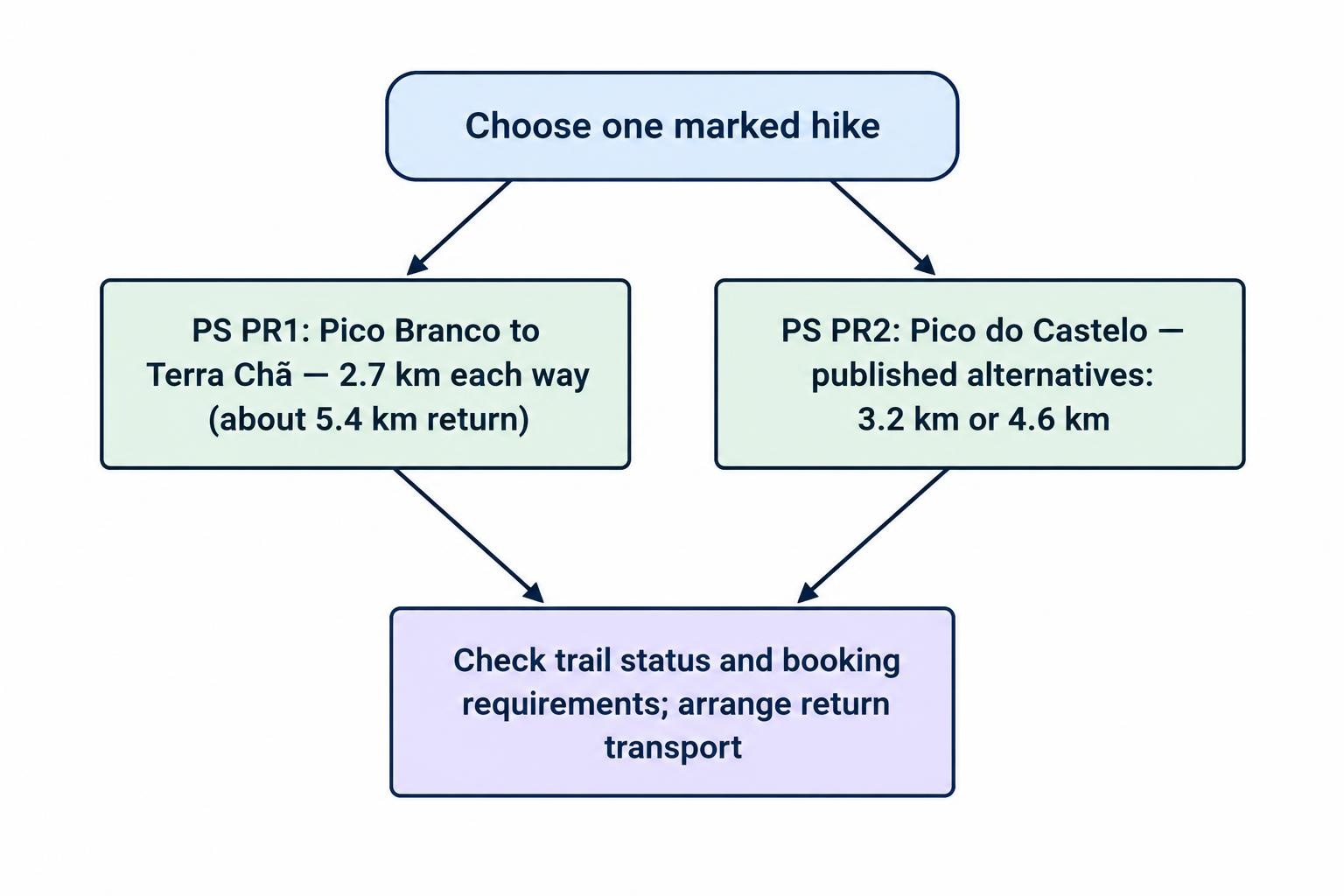
The classified PS PR1 route runs from ER111 through Pico Branco to Terra Chã. The published distance is 2.7 kilometers each way, making approximately 5.4 kilometers for the return walk. Choose it when walking is one of the main purposes of your visit, rather than an activity squeezed between several other stops.
Pico do Castelo
PS PR2, Vereda do Pico do Castelo, starts at Moledo and has published alternatives of 3.2 and 4.6 kilometers. Confirm your chosen route and return arrangements before starting; do not assume that a listed trail distance includes every walk you will need to make that day.
Check the IFCN trail status, booking requirements and fees before setting out. For 2026, the standard individual trail fee is €4.50 for visitors without an exemption, and reservations are made through SIMplifica. Check the conditions attached to your booking rather than relying on an older travel article.
Carry water, sun protection and suitable footwear. Arrange transport back from the walk before leaving, particularly if you are not driving. On a short visit, choose one hike and give it enough time.
Take a Boat Trip or Arrange a Dive
A boat outing is an alternative to another land excursion. Before booking, establish whether the trip is mainly coastal sightseeing, includes swimming stops, or follows another format. Similar promotional photographs can conceal quite different days out.
Ask about departure and return times, passenger numbers, shade and what happens if sea conditions force a change. If you have a ferry or flight later that day, explain that before paying. Leave room for delays rather than planning an offshore excursion right up to departure.
For divers, the wreck of the Madeirense is one of Porto Santo’s established attractions, lying south of the harbor. It features in Visit Portugal’s diving overview. Discuss your certification, recent experience and the proposed dive profile with the operator before booking.
If you have never dived, ask about a supervised introductory session rather than choosing a wreck excursion by name alone. For anyone who prefers to stay above water, a sightseeing boat trip can provide a change of perspective without making the day revolve around diving.
Visit Quinta das Palmeiras
Quinta das Palmeiras is a small botanical garden and mini zoo, offering a planted setting that contrasts with Porto Santo’s drier surroundings. It suits travelers who enjoy gardens and families looking for a shorter activity between beach sessions.
Approach it as a compact garden visit rather than a major wildlife attraction. That distinction helps set sensible expectations, particularly if children are choosing between this and a longer outdoor excursion.
Confirm opening hours and admission arrangements before making a separate journey. Allow time to wander rather than arriving immediately before closing, and follow the rules around animals and planted areas.
For a family day, pair the garden with an easy meal and beach time instead of adding a demanding hike as well. Fewer activities usually make room for the stops children actually want to linger over.
Try Local Food and Finish With a Lambeca
Make at least one meal part of your sightseeing rather than something fitted around it. Bolo do caco with garlic butter and espetada are useful starting points if you are new to the region’s cooking. The guide to traditional Madeira food covers dishes you may encounter across the archipelago.
Choose a restaurant around the meal you want, not just the nearest empty table. Ask what fish is available, check whether a quoted price is per portion or by weight, and order at a pace that suits your appetite.
For dessert, try a lambeca, the ice cream closely associated with Porto Santo. The ferry operator’s feature on Porto Santo’s lambeca tradition describes its mixed flavors and longstanding place in island life.
Leave this for a town visit when you are not rushing. A walk and an ice cream are perfectly respectable evening plans.
Choose Activities That Fit Your Visit
For a first visit, prioritize the beach, Vila Baleira and one contrasting activity. Choose Pico de Ana Ferreira for rock formations, Portela for the beach panorama, or a marked hike if walking is your main interest. You do not need to combine all three to have a worthwhile day.
With children, favor convenient beach access, short sightseeing stops and flexible meal times. For an active break, reserve a morning for a hike and another suitable window for a boat trip or dive. Treat those as the day’s main activities, not appointments between attractions.
Check transport arrangements before committing to several distant stops. The guide to reaching Porto Santo covers the arrival options; your time ashore should determine how ambitious the activity plan becomes.
If you are visiting from Madeira, decide whether you want a beach day or a broader introduction to the island. Trying to do both at full speed usually leaves neither enough time. The Porto Santo day trip versus overnight comparison helps with that choice.
Keep one part of the day uncommitted. Use it for another swim, a longer lunch or a stop you passed earlier. Porto Santo does not need a packed schedule to justify the visit.