Porto Santo suits a holiday built around the beach rather than a packed sightseeing schedule. The appeal is straightforward: long walks beside the sea, time in the water when conditions allow, and enough viewpoints and island history to give a beach break some variety.
It also makes a useful contrast to a busier Madeira itinerary. Spend your first days walking and sightseeing, then give Porto Santo two or three nights without trying to fill every hour. This Porto Santo travel guide covers when to go, how to arrive, where to stay and the practical choices worth making before you book.
Is Porto Santo right for your trip?
Choose Porto Santo if beach access matters more than having a different major attraction every morning. It works particularly well for couples wanting an unhurried break, families planning simple beach days, and travelers who would rather alternate swimming with a short outing than spend the holiday driving.
A short stay is the safer choice if you get restless without a full sightseeing program. Give yourself enough time to enjoy the beach, but avoid booking a week solely because the hotel looks good. Your preferred pace matters more than the number of places you can mark on a map.
If you are combining the islands, use the Madeira travel guide to plan the wider trip, then treat Porto Santo as a separate stay with its own transport arrangements.
When to visit Porto Santo
For a trip centered on beach time, June through September is a sensible starting point. Porto Santo’s average daily maximum temperature rises from about 23°C in June to 25.7°C in August, remaining around 25.4°C in September. January and February average daytime highs near 18°C. These are long term station averages, not a forecast, from the IPMA Porto Santo climate normals for 1991–2020.
September is worth considering if you want warm daytime conditions without automatically choosing the middle of summer. May and October can suit a mixed trip of beach walks, sightseeing and relaxed lunches, provided swimming is a possibility rather than the entire purpose of the holiday.
Winter requires different expectations. Plan around walks and flexible outings, with outdoor plans adjusted to the forecast. A mild afternoon does not promise comfortable sunbathing, and a hotel pool photograph tells you nothing about whether the pool is heated.
Whenever you travel, pack a light windproof layer. Check the local forecast shortly before departure rather than assuming that conditions elsewhere in the archipelago will be identical.
Getting to Porto Santo
By ferry from Madeira
Porto Santo Line operates the Lobo Marinho ferry between Funchal and Porto Santo. Check both directions in the official Porto Santo Line sailing timetable before reserving accommodation. The return sailing deserves just as much attention as the outward trip, especially when your stay connects with an international flight.
Allow a substantial part of each travel day for the sailing, boarding and transfers. Do not calculate your arrival at the hotel from the ferry departure time alone. Check the expected crossing duration for your departure, the boarding deadline, and whether transport from the harbor is included in your booking.
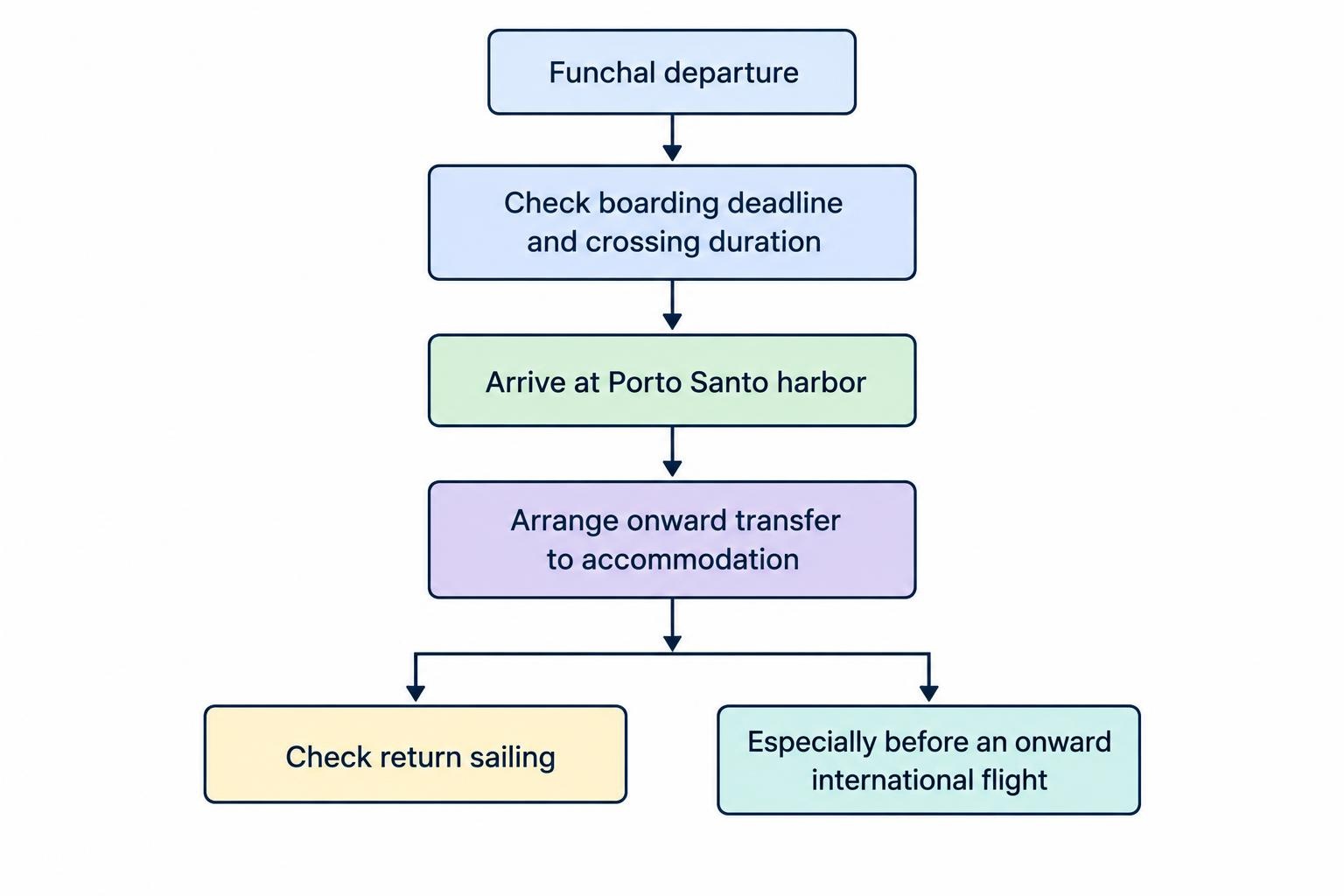
If you are considering taking a rental car across, obtain the rental company’s permission before paying for vehicle transport. Compare that arrangement with traveling as a foot passenger and arranging transport after arrival.
By air
Porto Santo Airport lists connections with Madeira, Lisbon and Porto among its destinations. Route availability and operating days need checking for your dates; use the airport’s airline and destination directory as a starting point, then confirm the actual flight schedule.
Compare the complete journey, not just time in the air. Airport transfers, baggage allowances and the gap between connecting flights can change which option makes sense. With separate tickets, leave a generous margin rather than building the holiday around a tight connection.
The guide to getting from Madeira to Porto Santo covers the transport decision in more detail.
How many days should you spend?
Two or three nights is a practical starting point for a first visit. It gives you room for beach time, a look around Vila Baleira and an outing without making arrival and departure the main events.
One night can work when your wider schedule is tight, but check how much usable time the transport leaves you. An overnight stay is less appealing if you arrive late, check out early and spend the intervening hours watching the clock.
A day trip is best treated as a beach visit with one modest extra, not an attempt to see the whole island. A longer stay makes sense if repeating a pleasant routine sounds like the point of the holiday rather than a planning failure.
For a closer comparison of travel time and flexibility, read Porto Santo as a day trip versus an overnight stay.
Where to stay in Porto Santo
Start with how you want to spend your evenings. If walking out for dinner matters, judge accommodation by its actual route to the places you want to eat. If you expect to spend most of the day at the hotel and beach, room facilities, outdoor space and beach access deserve more weight.
| Area to consider | Best fit | What to check |
|---|---|---|
| Vila Baleira | A town based stay with beach time and sightseeing | The walking route from the property to the center and beach |
| Cabeço da Ponta and the beach corridor | A stay focused on the shore and hotel facilities | Beach access, meal arrangements and transport for evenings out |
| An inland address | Travelers prioritizing space or a particular property | Whether daily transport cancels out any saving |
Read location descriptions carefully. “Sea view,” “near the beach” and “direct beach access” are different promises. Check the map, entrances and walking route rather than relying on a photograph taken from an upper floor.
For families, ask about shade, room layout and somewhere to dry swimwear. For travelers with reduced mobility, request details about steps, gradients and bathroom access. A general accessibility label is less useful than answers about the route you will actually use.
Getting around the island
You do not need to rent a car automatically. For a short, beach focused stay, compare the cost of transfers and one arranged outing with the full cost of a rental. A car becomes more useful when your plans involve several scattered stops or you want freedom to change direction during the day.
Public transport is another option, but build plans around the published service rather than assuming frequent departures. The SIGA route 995 harbor transfer timetable sets out the connection between the center and Porto de Abrigo and notes adjustments linked to ferry operations. Recheck the service before traveling.
Arrange arrival transport before you leave Madeira, particularly when carrying luggage or traveling with children. For any remote drop off, settle the return plan at the same time. Getting to a viewpoint is only half the arrangement.
Planning your beach days
Porto Santo’s main sandy beach stretches for approximately nine kilometers, with named sections serving different parts of the shore. Fontinha is central, beside Cais Velho; Calheta marks the end of the long beach and has a rockier setting. The official Porto Santo beach guide identifies the sections and their settings.
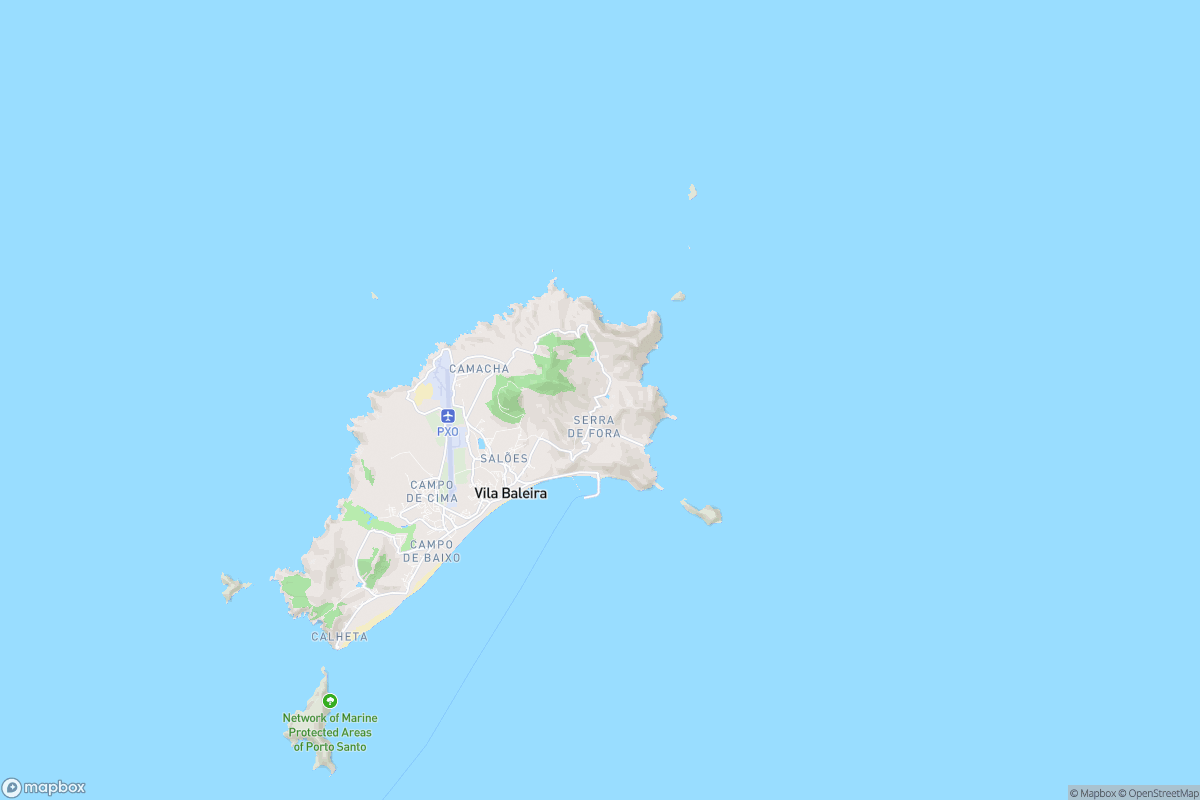
Choose your access point around the day you want. For a straightforward outing, prioritize nearby food, toilets and a manageable walk back. For a longer beach walk, decide whether you will return along the sand or arrange transport from another point.
Do not assume facilities, supervision or sea conditions are identical along the entire beach. Check what is operating where you enter, follow beach flags and lifeguard instructions, and change plans if conditions are unsuitable.
With children, an easy exit and nearby shade can matter more than finding the emptiest patch of sand. Bring water and sun protection rather than counting on a convenient purchase exactly when you need one.
Leave some time unassigned. There is little benefit in booking a beach holiday and then treating every afternoon without an excursion as an administrative oversight.
What to do beyond the beach
A few well chosen outings are enough to give a short stay variety. Portela offers a broad island view, while Pico de Ana Ferreira is known for its striking rock columns formed as magma cooled. Vila Baleira provides a cultural stop at Casa Colombo Museum. These are included in the tourism board’s Porto Santo attractions guide.
Choose between them based on your interests rather than trying to fit every stop into one excursion. A viewpoint and a town visit can provide a satisfying break from the beach without turning the day into a sequence of hurried photographs.
If you add a walk, check its current access conditions and any booking requirements before setting out. Take proper footwear and enough water, and do not judge a route’s difficulty from the island’s size. A short distance can still involve exposed ground or a sustained climb.
Keep weather dependent activities flexible where possible. Confirm the meeting point, duration, equipment and cancellation arrangements before paying, especially if the outing occupies your only full day.
The separate guide to things to do in Porto Santo covers the attractions in more detail. For a first visit, pick the outing you most want to do and leave room around it.
Food and eating out
Try Porto Santo’s version of bolo do caco rather than assuming it is identical to bread served elsewhere in Madeira. The traditional local version is thicker and larger, and does not contain sweet potato, a distinction recorded in the Porto Santo Biosphere Reserve’s account of local food traditions.
For everyday meals, compare convenience as well as menu prices. A cheaper dinner that requires paid transport each way may not be the cheaper evening. If your accommodation includes meals, check which services and drinks are covered before comparing it with a room only rate.
Tell restaurants about allergies or dietary requirements directly. Ask about ingredients and preparation rather than relying on a dish name or a brief menu translation. For a meal you particularly want, confirm opening hours and reserve ahead instead of making it the last unplanned stop of the day.
Costs, packing and booking priorities
Build your budget from five parts: travel to the island, accommodation, arrival transfers, meals and paid activities. Compare complete totals for the same dates and cancellation terms. Ferry packages, flight fares and hotel offers are not directly comparable until you account for baggage, meals and transfers.
A car free stay can be economical when the location supports it. It becomes less convincing if every meal and beach visit needs a taxi. Equally, paying more for a convenient address may save both transport costs and time.
Before booking, check:
- Transport both ways: confirm departures before committing to nonrefundable rooms.
- Arrival arrangements: know how you will reach the property with luggage.
- Room facilities: check meal plans, cooling and any pool heating you expect.
- Flexibility: leave breathing room before an onward international flight.
Pack swimwear, sun protection, a light outer layer and shoes suitable for the outings you intend to take. Then keep the plan simple: a convenient base, enough time on the beach and one or two outings chosen because they interest you. Porto Santo does not need a crowded itinerary to justify the visit.