Poncha is Madeira’s traditional mixed drink: sugarcane spirit, citrus juice and honey or sugar, worked together into a sweet, sharp pour. The familiar honey and lemon version is a useful starting point, but fishermen’s poncha and fruit variations deserve attention too. A small glass can carry plenty of alcohol; the fruit does not make it a soft drink.
Part of the appeal is the preparation. Fresh juice, a wooden mixing tool and a few minutes at the counter turn simple ingredients into something worth slowing down for. The Madeira tourism board’s introduction to poncha connects the drink with Câmara de Lobos, fishing traditions and the island’s bar culture.
This guide covers what to order, how the versions differ and how to make a small batch at home. For meal planning beyond the glass, use our Madeira food and drink guide.
What Is Poncha Made Of?
Poncha needs a sugarcane spirit, something acidic and something sweet. In the familiar honey version, those ingredients are Madeira rum, lemon juice and bee honey. Changing the citrus or sweetener changes the drink, sometimes more than the menu name suggests.
The spirit: aguardente de cana
Aguardente de cana is the Portuguese term you will hear at the bar. Madeira rum comes from fermented and distilled sugarcane juice, rather than being defined by the molasses base associated with many other rums. The young, unaged category is the usual starting point for poncha. These production details form part of IVBAM’s description of Rum da Madeira.
For making poncha at home, choose a bottle labelled Rum da Madeira and check its alcohol strength. Do not select a spirit simply because it is clear. Vodka can supply alcohol, but it cannot supply the same ingredient character.
Citrus and sweetness
Lemon gives the drink its sharp edge; honey rounds it out. Orange can move the balance in a gentler direction. None of that creates a universal recipe. Ask what goes into the house version, particularly if you dislike very sweet drinks or want to avoid honey.
Where Did Poncha Originate?
Poncha has a strong association with the fishermen of Câmara de Lobos, but a precise invention story is harder to establish. Its name is linked to English “punch,” and British influence is part of the proposed history. A single inventor and an exact birth date are not securely documented.
The historical discussion in Madeira’s 2017 regulation establishing the poncha authenticity badge acknowledges that uncertainty. It also distinguishes sugar sweetened fishermen’s poncha from honey versions and records the use of other fruits. That is a more useful starting point than treating every bar’s recipe as the one original formula.
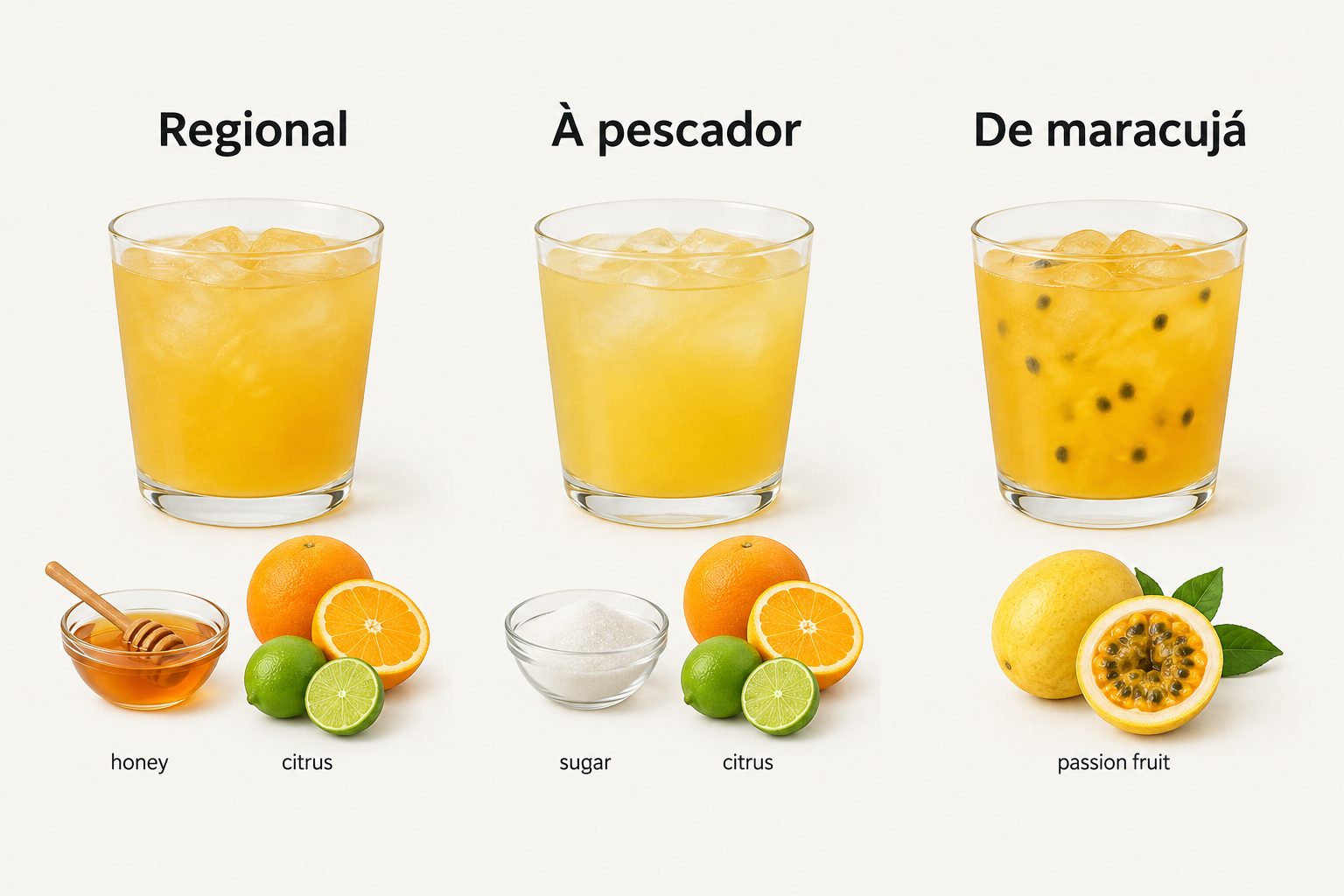
Poncha Regional, Pescador and Fruit Versions
Menu names help, but they are not a complete ingredient list. Use them to begin the conversation, then check the fruit and sweetener before ordering.
| Version | What distinguishes it | Ordering advice |
|---|---|---|
| Poncha regional or traditional | A honey sweetened citrus version; orange may feature. | Ask whether it contains lemon, orange or both. |
| Poncha à pescador | The fishermen’s style, using sugar rather than honey. | Choose it to compare the sweeteners, not because you assume it is stronger. |
| Poncha de maracujá | A passion fruit variation. | Ask about sweetness if you prefer a sharper drink. |
| Tangerine and other fruit versions | Alternative fruit bases or additions. | Check what is available and how it is prepared. |
For a first order, a lemon and honey poncha gives you a straightforward reference point. On another occasion, try pescador or passion fruit. Comparing one change at a time tells you more than ordering a tray of different flavours and trying to remember which was which.
Fruit choice alone does not establish alcohol strength. A sweeter drink can contain just as much spirit as a sharper one.
How to Order Poncha in Madeira
“Uma poncha, por favor” means “a poncha, please.” If several versions are available, add the style or fruit: regional, à pescador or de maracujá. You do not need a rehearsed speech. Asking which version uses lemon and honey is perfectly practical.
Before ordering, check whether the price covers one glass, a jug or a tasting selection. Without the serving size, a price comparison tells you very little. Ask about preparation too: if you want to watch it being mixed, say so rather than assuming every order starts with an empty jug.
The traditional wooden mixer is called a mexelhote, also written mexelote. It works the ingredients together vigorously. Poncha may arrive with a small house snack called a dentinho, such as peanuts or lupin beans. Treat that as a possible accompaniment, not a promise attached to every order.
If you have a food allergy, ask about both the drink and anything served alongside it. For a honey free version, request sugar and confirm the recipe; a different fruit does not necessarily mean a different sweetener.
Where to Try Poncha
Funchal: a convenient starting point
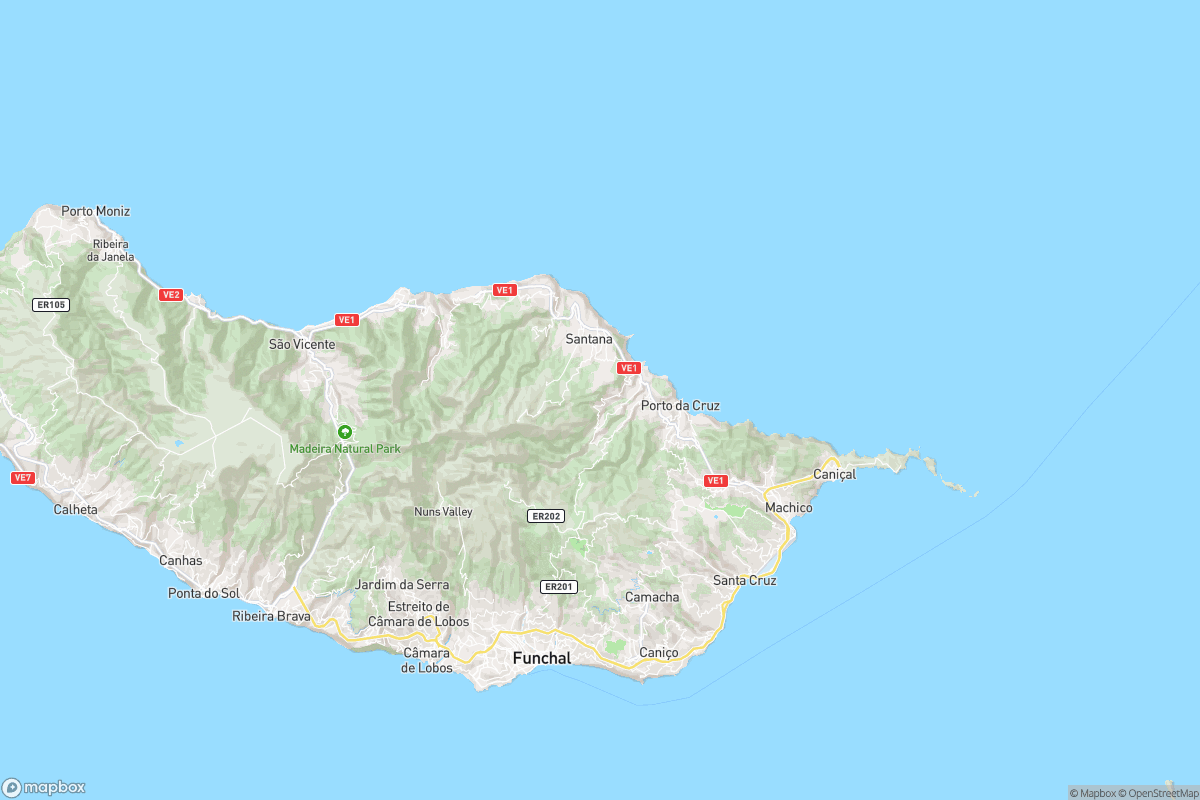
Funchal makes sense if you want to combine a drink with dinner and leave the car parked. Venda Velha is one option associated with poncha in the official directory of Funchal bars. Treat a listing as a starting point, then check current opening hours before making a special trip.
Choose the setting as carefully as the menu. Somewhere suitable for an early conversation may feel quite different later in the evening. If watching the preparation matters more than music or a terrace, ask whether you can order at the counter.
A drink can also fit at the end of our self guided walk through Funchal’s Old Town. Keep the walking route and the evening plans separate enough that there is no pressure to rush either.
Câmara de Lobos and Serra de Água
Choose Câmara de Lobos if the fishermen’s association interests you. Ask about the house pescador recipe rather than assuming every harbour bar prepares it identically. The useful comparison is in the glass: spirit, citrus, sweetener and balance.
Serra de Água offers another connection through its Poncha and Honey Festival. The official listing for the eleventh Poncha and Honey Festival schedules it for January 23–24, 2027. Check the programme again before arranging a visit around it.
For either destination, settle the return transport before ordering. A scenic road is not an argument for driving after a tasting. Our guide to getting around Madeira can help you separate sightseeing from the journey home.
A Simple Poncha Recipe for Home
You do not need to reproduce a particular bar’s proportions to make a useful first batch. Start small, measure the ingredients and adjust gradually. The IVBAM poncha recipe and preparation method uses lemon zest and juice, bee honey and Madeira rum, followed by mixing and straining.
The quantities below are a suggested starting balance, not a tested house recipe or an official island standard. They make approximately two small tasting pours.
- 60 ml Madeira rum, about 2 US fluid ounces
- 40 ml freshly squeezed lemon juice, about 1⅓ US fluid ounces
- 20 ml honey, about 4 teaspoons
- A little washed lemon zest, optional
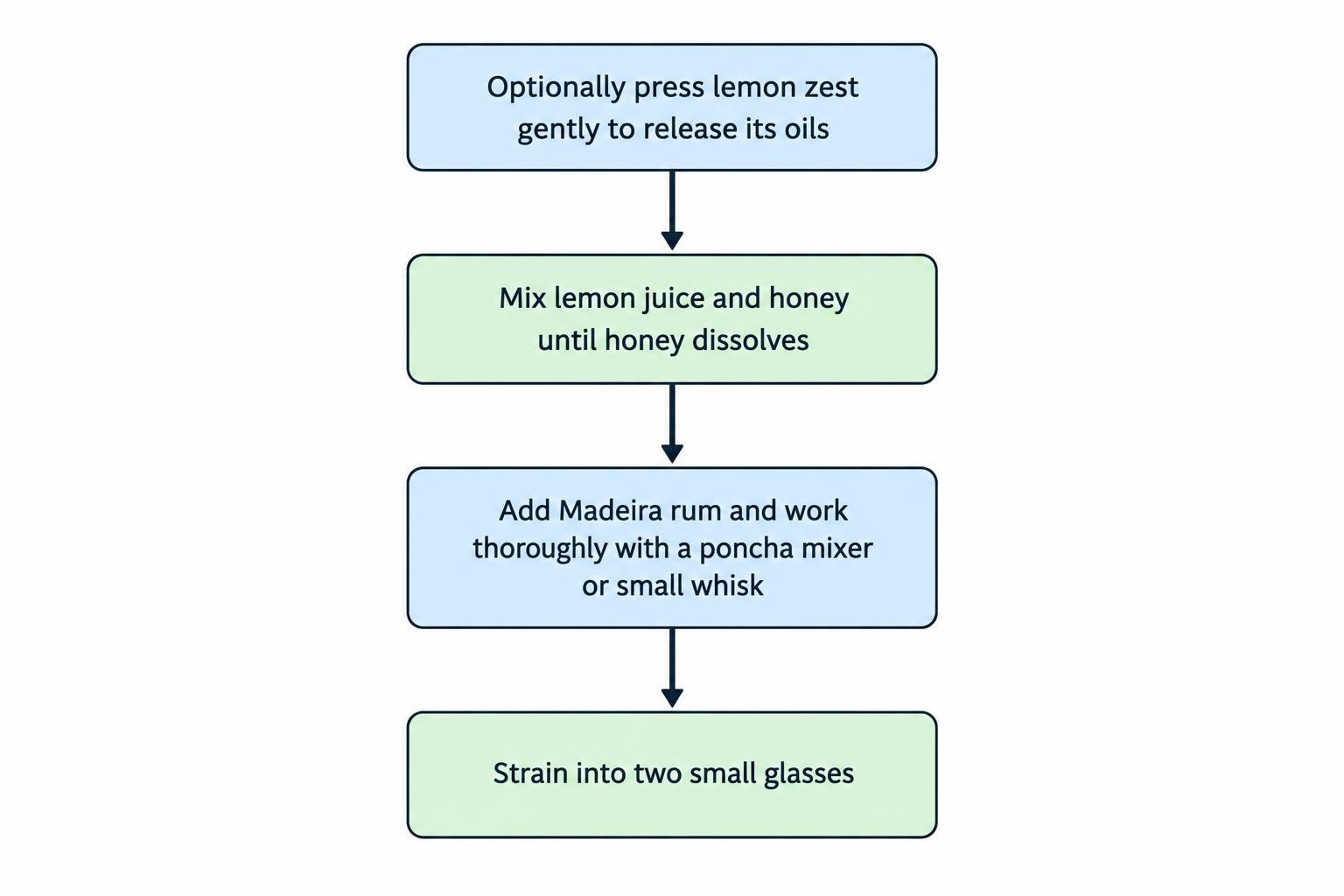
- If using zest, press it gently in a sturdy mixing vessel to release its oils.
- Add the lemon juice and honey. Mix until no thick honey remains at the bottom.
- Add the rum and work the mixture thoroughly with a poncha mixer or small whisk.
- Strain into two small glasses and serve.
Make adjustments in small increments. If the result is too sharp, add a little honey; if it is too sweet, add a little juice. Record the final amounts if you want to repeat the balance.
A kitchen whisk is a practical substitute for the wooden tool, not a reason to abandon the recipe. Avoid pouring more rum into an unmeasured batch simply because the citrus tastes strong. Adjust flavour and alcohol separately.
How Strong Is Poncha?
There is no dependable alcohol percentage for every freshly mixed poncha. It depends on the bottle strength, the quantity poured and the amount of juice, sweetener or dilution. The name on the menu cannot answer that calculation.
Using the suggested recipe above, 60 ml of rum at 40% alcohol by volume contains 24 ml of pure alcohol. Spread through roughly 120 ml of ingredients, that produces a mixture around 20% alcohol by volume before any further dilution. This is an illustrative calculation, not a measurement of a bar serving; mixed volumes are only approximate.
That example also shows why the glass size matters. Two small pours and one large pour can contain the same total alcohol. If strength affects your decision, ask about the spirit and measure rather than judging by colour, sweetness or how easily it drinks.
Choose a nonalcoholic drink if you will be driving. Do not plan around a supposed safe number of ponchas.
Buying Bottled Poncha or Ingredients to Take Home
Decide whether you want convenience or the preparation itself. A ready mixed bottle avoids squeezing and measuring; a bottle of Madeira rum lets you adjust each batch. Those are different purchases, so compare them against what you actually intend to do at home.
For ready mixed poncha, read the ingredient list and alcohol percentage. Check the storage directions, including any instructions that apply after opening. Do not assume a bottle needs the same treatment as a freshly prepared jug, or that every product carrying the name uses identical proportions.
If you enjoyed a bar’s version, ask for the spirit’s name and the fruit combination before buying ingredients. “The yellow bottle from the shop near the hotel” is less helpful once you are home.
A wooden mixer makes a practical souvenir if you plan to use it. Check its finish and cleaning instructions, then buy the rum for its suitability rather than paying extra for age you do not need for your intended recipe.
Is Poncha the Same as Madeira Wine?
No. Poncha is a mixed drink based on sugarcane spirit; Madeira wine is a separate wine category. They are not interchangeable in a recipe or tasting. If wine is also on your list, our guide to Madeira wine and tasting experiences covers that subject separately.
Can You Order Poncha Without Alcohol?
Ask whether the bar can prepare a citrus and honey drink without spirit, and confirm that it is completely alcohol free. It is an adaptation rather than the traditional rum based drink. If you also avoid honey, request a suitable alternative rather than relying on the word “fruit.”
For your first poncha, keep the decision simple: choose a familiar citrus version, ask what is in it and order a small serving. There is no requirement to work through the entire menu. One well chosen glass gives you enough to decide what, if anything, you would like to try next.