Madeira wine deserves more than a quick sample at the end of dinner. Its styles run from dry and sharp to rich and sweet, and a well chosen tasting can change what you expect from the island’s best known drink. The useful starting point is not the oldest bottle on the shelf. It is a comparison that helps you work out what you enjoy.
For a first visit, choose one guided lodge tour, taste across several sweetness levels, then decide whether a winery visit or an older wine merits more time and money. Central tastings fit easily into a day in Funchal; vineyard visits need a separate plan.
What Makes Madeira Wine Different?
Madeira is a fortified wine, meaning grape spirit is added during production. The timing of that addition helps determine how much natural grape sugar remains. Stopping fermentation earlier leaves a sweeter wine; allowing it to proceed further produces a drier style.
Heat and contact with air also shape the finished wine. With estufagem, wine undergoes controlled heating in tanks. With canteiro, it ages in wooden casks in warm lodge conditions, often on upper floors. These are deliberate production methods, not storage accidents. The IVBAM account of Madeira winemaking and maturation sets out both processes.
During a tasting, pay attention to acidity as well as sweetness. A rich Madeira can still feel bright rather than heavy. That contrast is more useful to notice than trying to identify twelve aromas before the next glass arrives.
Madeira Wine Styles: Where to Start
Four grape names provide a practical introduction. They are not interchangeable, and a tasting that moves through them gives you a useful reference for restaurant lists and bottle shopping.
| Grape name | Usual style | A useful starting point for |
|---|---|---|
| Sercial | Dry, with pronounced acidity | Drinkers who prefer a fresher aperitif |
| Verdelho | Medium dry, with more rounded richness | Comparing freshness with a little more sweetness |
| Bual, also written Boal | Medium sweet or medium rich | Those who enjoy sweetness without choosing the richest style |
| Malvasia, often called Malmsey | Sweet or rich | A fuller after dinner glass or dessert pairing |
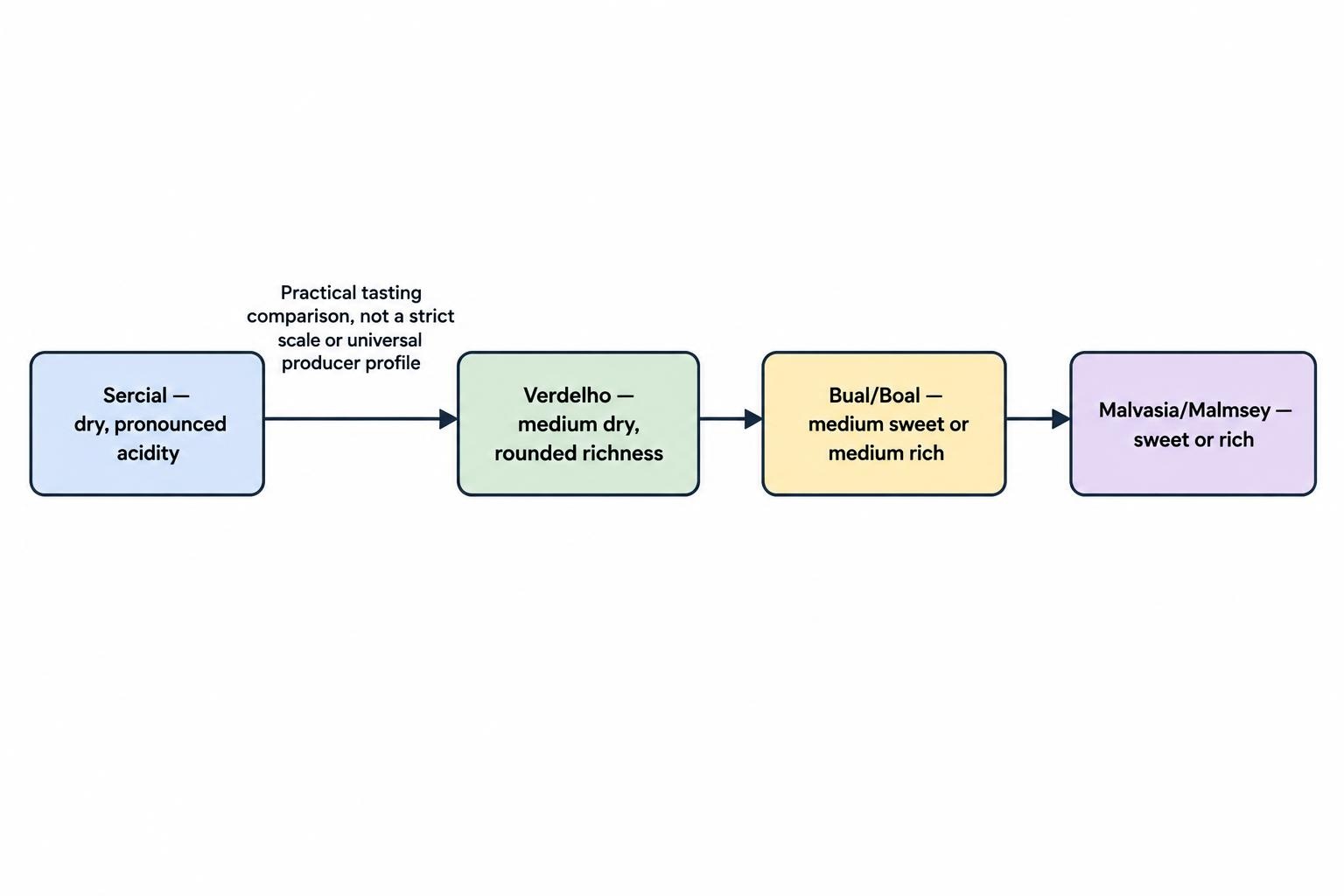
Treat this as a starting map, not a promise that every producer’s wines will taste alike. Age, blending and house style affect the result. Tinta Negra also produces wines across the sweetness range, so do not dismiss a bottle because it lacks one of the four names above.
For a closer comparison of flavour, sweetness and food matches, use the separate guide to Sercial, Verdelho, Bual and Malvasia. For your first tasting, the more useful question is simple: which balance makes you want another small sip?
Age Labels and Harvest Dates Are Different
An age indication such as 5, 10 or 20 years belongs to a different category from a harvest year. Do not read “10 years” as a vintage date. Colheita and Frasqueira identify wines associated with a stated harvest, rather than the same type of age labelled blend.
When comparing bottles, ask about the grape, sweetness, maturation and bottling date. A large year on the label can attract attention, but it does not tell you whether the wine suits your taste. Buying the oldest bottle before trying the style is an expensive way to answer that question.
Wine Tastings in Funchal
Start in town if you want an introduction without arranging a driver. A lodge tour and a tasting room visit serve different purposes: one gives you a structured explanation of production, while the other can put more attention on the wines themselves.
Blandy’s Wine Lodge: A Structured First Visit
Blandy’s Wine Lodge offers guided visits covering subjects such as cooperage, wine storage and canteiro ageing, followed by a tasting. Different formats include different rooms and wine selections, so compare the contents rather than choosing solely by the tour name. The Blandy’s Wine Lodge tour descriptions distinguish the introductory visits from options that include older wines.
This is a sensible choice if you want the production story before assessing several glasses. Check the language, departure time and tasting inclusions before booking. Do not assume that museum access or a Frasqueira sample comes with every ticket.
D’Oliveiras: A Second Producer to Compare
D’Oliveiras has a tasting and sales location at Rua dos Ferreiros 107, north of Praça do Município. Its range includes age labelled wines alongside harvest dated bottlings, making it worth considering for a second producer comparison. The IVBAM producer profile for Pereira d’Oliveira confirms the location and outlines the range.
Contact the house before visiting if you want a particular tasting or older wine. Ask what is available, what costs extra and whether an appointment is needed. A tasting room visit should not be treated as a promise of free samples or unrestricted access to rare bottles.
Visiting Barbeito Beyond the City Tasting Rooms
A winery visit makes sense when you want production facilities to be part of the experience, rather than concentrating only on the glass. Barbeito offers a guided introduction to its facilities, winery and wines, followed by a tasting.
The Barbeito tour and tasting programme for 2026 lists a four wine Gold option at €18 and a seven wine Platinum option at €33. The published durations are approximately one to one and a quarter hours, and one and a quarter to one and a half hours respectively. Advance booking is required, with visits offered in Portuguese or English on weekdays excluding public holidays. Reconfirm arrangements when booking, particularly for travel after 2026.
Choose the longer format because the wine selection interests you, not because seven sounds better than four. A shorter flight with time for questions can be the better introduction. Allow time on either side of the appointment rather than squeezing it between distant sightseeing stops.
How to Choose a Useful Tasting
For a first encounter, request a flight across sweetness levels. Comparing dry, medium dry, medium rich and rich wines helps establish your preferences before age becomes the main variable.
Once you know which style you like, compare different ages within that style. That makes the effect of maturation easier to assess. Changing producer, grape, sweetness and age in every glass can be enjoyable, but it makes direct comparisons harder.
Before paying, check three things:
- Whether the booking includes a guided visit, a tasting, or both.
- Which wines are included, especially any older or harvest dated samples.
- Whether the price is per person and whether extra pours cost more.
Ask for water and a spittoon if you want one. You do not need to finish every pour to assess it. Note the producer, wine name and your preference on your phone; “the amber one” becomes a rather poor shopping note after several glasses.
Vineyards, Wine Museums and Rural Visits
A lodge visit explains maturation, but seeing vineyards adds the agricultural side. Madeira’s vines occupy small plots, including terraces supported by stone walls, rather than the broad, level estates some visitors expect.
The official Madeira Wines Route identifies vineyard areas around Estreito de Câmara de Lobos and between São Vicente and Seixal. It also includes the Experimental Viticulture Station and Vine and Wine Museum at Arco de São Jorge.
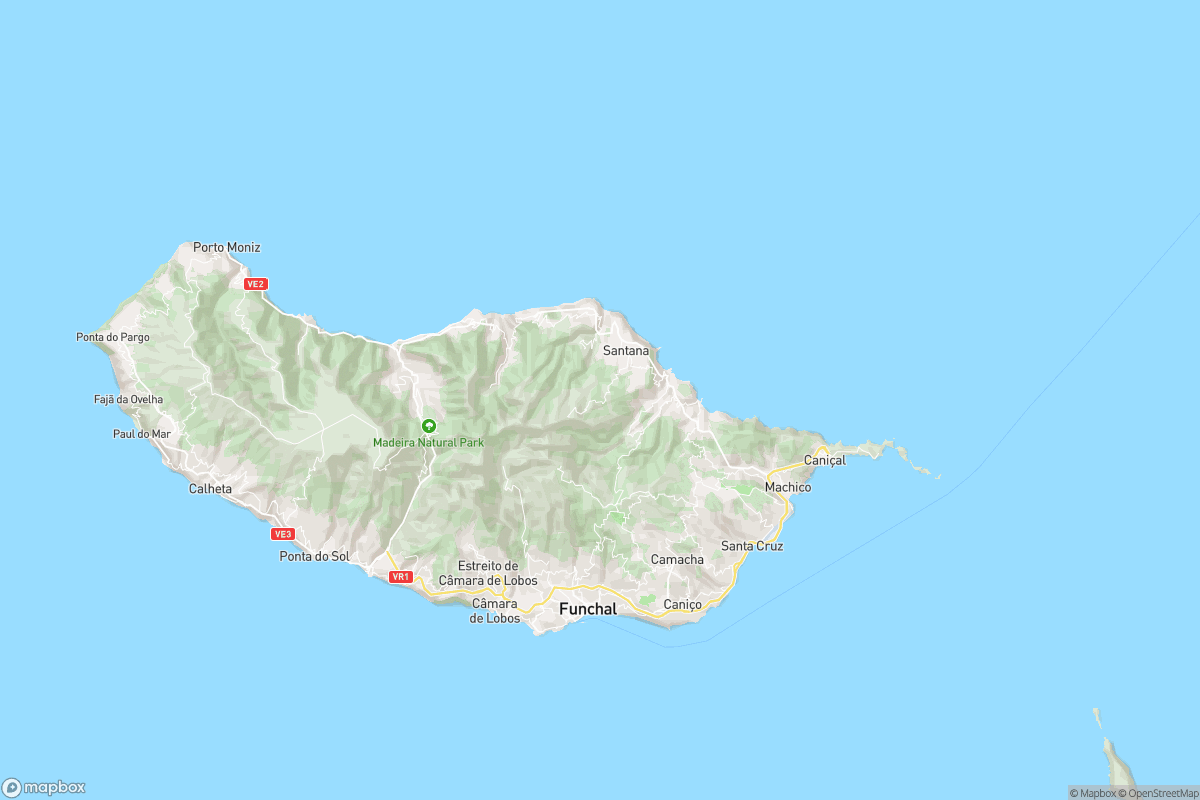
Use those places to shape a day around one part of the island. Do not turn a list of wine locations into a race between appointments. A museum visit, vineyard scenery and one booked tasting can make a more coherent day than several hurried stops.
Confirm access and opening arrangements directly before setting out. A vineyard visible from a road is not automatically open to visitors, and a winery tour does not necessarily include walking among the vines. If that is the experience you want, ask explicitly before booking.
When to Visit for Wine Experiences
Harvest celebrations offer a different experience from an ordinary tasting appointment. They put wine alongside local music, food and the work associated with grape growing.
The official Madeira Wine Festival page lists the next festival for August 22 to September 12, 2027. The event spans Funchal and rural wine locations, with related activities including the Madeira Wine Lounge, vineyard concerts and Estreito’s harvest celebrations. Check the programme for individual events rather than assuming they run throughout the festival.
Do not postpone a trip solely because you cannot attend the harvest celebrations. For a wine focused visit outside that period, build the plan around confirmed appointments. A festival offers atmosphere and variety; a booked tasting gives you a clearer opportunity to ask questions and compare wines.
Planning Transport and a Comfortable Visit
Keep a tasting day simple. Eat beforehand, leave time for lunch and avoid booking several substantial flights back to back. If everyone in your group wants to taste, arrange transport that does not depend on one of you driving afterwards.
For visits beyond central Funchal, check the journey to the actual premises, not just the nearest town. Use the guide to getting around Madeira to compare transport options, then confirm pickup and return arrangements before committing to an appointment.
Ask about steps, seating and access if anyone in your group needs them. Also check arrangements for companions who will not be drinking. A place on a tour does not necessarily mean an equivalent nonalcoholic tasting is included.
Pairing Madeira Wine With Food
Use food pairings as experiments rather than rules. Try a drier wine with a savoury starter, or compare a medium rich style with cheese. With sweeter wines, test a small piece of nut based cake or chocolate before committing to a full dessert pairing.
For a local combination, try a rich Madeira alongside bolo de mel. Start with a modest portion so the food does not overwhelm the comparison. The wider Madeira food and drink guide helps place a wine tasting within a meal rather than making it the entire afternoon’s catering.
Buying, Serving and Storing Your Bottle
Buy the wine you enjoyed, not the bottle you feel you ought to appreciate. Give the shop a budget and intended use: an aperitif, an after dinner glass, or a gift. Ask to compare a familiar favourite with one alternative before spending more on age.
Keep Madeira upright, away from direct sunlight. Serve drier styles chilled and richer styles slightly chilled rather than warm. Madeira can remain enjoyable for months after opening when stored correctly; the Madeira Wine Company’s storage and serving guidance covers these points, including suggested serving temperatures.
Before leaving, photograph the label and ask about care for that bottle, especially if buying an older wine. One well chosen purchase, with a clear memory of why you liked it, is a better souvenir than an impressive date you never tasted.