Traditional Madeira food is a good reason to leave room between sightseeing stops. Start with warm bolo do caco, try beef espetada with milho frito, then make time for black scabbardfish, grilled limpets and the island’s sugarcane sweets. Those dishes give you a useful introduction without turning every meal into a checklist.
The trick is knowing what belongs together, what works as a shared starter and what deserves a meal of its own. This guide focuses on dishes to order; the broader Madeira food and drink guide covers the island’s eating and drinking traditions beyond the plate.
Bread and Side Dishes Worth Ordering
Bolo do Caco: Madeira’s Garlic Bread
Despite its name, bolo do caco is bread, not cake. Madeira’s version combines wheat flour, sweet potato, yeast, water and salt, producing a round, flattened loaf with a soft, elastic crumb. Its name refers to the heated stone traditionally used for cooking. Served warm with garlic and parsley butter, it is both a starter and an accompaniment to a larger meal, reflected in the traditional product description for Bolo do Caco da Madeira.
Order one portion to share before deciding whether you need more. It is easy to finish the bread before the food it was meant to accompany arrives. With a saucy main course, keep a little back for the plate rather than treating the whole basket as an opening challenge.
For a more substantial option, look for prego no bolo do caco: a steak sandwich using the same bread. Ask what comes inside, rather than assuming every kitchen uses the same fillings.
Milho Frito: Fried Cornmeal
Milho frito starts as cooked cornmeal, which is allowed to cool and firm up before frying. Think of the basic preparation as a relative of polenta rather than fried sweetcorn kernels. Milho cozido is the softer, freshly cooked version.
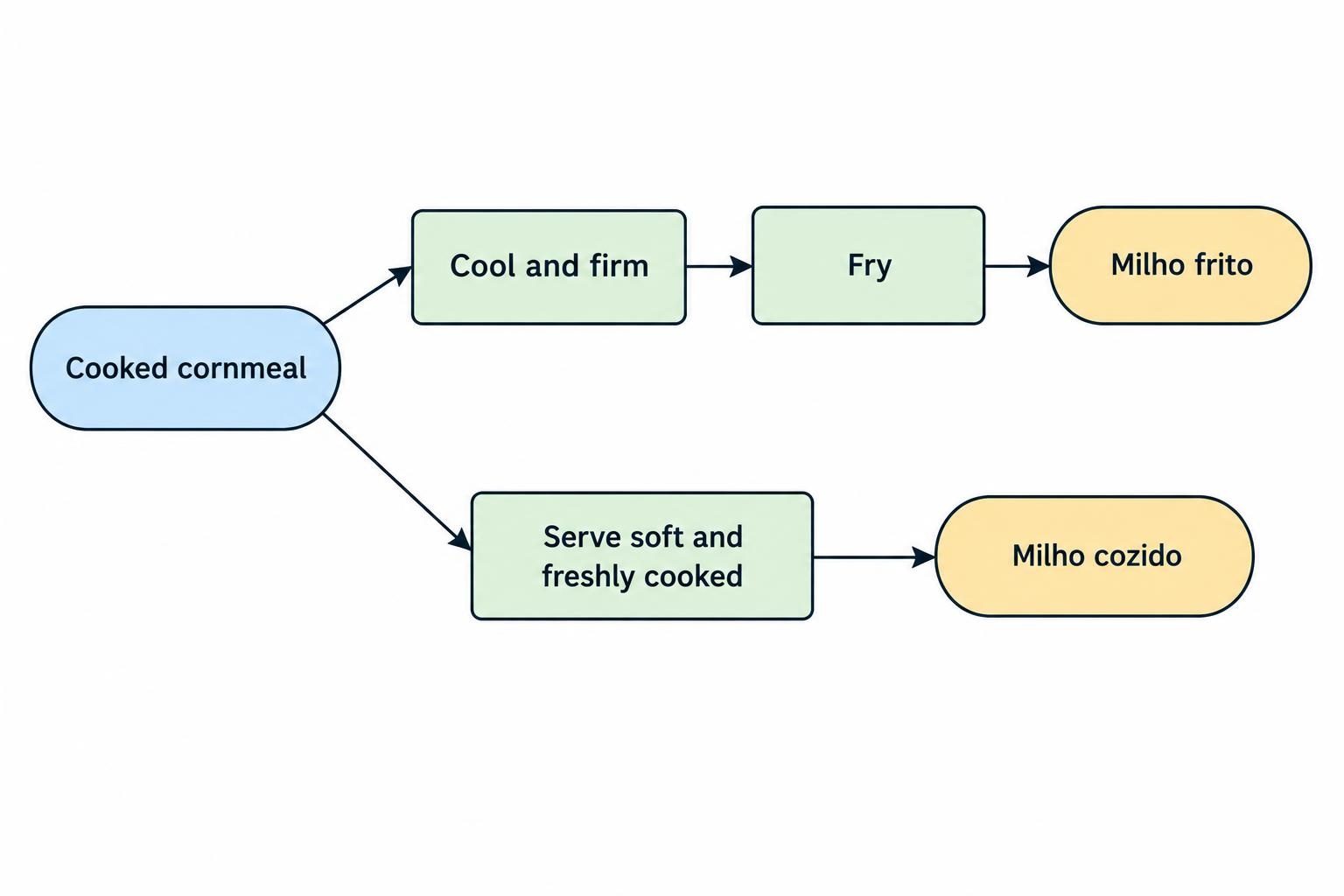
Choose milho frito when you want a different accompaniment from fries, especially alongside espetada. If two people are sharing bread and a meat dish, start with one side between you and add more if needed.
Do not assume a cornmeal dish suits every dietary requirement. Ask about the recipe and cooking method if you avoid animal ingredients or need the kitchen to prevent contact with other foods.
Traditional Madeiran Meat Dishes
Espetada: Beef Cooked on a Skewer
Madeiran espetada consists of beef cubes traditionally threaded onto a bay laurel stick, seasoned with coarse salt, garlic and bay leaves, then cooked over embers. Estreito de Câmara de Lobos has a particularly strong connection with the dish. Its usual accompaniments include milho frito, bolo do caco and tomato and lettuce salad, documented in the parish’s account of local food traditions.
This is a sensible choice for a first substantial Madeiran dinner. The preparation puts the beef and the grill at the centre of the meal, so there is little reason to bury the plate under extra sauces.
Check whether the menu price covers a skewer alone or includes side dishes. If your table orders several skewers, agree on the accompaniments together. Bread, cornmeal, fries and salad can make a balanced shared meal, but ordering each of them for every person is rarely necessary.
Carne de Vinha d’Alhos: Wine and Garlic Pork
Carne de vinha d’alhos is pork marinated in white wine and garlic, with a strong place in Madeiran festive cooking. It offers a different direction from espetada: choose it for the marinade rather than the flavour of grilled beef.
If both dishes appeal, order them on separate days. Trying another preparation tells you more about the island’s cooking than repeating the same combination of meat, bread and sides at every dinner.
Ask whether the kitchen serves it as a plated meal or in bread, and what accompanies the portion. For lunch, a sandwich version may be the more practical order; for dinner, leave space to try the meat with its own accompaniments.
Picado: A Platter for Sharing
Picado brings together small pieces of meat, sauce and fried potatoes on a shared platter. Bolo do caco can accompany it for dipping into the remaining sauce. Alongside prego, milho and marinated pork, it forms part of the island’s repertoire of typical Madeiran dishes.
Choose picado when sharing is the point of the meal. Ask how many people the advertised portion is intended to serve, then explain whether you want a snack or dinner. Those are two different questions, even when the menu offers the same platter.
Check which meat and sauce the kitchen uses before ordering. The name alone does not tell you every ingredient, and a photograph is not a reliable portion guide.
Fish and Seafood to Try in Madeira
Filete de Espada: Black Scabbardfish
Filete de espada means black scabbardfish fillet, one of Madeira’s best known fish dishes. Banana is a familiar accompaniment, giving visitors an opportunity to try fish and fruit together rather than keeping them on opposite sides of the menu.
If that combination appeals, order it as presented. If you are uncertain, ask whether the banana can come separately. You can taste the pairing without committing every mouthful to it.
Ask how the fillet is prepared and what comes with it. A dish name identifies the fish, but it does not settle every question about coatings, sauces or sides. That distinction matters more than finding the most elaborate version.
For a short visit, choose an espada meal and an espetada meal on different days. They give you two contrasting starting points, with less repetition than ordering whichever dish sounds most familiar each evening.
Lapas Grelhadas: Grilled Limpets
Lapas are limpets: marine molluscs with a firm texture and a pronounced taste of the sea. The grilled preparation uses garlic, butter, parsley and lemon to complement that flavour. These are the defining ingredients in the MICHELIN Guide’s description of Madeiran grilled limpets.
Order a shared portion if you have never tried them. That gives everyone a taste without making an unfamiliar texture the centre of dinner. They are a better choice for someone who enjoys shellfish than someone hoping seafood will taste of very little.
Keep the rest of the order restrained until you have decided on a main course. A seafood starter followed by fish makes sense; adding several other starters simply because they sound local can leave little appetite for either.
Bife de Atum: Tuna Steak
Tuna steak is another established Madeiran fish dish. Black scabbardfish gets much of the attention, but tuna belongs on the shortlist too. Both appear in the Portuguese tourism board’s overview of Madeira’s gastronomy, alongside the island’s seafood, tropical fruit and regional sweets.
Choose tuna if you would rather try another fish preparation than repeat espada. Ask about the sauce, accompaniments and available cooking options before ordering. If you are comparing menus, compare the complete dish rather than the name of the fish alone.
Sopa de Trigo: A Heartier Soup
Sopa de trigo is wheat soup, with variations that include pork and vegetables. It is worth considering when you want something other than grilled meat or a fish main course, but do not assume it is vegetarian because the name mentions a grain.
Ask about the day’s version and the portion size. For a lighter lunch, consider soup with bread before automatically adding a sandwich. For dinner, decide whether it is an opening course or the main event.
This is also a useful dish to ask about when a restaurant offers a short daily menu. Let the kitchen describe what it has made rather than expecting one fixed recipe everywhere.
Madeiran Sweets and Desserts
Bolo de Mel: Sugarcane Cake
Bolo de mel is a dark cake made with mel de cana, or sugarcane syrup. The “honey” in its name does not mean ordinary bee honey. Spices, nuts and dried or candied fruit contribute to its flavour, with recipes differing between families and producers. The Madeira Ethnographic Museum’s record of bolo de mel documents both its preparation and its role in Christmas gift giving.
Start with a small piece rather than expecting a large slice of light sponge. Give yourself time to taste the spices and fruit, especially if you plan to buy a whole cake to take home.
Compare ingredient labels instead of choosing by packaging alone. Ask about nuts, animal fats and alcohol if any of those affect your choice. A traditional name is not a guarantee that every producer follows the same recipe.
Broas de Mel: Sugarcane Biscuits
Broas de mel offer another way to try Madeira’s sugarcane confectionery. These small biscuits combine mel de cana with ingredients such as cinnamon and lemon zest; recipes can also contain butter, lard and egg. Their texture and preparation distinguish them from cake, even though the two share a flavour family, described in the tourism board’s account of broas and bolo de mel.
Try a small packet before buying several as gifts. They are a practical choice when you want a modest sweet with coffee rather than a full dessert.
Queijadas da Madeira: Sweet Cheese Pastries
Queijadas da Madeira are small pastries with a thin dough base folded around a sweet cheese filling. The traditional version recorded by Portugal’s agricultural authority uses requeijão, sugar, eggs and flour in the filling. The DGADR description of Queijadas da Madeira identifies their flattened shape and cheese based preparation.
Choose one when you want a pastry rather than the darker sugarcane flavour of bolo de mel. If several people are ordering, split a queijada and a piece of cake so you can compare them without turning a coffee stop into another lunch.
Fruit and Fruit Desserts
Bananas, passion fruit and custard apples are among the fruits associated with Madeira’s food. Fruit also appears in desserts, so leave room to consider something beyond cake and pastries.
Ask which fruit a dessert uses and how it is prepared. A fruit name on a menu does not tell you whether the result is sharp, creamy or very sweet. If you would rather taste the fruit itself, choose it fresh when available instead of assuming a pudding gives the same impression.
How to Order Without Overdoing It
For a first dinner, a straightforward order is shared bolo do caco, espetada, milho frito and salad, followed by a small sweet if you still want one. On another day, try lapas before a fish main course. These are suggested combinations, not rules about how a Madeiran meal must unfold.
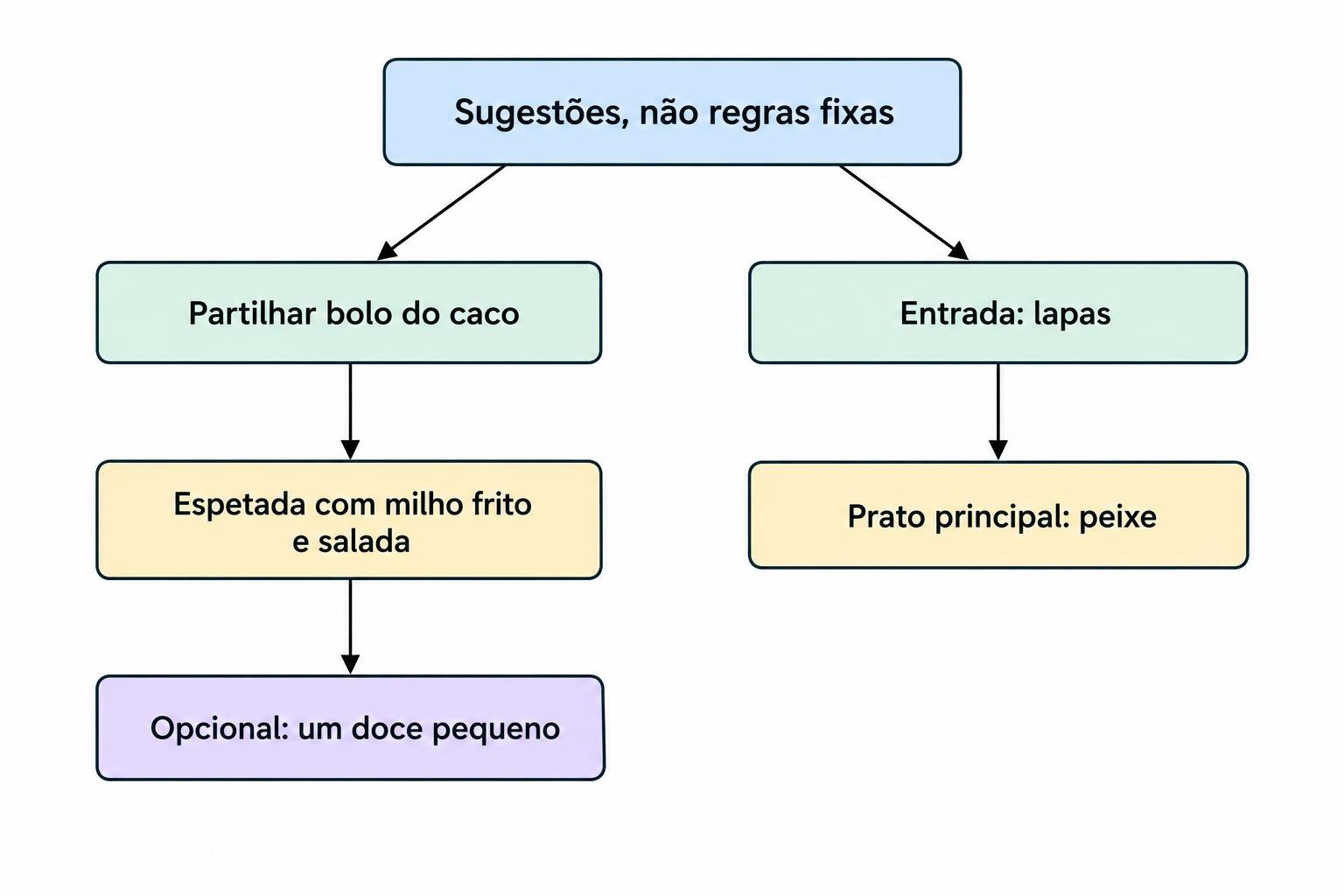
Before confirming your order, check three things: whether sides are included, whether the portion is intended for sharing and what ingredients appear in sauces or marinades. Ask the kitchen directly about dietary requirements rather than relying on an English menu’s shortened description.
If you want wine with the meal, use the Madeira wine guide to distinguish tasting experiences and styles from the separate question of what you want to drink with dinner. There is no need to turn every course into a pairing exercise.
Which Foods Make Good Souvenirs?
Consider packaged bolo de mel or broas after tasting them. Check the ingredients, storage instructions and best before date, then think about how they will travel in your luggage. Buy for the person receiving them, not just for the attractiveness of the box.
The guide to shopping in Funchal covers the wider souvenir decision. For food, the best approach is simpler: try a small amount first, keep the label and buy more of what you actually enjoyed. A suitcase has less appetite than a holidaymaker.