Porto Moniz Natural Pools offer a saltwater swim among dark volcanic rocks, with the Atlantic just beyond the pool edges. The setting is the attraction, but choosing the right bathing area matters: the managed swimming complex and the free Cachalote pools are separate places, with different facilities and access arrangements.
For most visitors planning a proper swim, the paid complex is the more practical choice. Cachalote suits a shorter stop or visitors who prefer a less developed setting. Neither should be treated as an ordinary hotel pool. Plan around sea conditions, leave time to change and dry off, and keep an alternative ready if bathing is not permitted.
Which Porto Moniz Natural Pools Should You Visit?
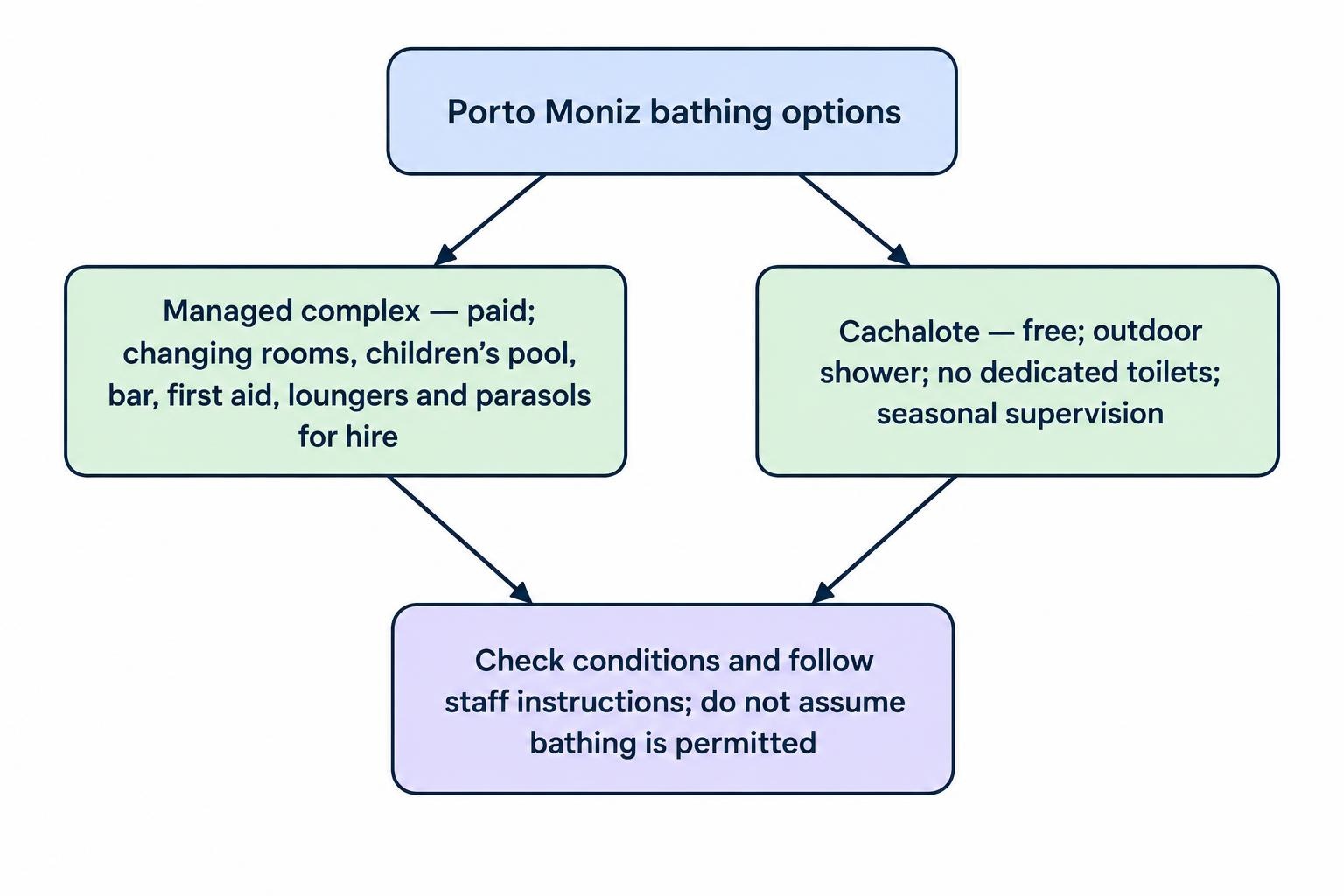
The managed swimming complex
The main complex combines pools formed in volcanic rock with built bathing areas and places to sit. Seawater enters naturally, so the experience remains connected to the ocean rather than being separated from it.
Changing rooms, a children’s pool, a playground, a bar, first aid facilities, and loungers and parasols for hire make this the easier option for a longer visit. Accessible entry to the complex is also listed in the Madeira Tourism Board’s managed pool information.
Choose this complex if your priority is swimming with convenient facilities, rather than finding somewhere to take a photograph and move on. Having somewhere to change becomes particularly useful when the pools are one stop on a day around the island.
The free Cachalote pools
Cachalote is a separate bathing area near the entrance to Porto Moniz, close to the aquarium. These pools retain a more natural outline, with seawater between the volcanic rocks.
Admission is free. An outdoor shower is available, but there are no dedicated toilets or the supporting facilities of the paid complex. Supervision is provided during the bathing season, not something to assume throughout the year. These distinctions are set out in the official Cachalote bathing area details.
Free access does not make Cachalote a substitute whenever the main complex is closed. If sea conditions prevent swimming at one location, do not assume that a nearby pool is suitable simply because there is no ticket desk.
You can appreciate both places without swimming at both. For a first visit, make the managed complex your intended bathing stop and assess Cachalote separately, without feeling obliged to enter the water.
Entrance Prices and Opening Hours
The municipality publishes the following admission prices and seasonal opening hours for the managed complex.
| Admission or season | Published price or hours |
|---|---|
| Standard admission, over age 3 | €3 per entry |
| Children aged 3 and under | Free |
| Eligible student or senior card holders | €1.50 per entry, with qualifying documentation |
| Summer opening hours | 9 am–7 pm |
| Winter opening hours | 9 am–5 pm |
Other concessions apply to qualifying municipal card holders and eligible visitors with disability documentation. Check eligibility, seasonal hours and any changes against the Porto Moniz municipality’s pool tariff and visitor information before travelling.
Treat these as the published operating arrangements, not a promise that swimming will be available on your chosen day. Confirm the current situation if the pools are the main reason for making the trip.
Admission is priced per entry. Before leaving for lunch, ask whether your ticket permits a return; do not build the afternoon around an assumed right to come back. Budget separately for anything you intend to hire, rather than treating a lounger or parasol as part of the entrance price.
Swimming Safety: Conditions Come Before the Ticket
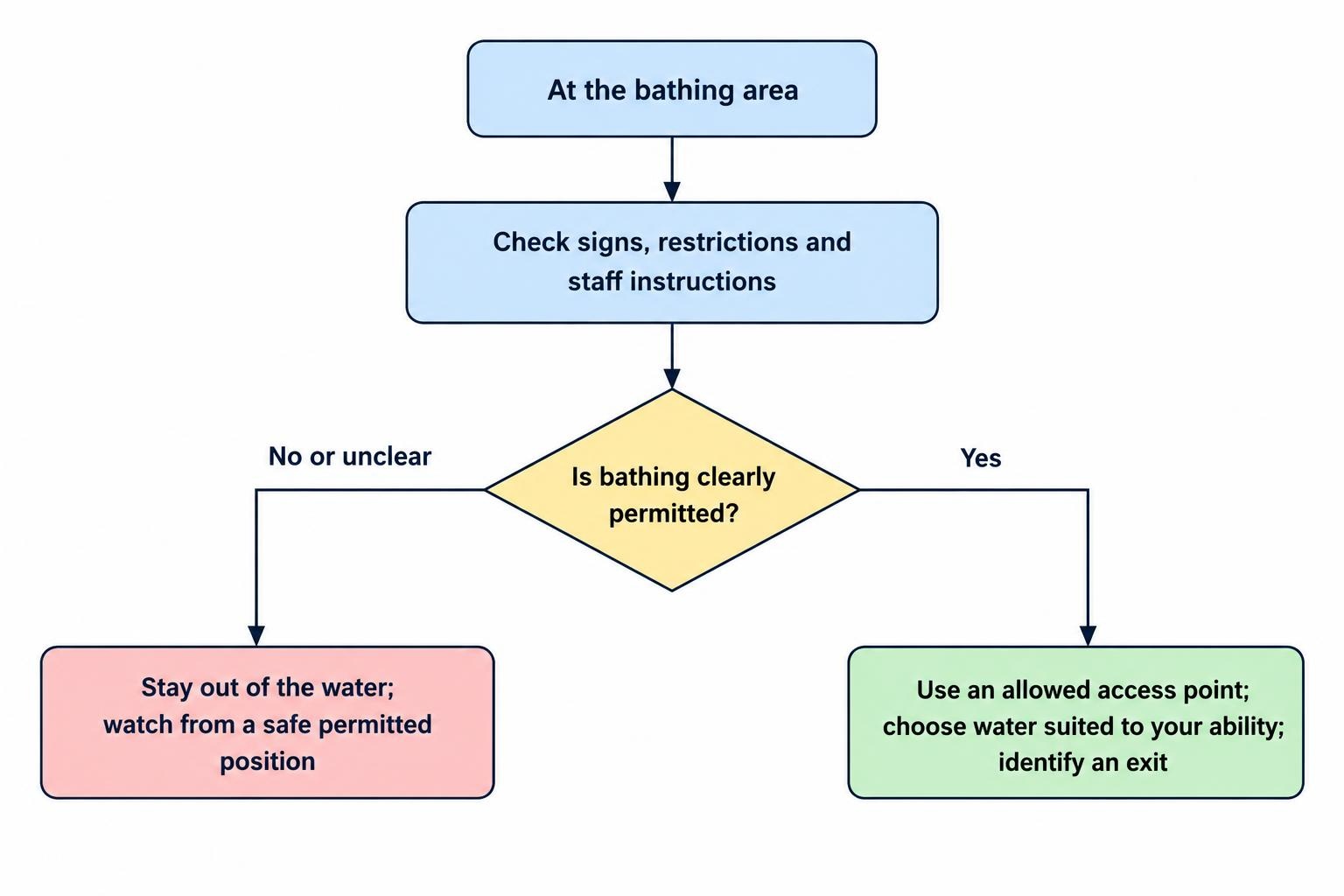
The most useful distinction here is between a pool that looks sheltered and a bathing area that staff have assessed as suitable for use. Do not make that judgement from a photograph, a brief lull between waves or the presence of other swimmers.
Use supervised bathing areas, follow signs and staff instructions, and avoid jumping into water among rocks. These are basic precautions supported by the Portuguese Maritime Authority’s bathing safety advice.
Before entering, identify the permitted access point and a straightforward way out. Choose a section that matches your swimming ability rather than the one with the best view. Do not assume you can stand throughout the bathing area, and ask a lifeguard if you are uncertain about depth or access.
Walk rather than run around the pools. Wear footwear suitable for wet surfaces when moving between your belongings and the bathing area, and avoid climbing onto rocks to create your own route.
If access is restricted, keep clear of barriers and exposed edges. Watching the sea from a safe, permitted position is still a worthwhile visit. Moving closer for a better photograph is not a sensible response to a closure.
For non-swimmers, make the visit about the setting rather than entering water that feels beyond your ability. There is no requirement to swim for the stop to count.
Best Time to Visit Porto Moniz Natural Pools
If swimming is central to your holiday, use summer or early autumn as a starting point for planning, then choose the actual day around local conditions. Keep the Porto Moniz visit movable within your itinerary instead of fixing it between two bookings that cannot change.
Check wind and sea conditions as well as the temperature forecast. The IPMA wave forecast for Madeira is useful for advance planning, but it does not replace instructions at the pools. A regional forecast cannot grant permission to enter a bathing area.
For a morning visit, aim to arrive near the published opening time if you want a full choice of how to spend the day. This leaves room for a swim, lunch and an alternative stop without watching the clock throughout.
In winter, plan a visit that still works without bathing. Bring swimming things if you would like the option, but avoid making the entire day depend on using them. The wider guide to the best time to visit Madeira can help balance swimming with walking and sightseeing.
Getting to Porto Moniz From Funchal
By car
A car gives you control over the timing and makes it easier to change plans after checking conditions. From Funchal, a common approach runs through Ribeira Brava and São Vicente, continuing along the north coast past Seixal.
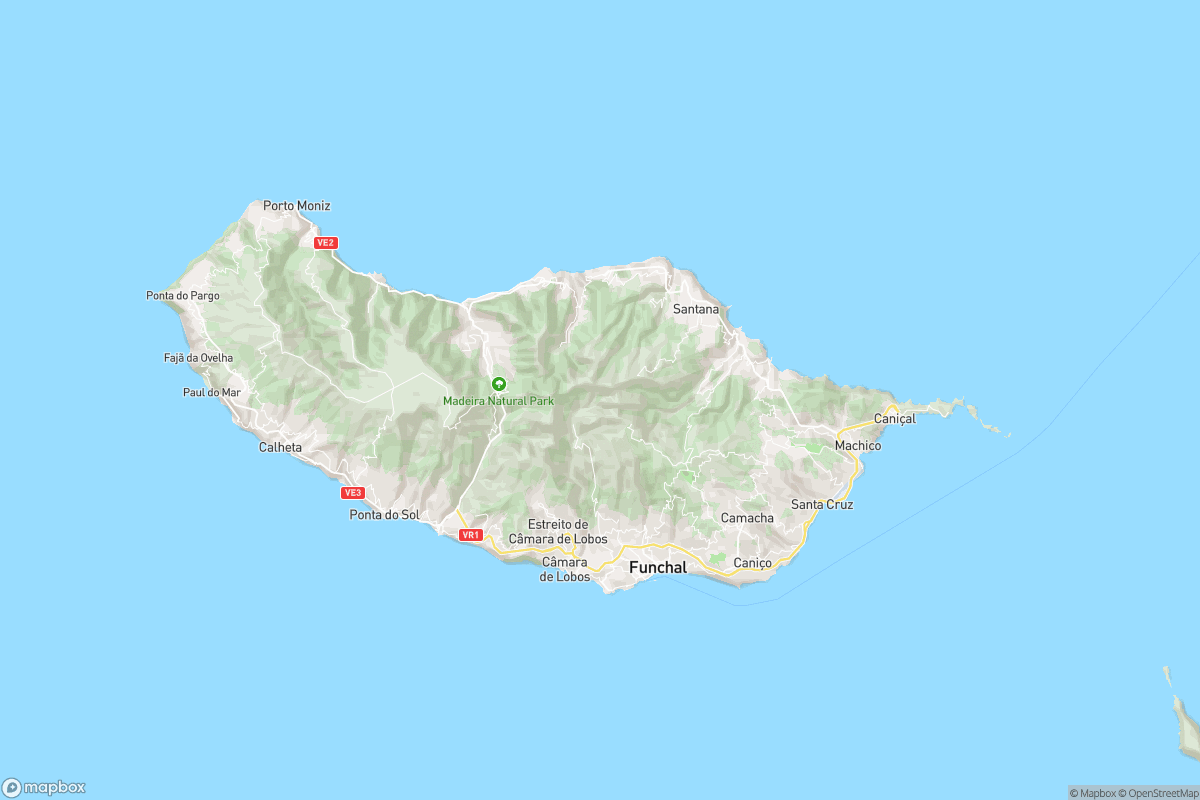
Use live navigation for the journey rather than relying on a fixed driving time. Add room for parking, changing and any stops you actually intend to make. A route that looks tidy on a map can become a rushed day once every viewpoint turns into a photo stop.
At Porto Moniz, check parking signs and payment arrangements where you leave the vehicle. Keep dry clothes accessible, and avoid leaving valuables visible in the car while you swim.
By bus or organised excursion
Bus travel requires planning around the return journey first. Use the official SIGA timetable search to check services to Porto Moniz for your travel date, including differences between weekdays, weekends and holidays.
Confirm that the destination is Porto Moniz itself, not another stop in the municipality. Work backwards from the return departure, allowing time to leave the water, change and reach the stop without rushing.
For an organised excursion, ask how much time is actually available at the pools. A “Porto Moniz stop” may suit sightseeing without allowing a comfortable swim. Check whether admission is included and whether swimming is optional within the schedule.
Facilities, Accessibility and Visiting With Children
The practical advantage of the managed complex is being able to organise a swimming visit around changing facilities, refreshments and a place to sit. Even so, keep your setup simple: choose your bathing area first, then decide where to leave your towel and belongings.
If you want a lounger or parasol, ask about availability and the charge before settling in. Avoid planning around a particular item being available, especially if shade or a certain seating position is necessary for your visit.
Visitors with mobility needs should distinguish access to the complex from access into the water. Before travelling, ask about the route from the entrance to the bathing area, steps, handrails, changing facilities and any assistance you require. A general accessibility listing does not answer every practical question.
For families, keep the plan modest: one swimming session, a break and the option to leave when everyone has had enough. Agree which adult is supervising children in the water rather than assuming someone else is watching. The separate guide to visiting Porto Moniz Natural Pools with kids covers family planning in more detail.
What to Bring
Pack for a seawater swim followed by time outdoors, not just a quick dip. A small bag is easier to manage than carrying everything you brought to Madeira.
- Swimwear, a towel and dry clothes: include a bag for wet items if you are continuing elsewhere.
- Footwear for wet surfaces: choose something secure and comfortable for moving around the bathing area.
- Sun protection and drinking water: take what you need rather than depending on an immediate purchase.
- A light layer: useful while drying off or continuing your day after swimming.
If you bring goggles, use them within the permitted swimming area. They are for enjoying the water, not a reason to venture into a section you would otherwise avoid.
Keep valuables to a minimum. Before leaving your bag unattended, establish what storage is available and whether it meets your needs.
How Long to Allow and What to Combine With the Pools
As a planning allowance, set aside around two to three hours for the managed complex. That gives you room to change, swim, rest and get ready to leave. A brief sightseeing stop can be much shorter, but a swim squeezed into a hurried excursion is rarely relaxing.
For a full day from Funchal, choose one other main stop rather than trying to cover the entire west of Madeira. Decide whether swimming or sightseeing takes priority, then protect enough time for that activity.
A visit to Fanal Forest offers a different setting to the coast. Keep the two visits flexible rather than assuming that conditions suitable for one will also suit the other. Pack any walking clothes separately so wet swimwear does not complicate the rest of the day.
Alternatively, combine Porto Moniz with Seixal’s black sand beach along the north coast. You do not need to swim twice. One can be the bathing stop and the other a shorter visit, depending on conditions and how much time you have.
If bathing is not permitted at Porto Moniz, revise the day instead of driving between exposed swimming spots hoping to find a different answer. Take a longer lunch, spend time in town or move on to a non-swimming activity.
Are Porto Moniz Natural Pools Worth Visiting?
Porto Moniz is worth considering if you want a swimming stop with a volcanic coastal setting and the option of managed facilities. The paid complex is the practical default for a longer visit; Cachalote is a separate, less serviced alternative rather than the same experience without a fee.
It is less suitable if you require guaranteed bathing, consistently easy water access or a stop that can be completed to a rigid timetable. Compare it with other Madeira beaches and natural pools before deciding how much of your day to commit.
The best plan is straightforward: check conditions, choose the right pool, allow enough time and be willing to stay out of the water. That flexibility is more useful here than an ambitious itinerary.