The best viewpoints in Madeira show how much the island changes over short distances: sharp mountain ridges, cultivated valleys, sea cliffs and the spreading rooftops of Funchal. Pico do Areeiro is the strongest choice for mountain scenery, Cabo Girão for a glass platform above the coast, and Eira do Serrado for looking into the island’s interior.
You do not need to visit every lookout. Choose contrasting views, group stops by area and leave room to change plans when visibility drops. The Madeira Tourism Board’s viewpoint directory covers the locations below, from roadside terraces to lookouts reached on foot.
10 Best Viewpoints in Madeira
1. Pico do Areeiro: Best for Mountain Scenery
At 1,818 metres, Pico do Areeiro offers a view across Madeira’s central mountain range. Ridges overlap into the distance, with steep valleys separating the peaks. When cloud sits below the summit, the scene changes completely, though clear skies can be just as rewarding.
The summit area has road access, so seeing the mountains does not require committing to a long hike. Treat the main viewpoint and the PR1 walking route as separate outings: continuing onto the trail means accepting its walking demands, booking requirements and current access conditions.
Choose a clear forecast over a rigid sunrise plan. An early alarm is not a visibility guarantee. If you want a mountain walk rather than a viewpoint stop, compare the options in the Pico Ruivo hiking guide before deciding how much time to reserve.
2. Cabo Girão: Best for the Glass Skywalk
Cabo Girão puts the drop directly beneath your feet. Its suspended glass platform stands at a viewpoint around 580 metres above sea level, overlooking the south coast and small cultivated plots below the cliffs. The attraction is the combination of height, coastline and that transparent floor.
This is a sightseeing stop rather than a hiking objective. Pair it with time in Câmara de Lobos instead of building an entire day around the platform. Anyone uncomfortable with heights should decide for themselves whether stepping onto the glass adds anything to the visit.
The standard visitor ticket costs €5 for ages 13 and over; children aged 12 and under are exempt. Check the official Cabo Girão ticket service for current admission conditions and other exemptions before travelling.
3. Eira do Serrado: Best for Valley Views
Eira do Serrado looks down into Curral das Freiras, with houses and cultivated land surrounded by steep mountain walls. At 1,095 metres, it gives a different perspective from the coastal lookouts: the interest lies in the enclosed valley and the scale of the slopes around it.
Access involves an uphill footpath beginning beside Estalagem da Eira do Serrado. It is not an entirely level roadside stop, so allow time for the approach rather than expecting to step straight from a vehicle onto the viewing terrace.
Consider combining the viewpoint with a visit to Curral das Freiras. Looking down from above and then spending time in the settlement makes a more complete outing than collecting a photograph and immediately returning to Funchal.
4. Balcões: Best Viewpoint With a Short Walk
Balcões rewards a forest walk with an open view across the Ribeira da Metade valley. The foreground is green and wooded, while clear conditions reveal the central peaks beyond. It suits visitors who want the approach to feel part of the experience without choosing a demanding mountain route.
The official PR11 Vereda dos Balcões route starts at Ribeiro Frio and measures 1.5 kilometres each way, making a three kilometre return walk. Its published duration is around 90 minutes.
Keep that walking time separate from driving, finding parking and stopping at the lookout. Wear shoes with grip, even for this easier route. If cloud hides the distant peaks, decide whether the forest itself still makes the walk worthwhile rather than expecting the viewpoint to deliver the same scene in every condition.
5. Ponta do Rosto: Best for Eastern Coastal Cliffs
Ponta do Rosto shows a different Madeira from the wooded interior. Exposed rock, sparse vegetation and the Atlantic dominate the view near the island’s eastern peninsula. It is a strong choice if your other planned stops are mostly forests, gardens or mountain valleys.
The lookout provides views across the eastern coastline, with basalt dykes visible in the cliffs. The Machico tourism directory’s Ponta do Rosto entry identifies the location and its geological interest.
Use the established viewing area rather than following informal paths towards an edge. This is also worth distinguishing from the longer Ponta de São Lourenço walk: visiting the lookout is not the same outing as walking along the peninsula. Budget for each separately if you intend to do both.
6. Rocha do Navio: Best for North Coast Scenery
Rocha do Navio, in Santana, brings together the Atlantic, the north coast cliffs and the offshore Ilhéu da Viúva. It is a good counterpoint to Cabo Girão: both offer height above the sea, but the composition here centres on the northern coastline and the islet below.
Plan the upper viewpoint as a worthwhile stop in its own right. Do not assume that seeing the coast requires descending to it, or that a cable car mentioned in an older itinerary will necessarily operate during your visit.
For photography, try a wider frame that includes the cliffs and sea rather than concentrating only on the islet. The relationship between the coastline and the water is what makes this view worth the detour.
7. Véu da Noiva: Best for a Waterfall View
Véu da Noiva offers a view of a waterfall descending the green coastal slope towards the sea. The lookout is on the old road between São Vicente and Seixal, making it a sensible addition to a north coast outing.
This is a place to observe the waterfall from a distance, not a route to stand beneath it. Plan around the designated viewpoint and respect any barriers or access restrictions rather than treating an old road alignment as an invitation to continue.
The wider scene deserves attention too. Include the surrounding cliff and ocean in photographs to show the waterfall’s setting. A tightly cropped image can lose the coastal context that distinguishes this stop from an inland waterfall walk.
8. Pico dos Barcelos: Best for Funchal
Pico dos Barcelos overlooks Funchal from Santo António at an altitude of 355 metres. The view brings the city’s shape into focus: development spreads across the slopes, the bay curves below, and the Atlantic forms the backdrop.
Choose this lookout when you want an urban panorama rather than another remote cliff or mountain stop. It also offers a useful sense of how the neighbourhoods relate to the waterfront, something that is harder to judge while walking between streets.
Keep the visit simple. Allow time to look across the bay and identify areas you have already visited, then continue with your Funchal plans. There is no need to turn every viewpoint into a half day expedition.
9. Ponta do Pargo Lighthouse: Best for a Western Sunset Stop
The viewpoint beside Ponta do Pargo Lighthouse looks over the Atlantic from Madeira’s westernmost cape. Coastal cliffs extend into the distance, giving the scene a broader, more open character than the enclosed mountain valleys.
Its western position makes it a sensible sunset candidate, provided the weather and access conditions cooperate. Treat sunset as a possible bonus rather than the only reason to go: the coastal view is worth considering in daylight too.
Plan the return before settling in for the evening light. Check your route, leave enough fuel and avoid adding an unfamiliar mountain crossing simply because it appears shorter on a map. Carry a light if your visit may finish after dark.
10. Bica da Cana: Best for a Mountain Stop Overlooking São Vicente
Bica da Cana stands at around 1,580 metres and looks across the São Vicente valley. Forested slopes and higher mountain formations give it a different composition from Pico do Areeiro, making it worth considering when your plans already take you through the uplands.
Cloud can sit below the higher terrain, but it can also remove the view altogether. Do not make a long detour solely because a photograph shows a perfect layer of white beneath the peaks.
Distinguish the viewpoint visit from any longer walk nearby. Choose your stopping point and walking route in advance, especially if you expect to arrive before daylight. A saved location pin is useful; it is not a substitute for checking the actual approach.
How to Group Madeira’s Viewpoints
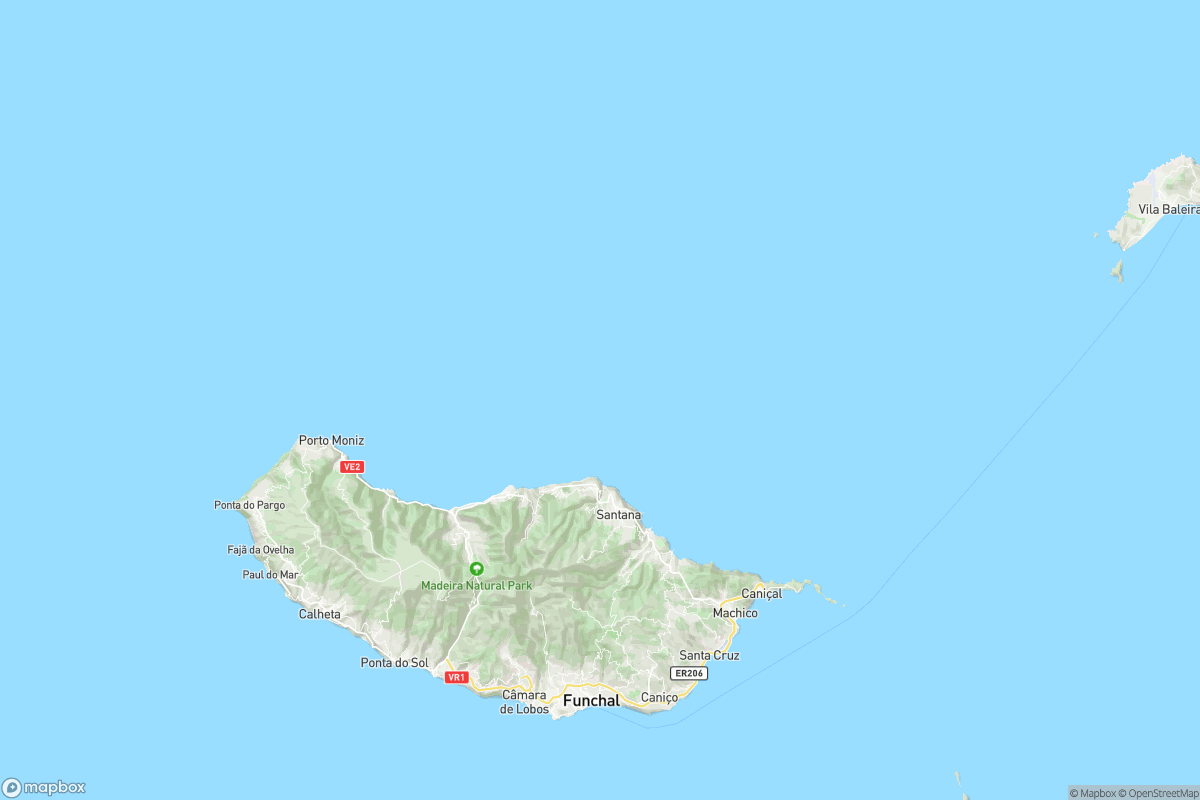
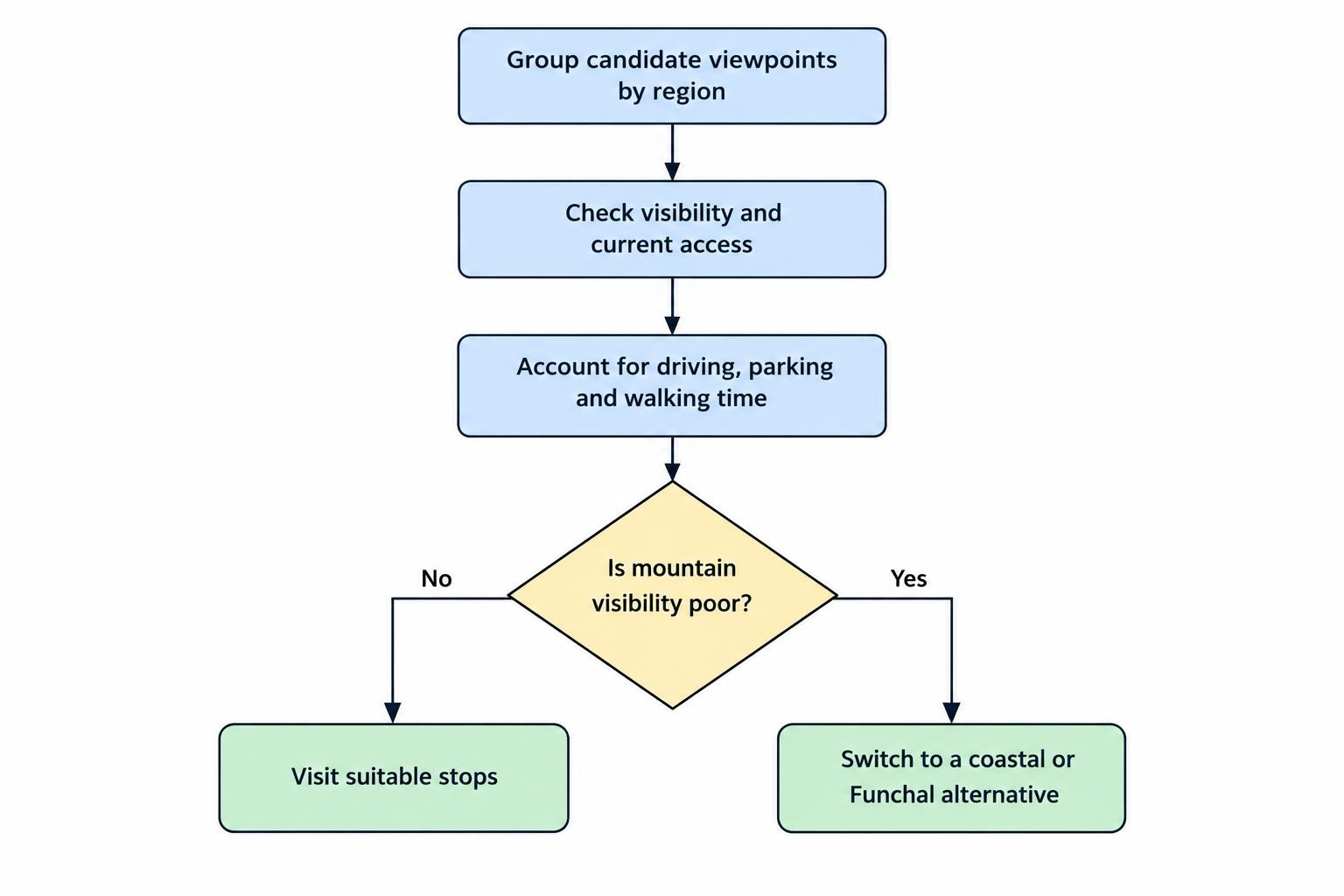
Build viewpoint stops into regional outings rather than joining every famous location into one ambitious driving loop. The following combinations are planning suggestions, not fixed itineraries. Drop a stop when weather, parking or walking takes longer than expected.
| Area | Viewpoints to consider | Planning approach |
|---|---|---|
| Funchal and nearby interior | Pico dos Barcelos and Eira do Serrado | Combine a city panorama with a mountain valley view. |
| Central mountains and northeast | Pico do Areeiro, Balcões and Rocha do Navio | Allow proper walking time for Balcões; make the mountain stop weather dependent. |
| Eastern Madeira | Ponta do Rosto | Decide separately whether to add the peninsula hike. |
| North and west | Véu da Noiva and Ponta do Pargo | Fit these into a broader regional day rather than rushing between them. |
If the eastern peninsula walk is part of your plans, use the Ponta de São Lourenço hiking guide to assess the walking commitment. Do not squeeze it into the time allocated for a short lookout visit.
Practical Planning: Transport, Bookings and Weather
Choose Transport Around the Stops
For a day with several dispersed viewpoints, compare a rental car, private driver or organised excursion. Without a car, confirm that a tour visits the actual lookout you want, allows enough time there and includes a workable return arrangement.
Drivers should leave space in the schedule for approaches, parking and turning around safely. A short distance on the map does not tell you whether the final road will suit your confidence behind the wheel. Review the Madeira driving and parking guide before planning a day dominated by upland roads.
Separate Viewpoint Admission From Trail Booking
A roadside lookout, a paid viewing platform and a classified walking route are different visits. For 2026, IFCN’s classified trails use entry time slots booked online through SIMplifica. The standard individual trail fee, excluding PR1, is €4.50 for visitors without an operator protocol; exemptions and other ticket arrangements apply.
Check the IFCN trail booking and fee rules before visiting Balcões or continuing onto a classified trail from another viewpoint. Check current route status too. A successful booking does not remove the need to respect closures or instructions on site.
Keep One Clear Weather Alternative
Prepare a coastal or Funchal option for a day when the mountains are obscured. Check conditions for the intended location rather than judging an upland outing from the weather beside your accommodation. Carry an extra layer and rain protection, and take a light for visits before dawn or after dusk.
Stay inside barriers, keep children close near drops and stop only where parking is permitted. If wind or visibility makes a viewpoint uncomfortable, leave. There is no photograph worth negotiating with a cliff for.
For a balanced first visit, choose one mountain lookout, one valley view and one coastal stop, then fit them around the other things to do in Madeira that interest you. Three well chosen viewpoints with time to enjoy them make a better day than ten hurried stops.